Rajputi Poshak Colours: Every Shade, Its English Name, and When to Wear It
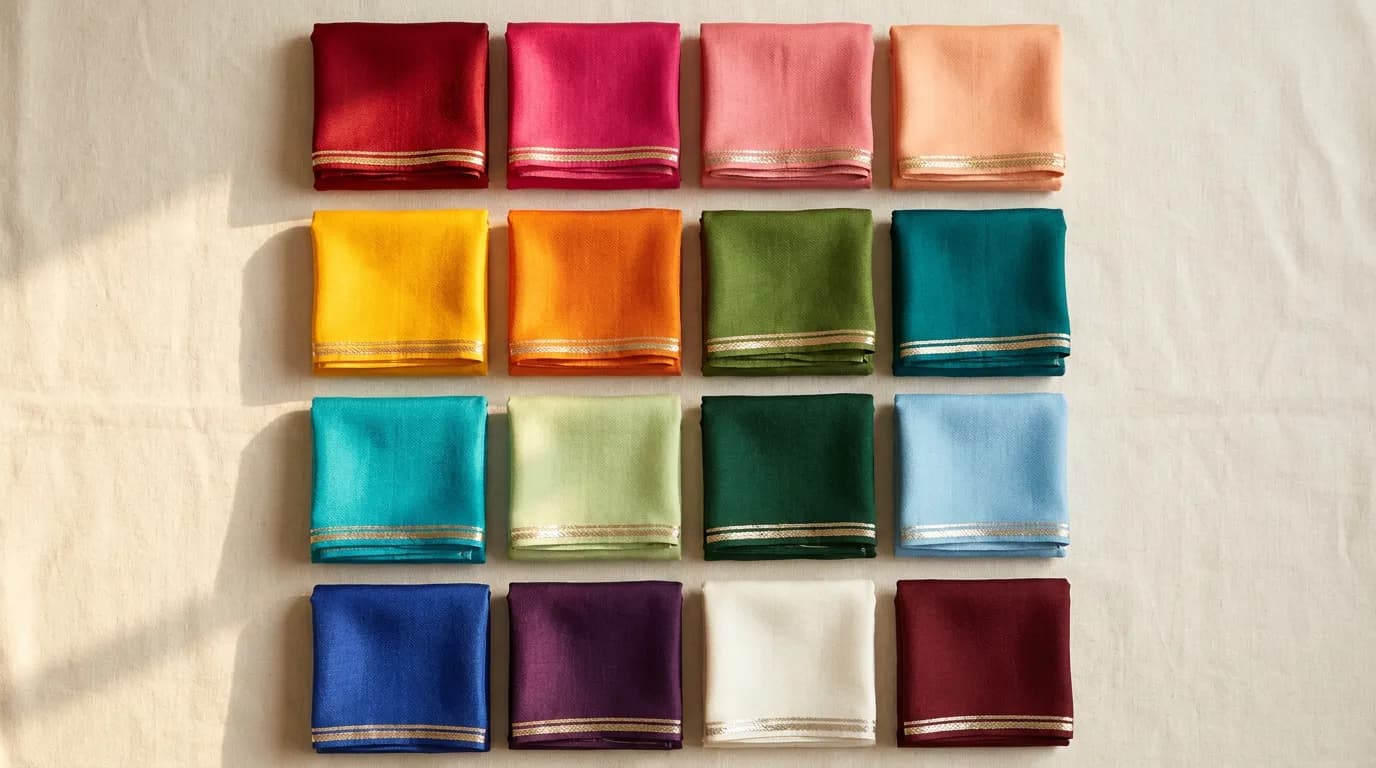
The traditional Rajputi poshak colours are lal, rani, gajri, pyazi, champai, piliya, kesariya, mehndi, rama, firozi, elaichi, aasmani, jamuni, safed, sunehri and badami — names most Rajasthani families know by feel rather than by their English equivalents. A poshak colour is chosen by occasion first and complexion second: red for the phere, turmeric yellow for the haldi, rama for Teej, and only after that a conversation about what suits the woman wearing it.
We hear the same sentence at the Jhotwara counter most weeks. A mother comes in for her daughter's bari, sits down at the swatch drawer, says kuch naya rang dikhao, and picks a red anyway, because the phere have their own rules. That is the honest shape of colour in a Rajput home. Tradition holds the important days. The newer shades take everything around them.
This page puts the whole vocabulary in one place: what each Rajasthani colour name means in English, which function it belongs to, what our karigars pair on the adda, what has moved in 2026, and the few shades you should quietly leave at home.
Occasion first, complexion second
Ask a Rajput household how a poshak colour gets decided and nobody starts with skin tone. They start with the function. Lal for the phere, piliya for the haldi, white-and-red for faag. The colour has a job to do before it does anything for the woman wearing it.
Family custom comes next, and it overrides everything else on this page. Some houses keep kaala out of every shubh function. A Jodhpur family once couriered us a two-inch strip cut from a grandmother's odhni and asked for that red and no other; it took more than one dye lot before they were satisfied. Ask your own elders before you ask any designer.
Time of day is the third filter and the one most people skip. Hard daylight flattens deep shades and makes all-over tari look muddy. Evening light eats pastels. A champai poshak that looks like poetry at an eleven o'clock sagai can look tired and grey by nine at the sangeet.
Complexion is fourth. It matters, though far less than the internet insists. What decides whether a colour suits you is the six inches of cloth nearest your face: the kor of the odhni, the magji at the neck of the kanchli, and whether the gota sitting there is gold or asli chandi.
Then the metal. Warm shades want gold gota, cool shades want real silver. Most of the colour mistakes we are asked to fix turn out to be metal mistakes.
Rajasthani poshak colour names and their English shades
| Rajasthani name | English shade | Worn for |
|---|---|---|
| Lal | True red, anywhere from tomato red to deep blood red | Phere, bari, the wedding day itself |
| Rani | Deep magenta pink | Wedding functions, receptions, mothers of the bride and groom |
| Gajri | Carrot pink, a dusty rose leaning orange | Day functions, engagements, milni |
| Pyazi | Onion pink, pale blush with a faint mauve cast | Day events, sangeet, unmarried girls |
| Champai | Pale champa-flower yellow, cream with a soft yellow cast | Daytime sagai, tilak, summer weddings |
| Piliya / Aam-pila | Turmeric yellow to ripe-mango yellow | Haldi, the piliya given to a new mother, Basant |
| Kesariya | Saffron orange | Faag, groom-side functions, Rajput ceremonial wear |
| Mehndi | Henna green, olive over a grey base | Mehndi night, Teej |
| Rama | Rama green, a rich blue-leaning emerald | Teej, Gangaur, phera-side functions, married women's shubh wear |
| Firozi | Turquoise, the colour of the firoza stone | Sangeet, day receptions, real-silver pieces |
| Elaichi | Cardamom green, pale and slightly grey | Daytime functions, summer, brides who want quiet |
| Bottle green | Dark forest green | Evening weddings, winter, reception poshaks |
| Aasmani | Sky blue | Day sangeet, mehndi, everyday poshaks |
| Royal blue | Deep saturated blue | Evening receptions, cocktail-side functions |
| Jamuni | Purple, the colour of the jamun fruit | Evening functions, winter weddings |
| Wine | Deep maroon-purple, red with brown sitting under it | Evening receptions, sangeet, winter |
| Safed | White | Faag with red, as faganiya; not worn plain at weddings |
| Kaala | Black | Modern evening wear; avoided at shubh functions in many houses |
| Sunehri | Golden, tissue and gold-ground fabric | Receptions, sangeet, second-day functions |
| Gulabi | Rose pink | Engagements, mehndi, the bride's sisters and friends |
| Badami | Almond, a warm beige-tan | Everyday poshaks, travel, day pujas |
Which colour for which occasion
- 01Phere, saat phere
Lal, and there is not much to argue about. The only real decision is which red. A bright tomato lal photographs younger. A maroon-leaning one reads formal and carries heavy gota better.
- 02Bari
The bari poshak comes from the bride's family and in most Rajput homes it is red. Rani pink is the accepted second, usually chosen when the phera poshak is already a deep red and the two need to look distinct.
- 03Shadi and reception
Here you finally get room. Rani, jamuni, bottle green, royal blue, sunehri tissue. Evening light is kind to saturation, so deep colours earn their keep after dark.
- 04Engagement or sagai
A daytime sagai suits champai, pyazi, gajri, elaichi. An evening one flips the logic: firozi with silver, or a soft wine.
- 05Haldi
Piliya. Turmeric yellow, and keep it plain, because that poshak is about to take haldi, oil and a great many hands.
- 06Mehndi
Mehndi green or rama, with light work at the sleeve so you are not fighting the cone. Aasmani and firozi have quietly taken over Jaipur mehndi nights.
- 07Teej
Rama above everything, with green-and-yellow lehriya close behind. At Teej green is not a preference. It is the point.
- 08Gangaur
Married women wear their good red or rama; unmarried girls take pinks and pilas. It is a procession festival, so spend on the odhni. That is what people see.
- 09Faag and Holi
Faganiya. White ground with red, sometimes a kesariya odhni over it. Nothing else looks right at faag, and nothing else survives the gulal.
- 10Sangeet
Firozi, royal blue, wine, sunehri. Choose for movement. A 24-kali ghaghra on a light silk swings when she turns; heavy tissue stands still.
- 11First Diwali as a bride
Red or rani with gold, almost everywhere. Many families send a specific poshak for it, so ask at home before you buy anything.
- 12Everyday and day pujas
Badami, elaichi, aasmani, a soft gulabi. Cotton-silk, very little gota, magji at the edges and nothing more.
Colour combinations that hold up
A poshak is four pieces, kanchli, kurti, ghaghra and odhna, so picking a colour really means deciding how those four speak to each other. Two schools, both correct.
Ek rang, the matching poshak. One shade throughout, with the handwork doing all the separating. This is the ceremonial choice and it is how we build most bari poshaks. It photographs cleanly and it does not date.
Hamrahi, the contrast odhna. The older Rajasthani habit. A lal ghaghra under a rama green odhni, or a rama kanchli-kurti under a red odhna. Green against red is the classic and nothing newer has beaten it. Gajri with mehndi is its quieter cousin. Firozi with a gajri magji is a pairing we come back to constantly for day functions.
The border decides more than the ground does. A thin gota-kiran along the kor lifts a pale poshak without adding weight to it. A wide danka border turns an ordinary bottle green into a reception piece. Magji in a contrast shade at the neck and down the kali seams is the cheapest trick in Rajputi tailoring and still the best one.
On metal, our karigars follow a rule none of them has ever said out loud. Gold gota belongs on warm grounds: lal, kesariya, gajri, piliya, badami. Asli chandi belongs on the cool side: firozi, rama, aasmani, jamuni, elaichi, safed. Put silver on a hot red and the red goes cold. Put gold on a pale elaichi and the elaichi looks dirty. That is most of the science.
If you made us pick two, personally. A rama ghaghra and kanchli-kurti under a lal odhni, real-silver gota kept to the odhni kor and nowhere else, quiet enough for a milni and still right in ten years. And for a day engagement, elaichi with asli chandi and a pyazi pink odhna. Nobody expects it, and it holds in hard eleven o'clock light better than any pastel we know.
The same shade is not the same shade on two fabrics
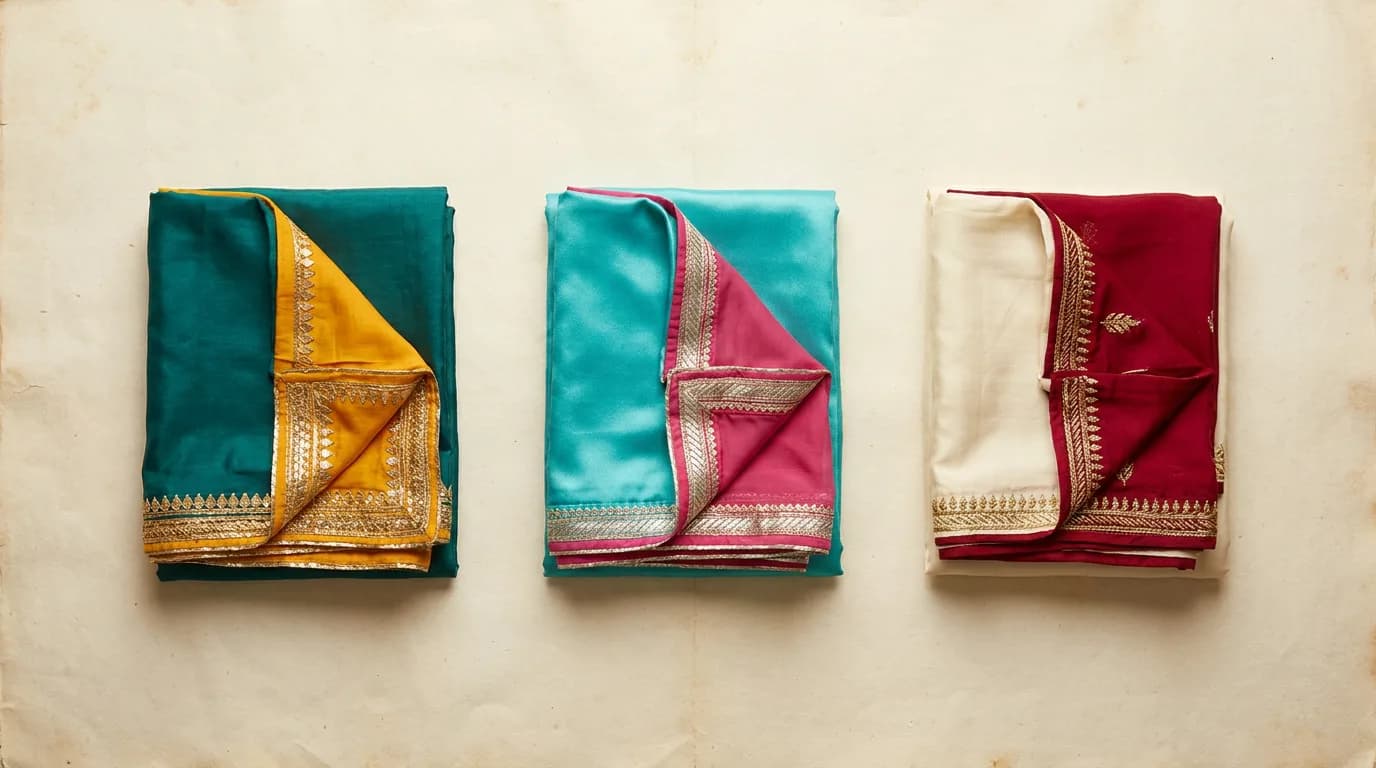
Half of a colour is dye and half is cloth. Lal on a heavy silk comes up darker and quieter than the identical lal on georgette, because silk holds the light and gives less of it back. Chiffon lifts nearly everything by a tone. Velvet drops it by two and keeps it there.
Some shades fight the cloth outright. Firozi on raw silk goes chalky, and our dyer refuses to do it, which we stopped arguing about years ago. Pastels on a slubby weave look patchy rather than soft. Rama is the most stubborn of the lot: it will sit perfectly on one bolt and turn grey-green on the next of the same order, so we dye a whole poshak in a single lot and never top up one kali later.
New lots hang on the terrace rail through a morning before anything is cut. Shop tubelight flatters, ours included. If a colour still looks like itself at eleven and again at four, it goes to the cutting table.
Then there is the gota, which nobody warns brides about. Asli chandi gota is not silver-coloured, it is silver, and it takes on whatever it sits beside — warmer against a lal ground, colder and brighter against firozi. Hold one reel against two grounds and you can watch it shift. It also tarnishes if it is left in paper through a monsoon, so ours lives in cloth bags with the reels turned inward. If your odhni comes home from a wedding with the kor gone dull, nothing is damaged. A jeweller's cloth brings it straight back.
The racks change week to week as pieces sell and new shades come off the adda. Fifteen reds is not indulgence, by the way. No two Rajput families mean the same red when they say lal.
| Published poshaks | 21 |
| Bari (bridal) poshaks | 19 |
| Shades of red in the bari range | 15 |
| Rani pink bari poshaks | 3 |
| Shaded pieces | 1, a red-orange |
| Designer poshak in baby pink | 1 |
| Suits | 1, marigold-yellow floral |
| Bari price band | Rs 20,400 to Rs 94,500 |
| Made-to-order build time | About 38 days |
| Karigars on the adda | 214 |
| Countries we ship to | 42 |
The new colours, without the percentages
We are not going to hand you a trend chart. What we can tell you is what the cutting table has been busy with.
Pastels have taken the daytime. Champai, pyazi, elaichi, a soft peach, and a lilac-leaning lavender we were sceptical about and now keep cutting. These are day-function colours. They work with restrained handwork and silver, and they collapse under heavy gold.
Evenings have gone deeper. Wine, bottle green, jamuni, an inky royal blue. Dark grounds carry danke ka kaam beautifully and they sit well under warm venue lighting, which is what most receptions are lit with now.
Shaded and ombre pieces are the genuinely new idea rather than a revival. We keep one red-orange shaded bari poshak in the range and it gets asked about far more than its shelf space deserves. Grading a shade evenly across a 24-kali ghaghra is slow work and it goes wrong more often than a flat dye does, which is why few houses offer it at all.
Piliya has come back out of the haldi tent. For a decade it was a ritual colour and nothing else. Younger brides are now taking aam-pila into their mehndi and their day sangeet, with gold gota and no tari at all.
On design rather than colour, this year has run towards narrower gota, less all-over tari, and more concentrated work on the kor and the magji. Lighter garments, better cloth, effort where the eye lands. Our own new pieces have moved that way too.
Shop by shade
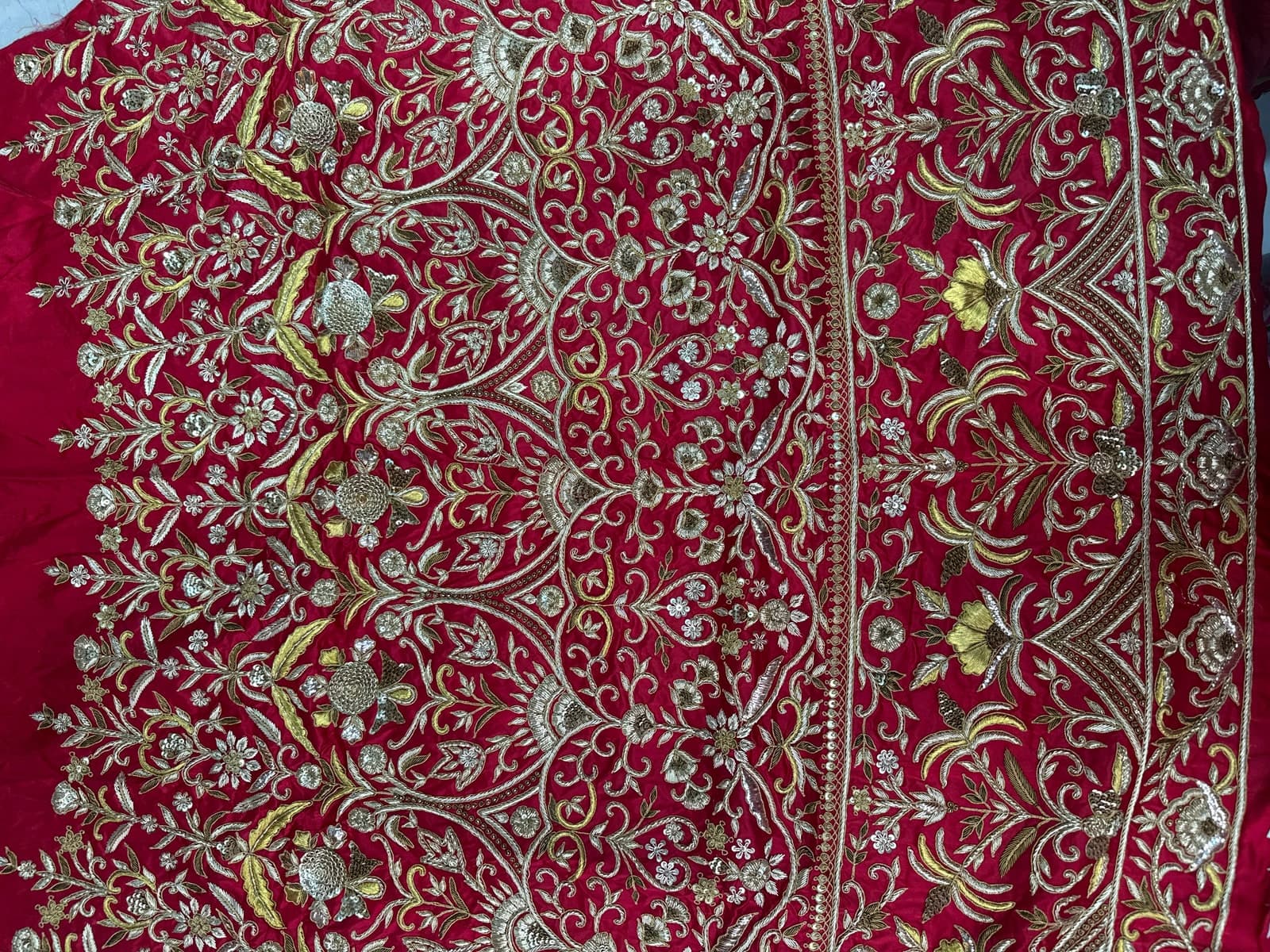
Crimson Bari Rajputi Poshak — Antique Golden Zari
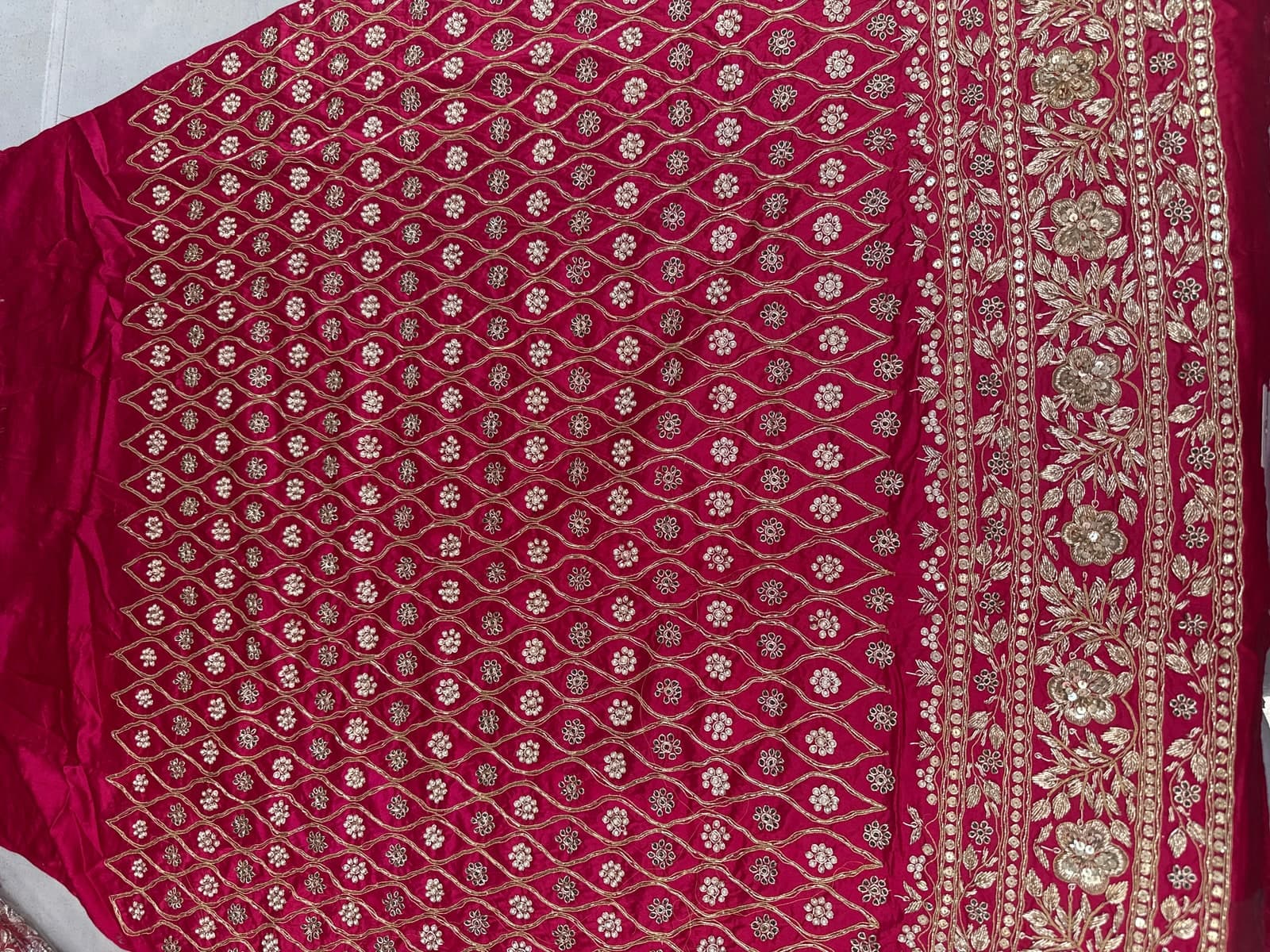
Rani Pink Bari Rajputi Poshak — Gota Jaal
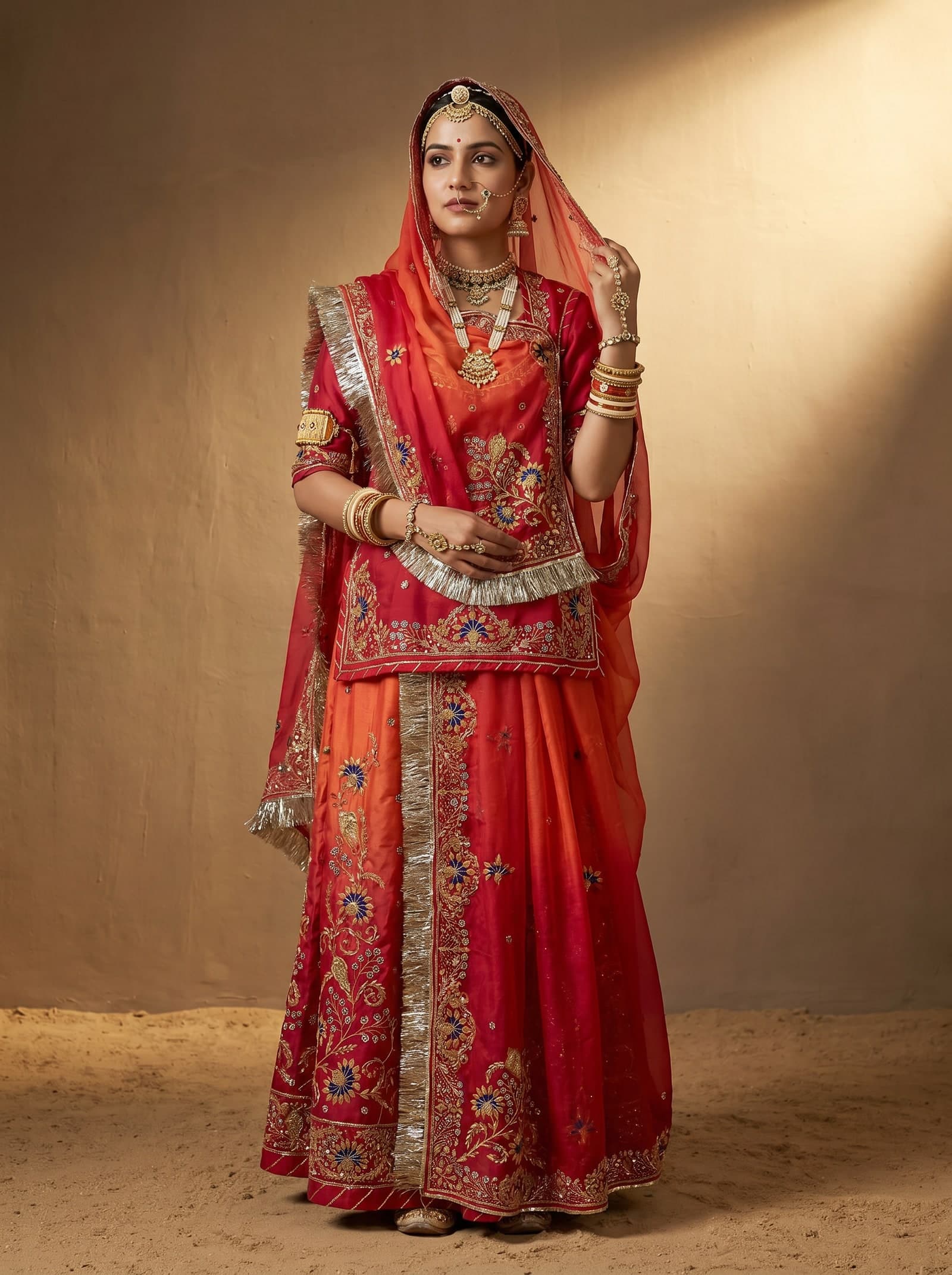
Red-Orange Shaded Bari Rajputi Poshak — Golden Dabka
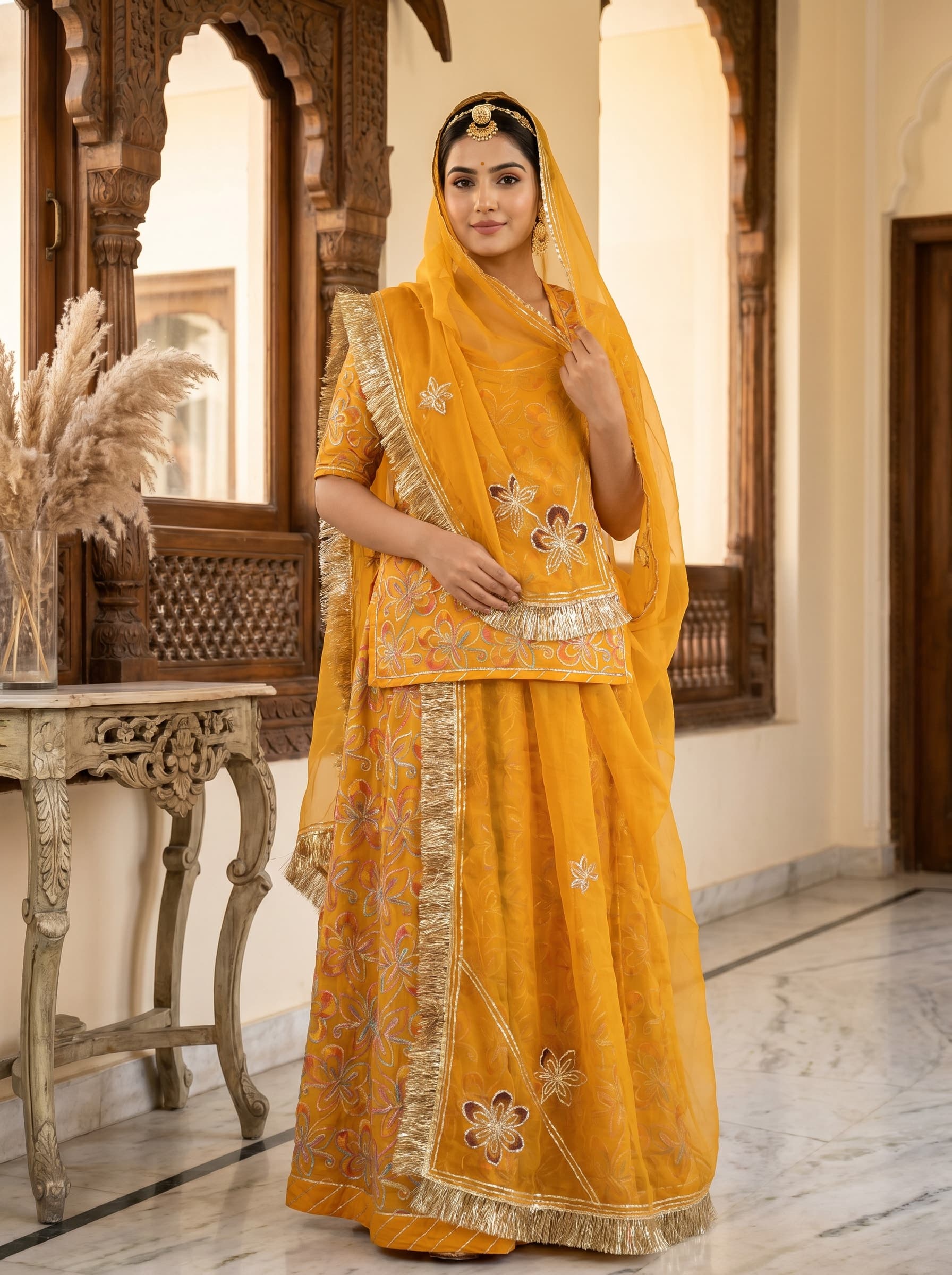
Marigold Yellow Floral Suit
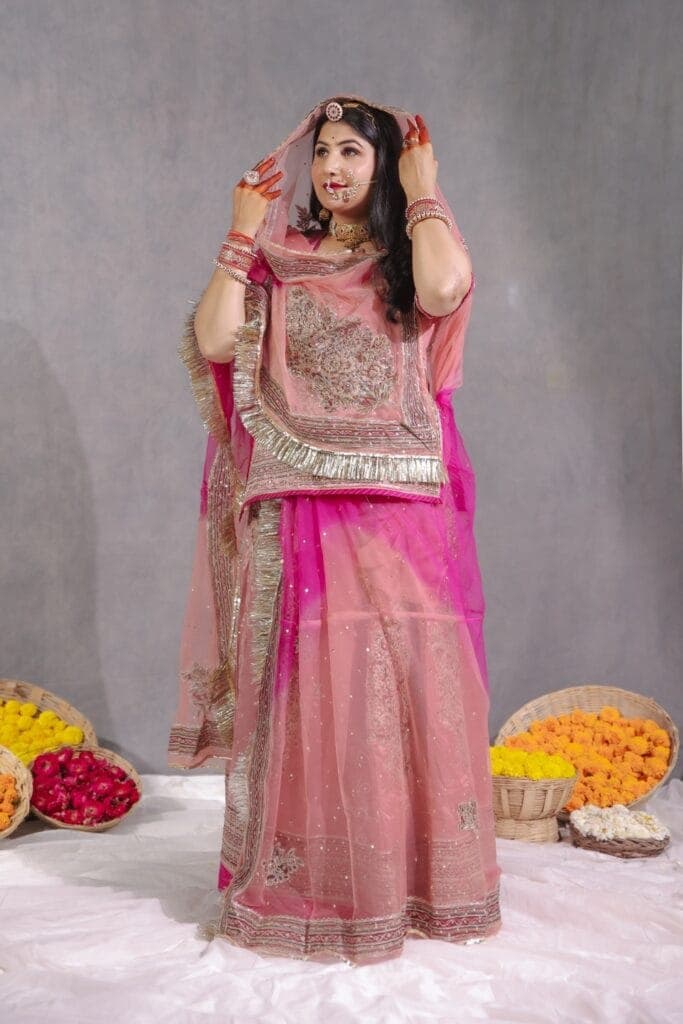
Designer Baby Pink Rajputi Poshak
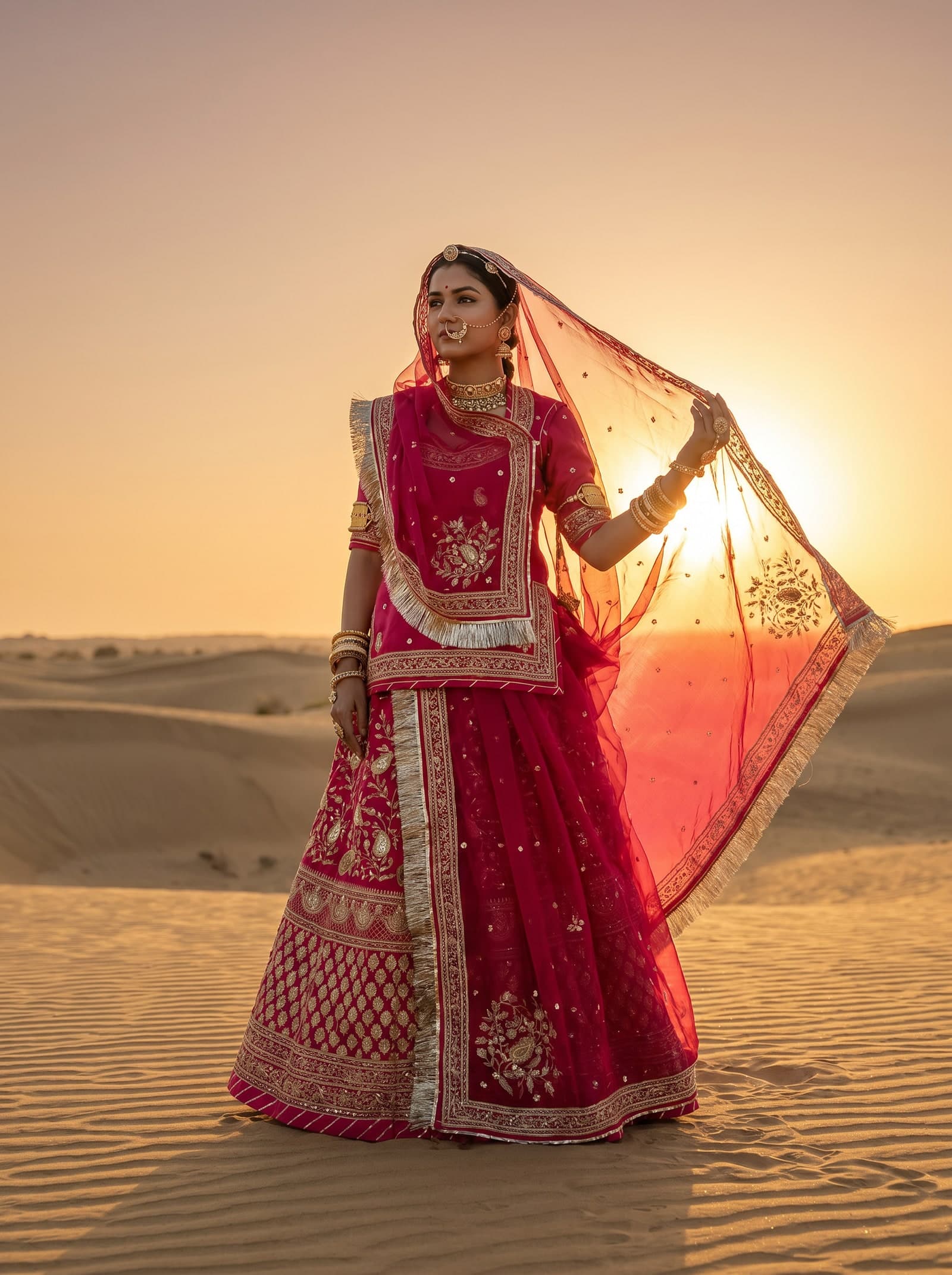
Rani Pink Bari Rajputi Poshak — Aari Zardozi
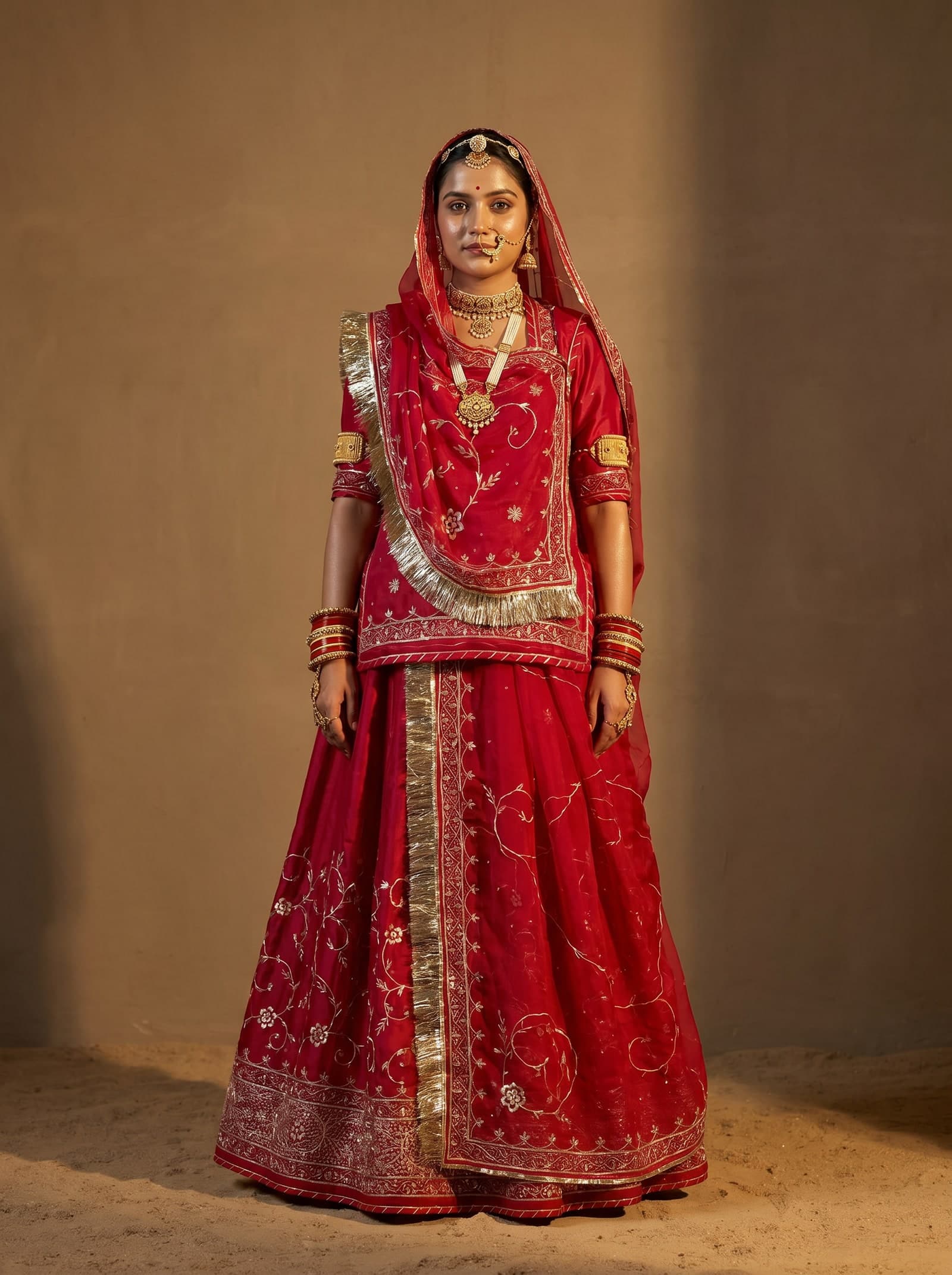
Red Bari Rajputi Poshak — Dabka
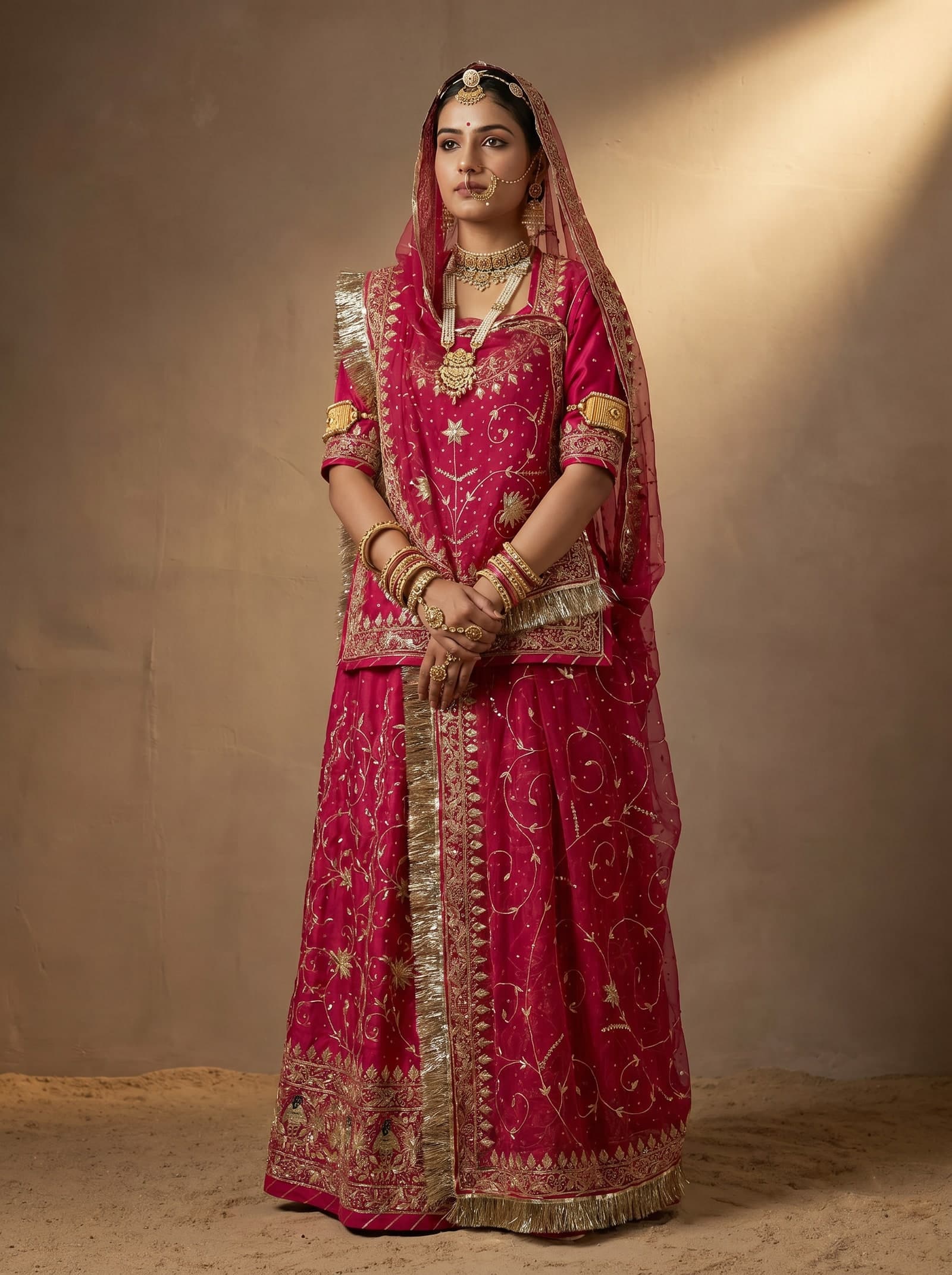
Rani Pink Bari Rajputi Poshak
Light colours, dark colours, and what suits your skin
Two opinions here, both of which will annoy somebody.
Dusky skin looks superb in exactly the colours people keep warning against. Rama, firozi, wine, rani, a mustard-toned piliya. Saturation sits beautifully on saanwla skin and the contrast is the whole point of it. The shades to be careful with are the ones living in the same family as your own tone, worn flat and with no contrast border. A badami poshak with badami gota will vanish on anybody.
Fair skin is not automatically a pastel's friend either. Pale skin against champai or off-white with nothing separating the two reads bloodless in photographs. Give it a kor, a gajri magji, a thin silver gota, a contrast odhni, and the same poshak comes alive.
If you want a light poshak: elaichi, champai, pyazi, badami, aasmani. Keep the handwork narrow, use silver, and put the contrast at the neckline where it does the work.
If you want a dark one: bottle green, jamuni, wine, royal blue, a deep maroon lal. These want weight. A fuller kali count so the ghaghra keeps its fall, and enough gota that the colour does not read as one flat block across a room.
One practical thing, and it costs nothing. Take the fabric to a window. Every shop in Jaipur is lit to make cloth look good, ours very much included. Daylight is the only fair judge, and a colour that survives Johari Bazaar at noon will survive your wedding.
When a colour is the wrong choice
Plain white at a wedding. In most Rajput households safed on its own belongs to mourning, and however lovely an ivory poshak looks on a screen, an elder will notice. Faganiya is the understood exception, since white ground with red at faag is a festival colour and reads as one.
Black at shubh functions. Some families are entirely relaxed about kaala now, particularly for sangeet and cocktail evenings. Many are not, especially at phere, tilak and griha pravesh. It costs you one phone call to find out which kind of family you are marrying into.
The bride's own red. If you are a guest, a sister or a bhabhi, do not walk into the bari in the same red she is wearing. Take rama, jamuni, gajri, firozi. Let her be the one in lal.
On widows and red, custom varies house to house. Plenty of families today have set the old restrictions aside; others hold to them closely. We do not think it is a workshop in Jhotwara's place to rule on that. Ask your own elders, and if the answer is no, rama, jamuni and firozi carry every bit of the ceremony that red does.
Heavy tari at a haldi. Not a colour rule, a practical one. Turmeric, oil and real-silver gota are not friends, and the stain sets into the thread before the ladies have finished. Wear a plain piliya you are not precious about, and save the good one for the phere.
Colour is the one thing you should not buy from a screen
Screens lie about rama, always. It photographs as bottle green or as peacock blue depending on the phone, and it is neither. Firozi and aasmani get confused constantly. Champai and off-white are indistinguishable in a product photo and completely different across a room.
So if you can reach us, reach us. All three counters keep swatches, and we will cut you a strip to carry home and look at in your own light.
Jaipur, Jhotwara — Shop 7, Khatipura Road, opposite Goverdhan Sky, Fateh Colony, Indrapura, Jhotwara, Jaipur 302012. Phone +91 77424 58740.
Jaipur, Sanganer — 210, Swami Vihar, Shiv Shakti Nagar, Sanganer, Jaipur 302019. Phone +91 98290 24503.
Jodhpur — Gali No. 33, 7, Link Road, near Ramdev Vatika and the RTO Office, ZSB, BJS Colony, Jodhpur 342006. Phone +91 96363 66904.
All three are open 10 AM to 8 PM.
Further away, and many of you are, since we ship to 42 countries: send a photograph of the shade you have in mind to our concierge on WhatsApp at +91 98290 17524, or write to concierge@grandabhaneri.com. We will tell you plainly whether we can match it and roughly what it will cost. The price guide and the calculator will get you close before you ever speak to a person.
Frequently asked
Last reviewed: 17 May 2026 · Verified by the DivineTatva expert panel
Which colour poshak should a bride wear?
Red. For the phere and for the bari poshak, lal is the settled answer in almost every Rajput household, and the only real choice is which red: a bright tomato lal, a deeper maroon-leaning one, or a rani pink if the family wants the bari and the phera poshak to look distinct from each other. For the surrounding functions she has freedom. Piliya at the haldi, mehndi green or aasmani at the mehndi, firozi or wine at the sangeet, and something deep like jamuni or bottle green for an evening reception.
What colour is firozi, and how is it different from aasmani?
Firozi is turquoise, named after the firoza stone. It carries green inside the blue, which is why it reads warmer and richer in the hand than it looks on a phone screen. Aasmani is plain sky blue, lighter, with no green in it at all. They are constantly confused online and never confused in person. Both take real-silver gota far better than gold.
What is rama colour?
Rama is the deep blue-leaning emerald green that Rajasthani families treat as auspicious for married women, worn at Teej, Gangaur and phera-side functions. It is not bottle green and it is not peacock blue, though it photographs as one or the other depending on the light. Rama with a red odhni is the oldest good combination in Rajputi dressing. It is also the hardest shade to dye twice the same way, which is why a rama poshak should be cut from a single lot.
What do elaichi and gajri mean in English?
Elaichi is cardamom green, a pale green with a grey base, and it is a daytime and summer colour. Gajri comes from gajar, the carrot, and it is a dusty rose pink with an orange tilt to it. Gajri suits day functions, milni and engagements, and it works beautifully as a magji or a contrast border on firozi and mehndi grounds.
Which poshak colour suits dusky skin?
Saturated ones. Rama, firozi, wine, rani and a mustard-toned piliya sit very well on saanwla skin, and the contrast is what makes them work. What to avoid is a shade living in the same family as your own tone worn flat with no border, like a badami poshak with badami gota. Add a contrast kor at the neck and almost any colour becomes wearable.
Can an unmarried girl or a widow wear a red poshak?
Unmarried girls wear red freely at weddings, Gangaur and Teej. The convention is only that a guest does not wear the same bridal red as the banni on her own day. For widows, custom differs from house to house. Many families today have set the old restriction aside; others hold to it. It is a question for your own elders rather than for a workshop, and if the answer is no, rama, jamuni, firozi and gajri carry all the ceremony red does.
What are the new Rajputi poshak colours in 2026?
Soft pastels for daytime functions have been the strongest movement: champai, pyazi, elaichi, peach and a lilac-leaning lavender, all with restrained handwork and silver. Evenings have gone deeper into wine, bottle green, jamuni and inky royal blue. Shaded and ombre poshaks are the newest idea of the lot, and piliya has moved out of the haldi tent into mehndi and day sangeet wear.
Which colour poshak for haldi and mehndi?
Piliya for the haldi, turmeric or mango yellow, and keep it simple because it is going to take haldi and oil. Turmeric sets into gota thread before the function is over, so this is not the poshak for real-silver work. For mehndi, henna green or rama is traditional, though aasmani and firozi have become very common in Jaipur. Whatever you choose for mehndi, keep the sleeve light so the girl with the cone has room to work.
Written in our Jaipur workshop, where the colour argument is a daily event and rarely a short one. Most of what is above comes from standing at the swatch drawer while families disagree, and from our dyers, who will tell you flatly when a shade will not hold on silk. Colour custom is local. A rule that is absolute in one Jodhpur house is a shrug in the next. If we have something wrong for your community, we would genuinely like to hear it: concierge@grandabhaneri.com.