Rajputi Bari Poshak: What the Bride Wears for the Phere, and What It Costs
A rajputi bari poshak is the bridal poshak a Rajput bride wears for her phere — sent, by tradition, from the groom's family in the bari, the ceremonial gift of clothes that reaches her home before the wedding. It is almost always lal. It is always four pieces — kanchli, kurti, ghaghra, odhna. And it is the most worked, most photographed, most remembered poshak she will ever own.
We build bari poshaks through the year in our Jaipur workshop, and every one teaches us the same lesson: the bride remembers the weight. Not the price, not the fittings — the weight of the ghaghra when she stood up for the phere. This guide covers what a bari poshak actually is, what it should cost, and how to choose one you'll still open the trousseau box for, twenty years on.
What 'bari' actually means
In most Rajput homes, the bari is the set of poshaks, jewellery and sagun the groom's family sends to the bride before the wedding — carried in with some ceremony, opened in front of everyone who matters. The poshak inside it, the one meant for the phere, is the bari poshak.
That is why this poshak is never casual. It is chosen by one family and worn into another. A saas who sends a heavy dabka lal poshak is saying something, and everyone in the room can read it.
These days plenty of brides choose their own bari poshak and the sasural pays for it — or the bride's side simply buys it outright. The ritual bends. The poshak doesn't: for the phere it stays lal, it stays full, and it stays the best piece in the trousseau.
Why the bari poshak is almost always lal
Lal is the colour of suhaag in Rajputana, and a Rajputi bride wears it with intent — it is a declaration, not a preference. Rani pink appears in houses that like a little daring; crimson and scarlet are really arguments about depth, not colour.
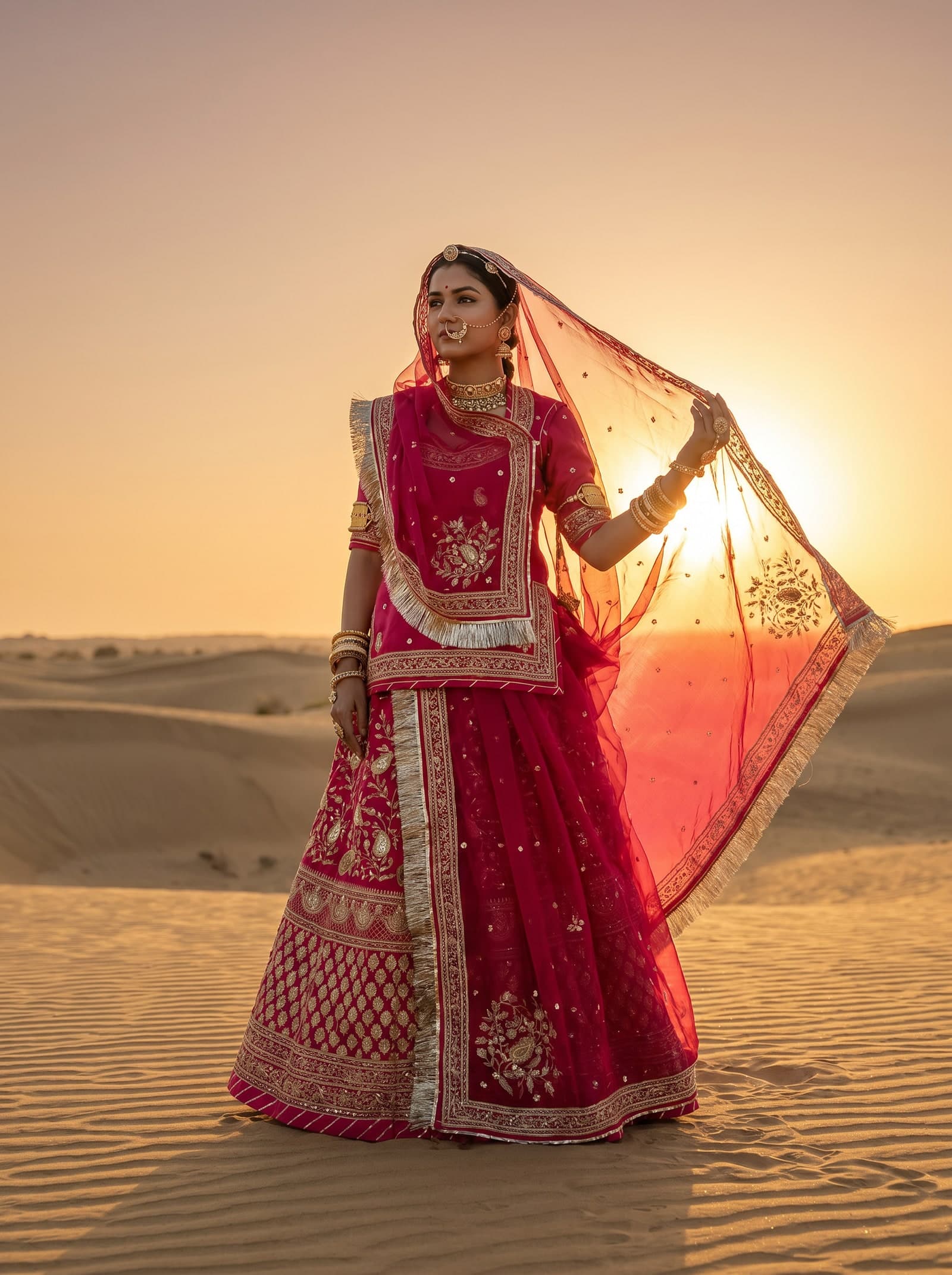
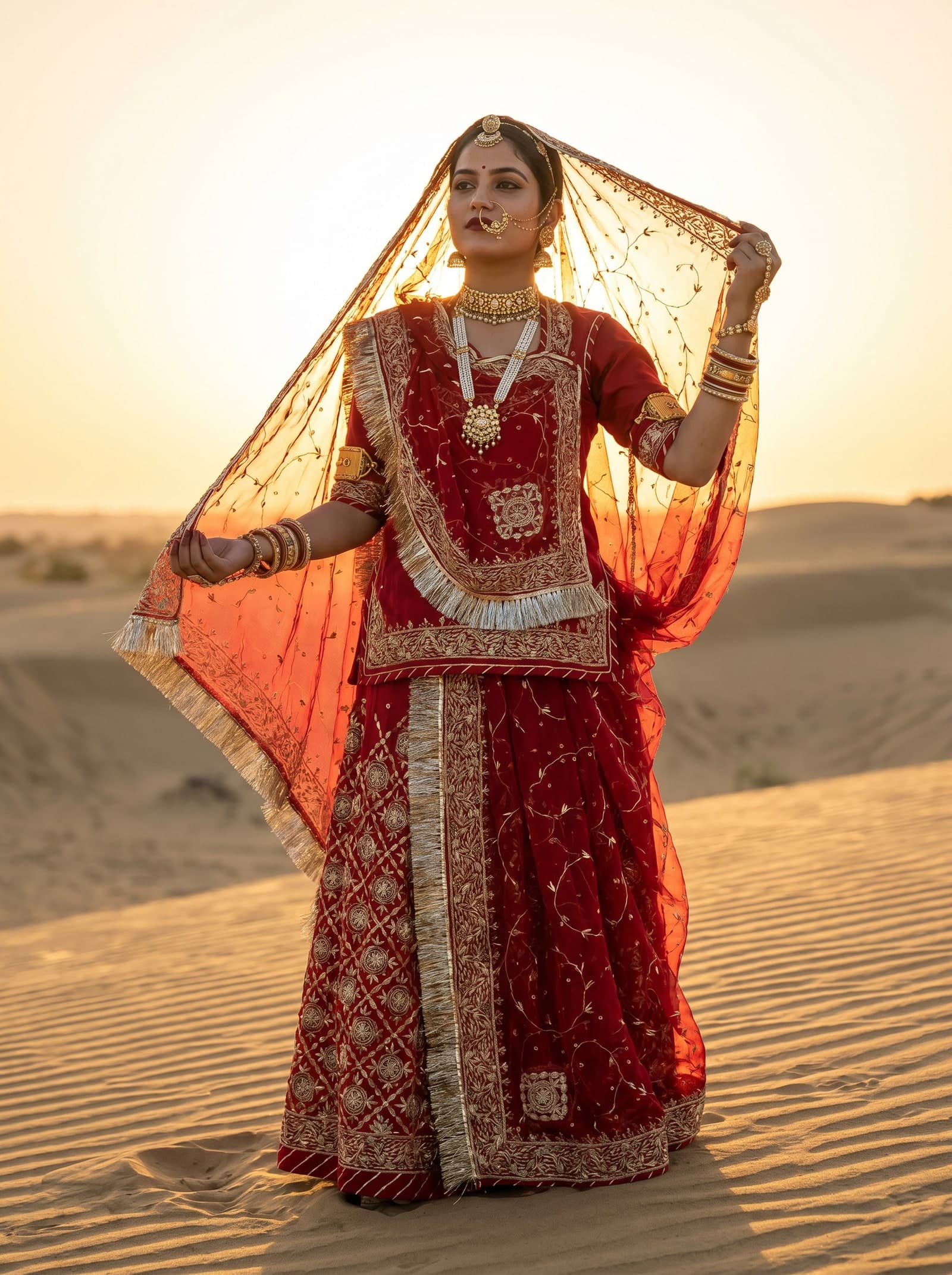
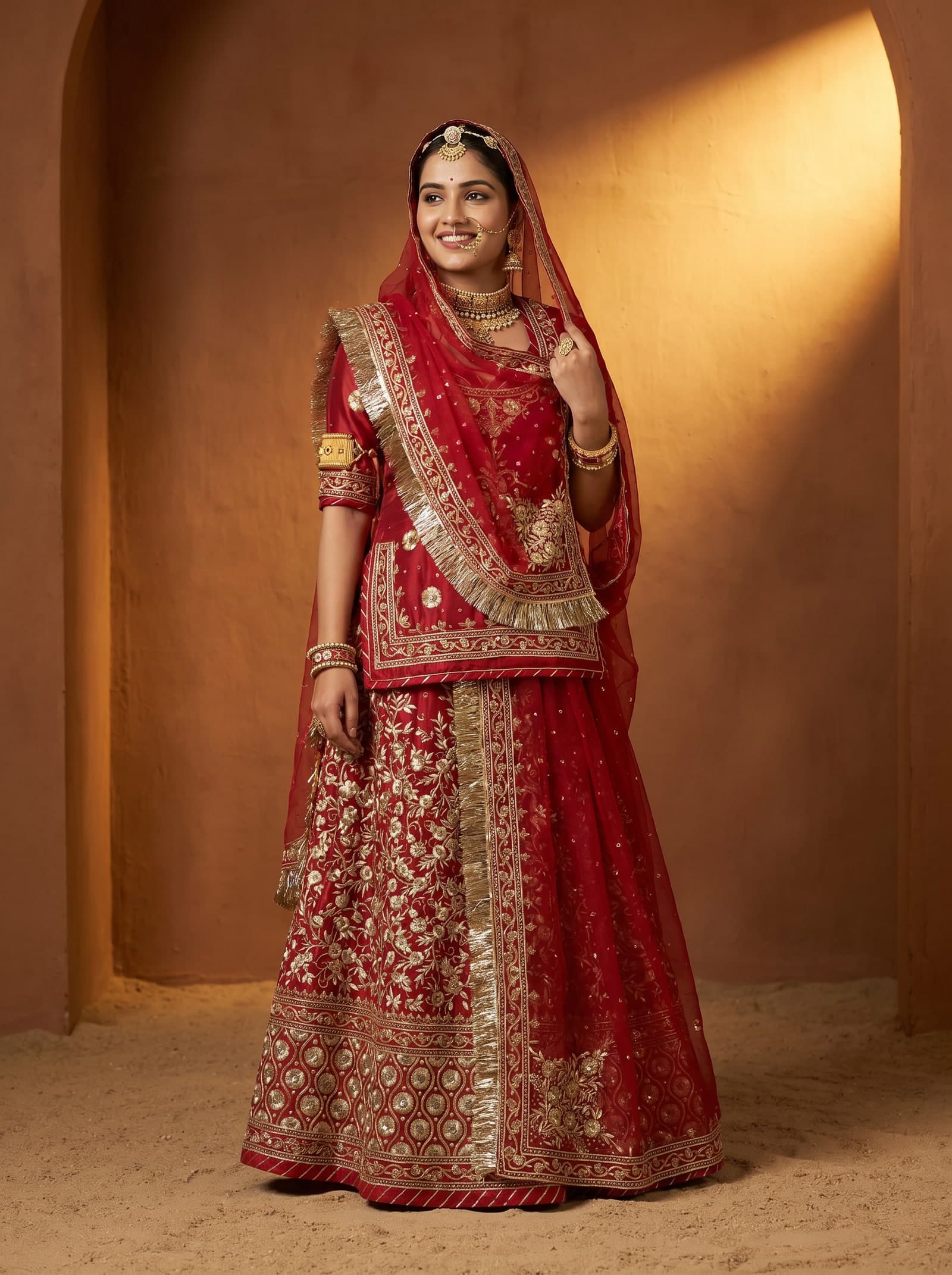
Of the nineteen bari poshaks on our racks as I write this, fifteen are some depth of lal — scarlet through crimson — three are rani pink, and one shades from red into orange like a Jodhpur evening. That ratio hasn't really changed in a hundred years.
If you're tempted by rama or firozi, keep them for the engagement or the mehndi. The phere belongs to red.
The rajputi bari poshak, at a glance
| Pieces | Four — kanchli, kurti, ghaghra, odhna |
| Colour | Lal, almost always; rani pink for the bolder houses |
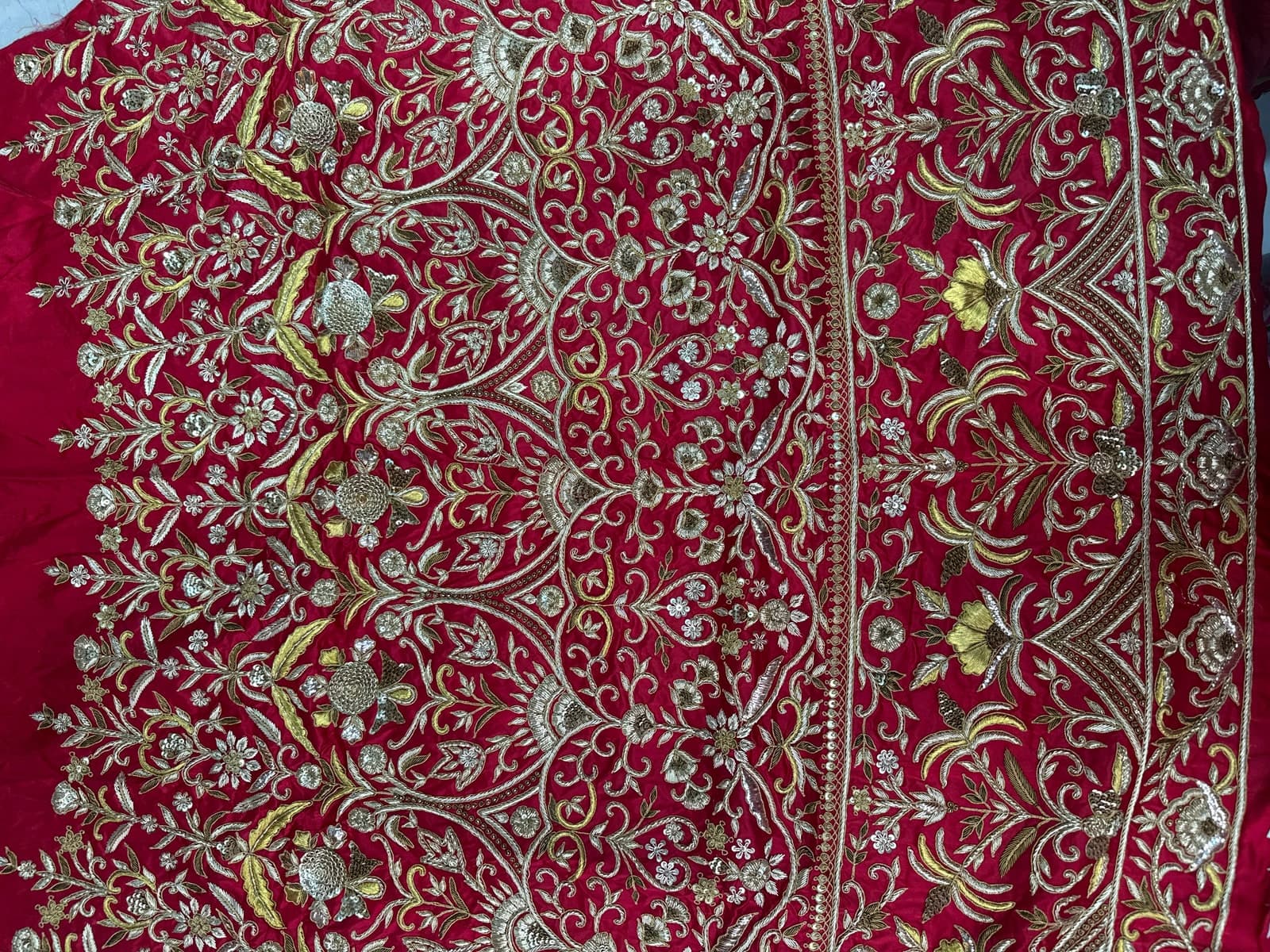
| Work | Dabka, aari-tari, zardozi, gota-patti, zari jaal |
| Who gifts it | Traditionally the groom's family, in the bari |
| Worn for | The saat phere — and often the vidai after |
| Made-to-order time | Around 38 days in our atelier |
| Price at our atelier | ₹20,000 – ₹95,000 |
Dabka, aari-tari, zardozi — reading the work
Hold the odhna against a window. Real dabka is coiled wire — press it gently with a thumbnail and it springs back. Machine embroidery lies flat and shines too evenly, like a photograph of embroidery rather than the thing itself.
Aari-tari is hook-work done on a stretched adda, and on the good pieces you can turn the cloth over and read the karigar's rhythm on the reverse — even stitches, no long lazy jumps. Zardozi sits raised off the fabric; gota-patti catches light in flat little leaves. On our real-silver pieces the gota is asli chandi, which is why an old poshak from a good house can be sent back to the karigar and polished like jewellery.
None of this is about showing off at the shop counter. It decides how the poshak ages — whether it goes dull in five years or becomes the piece your daughter argues for.
Bari poshaks, ready to discuss
How to choose your bari poshak
- 01Settle the colour first
Lal if you want the ritual read loud and clear; rani pink if your house wears its confidence lightly. Decide this before you look at a single design, or the racks will decide for you.
- 02Respect the weight
A fully worked 24-kali ghaghra is beautiful and heavy. You will sit, stand and take seven phere in it, probably past midnight. Lift it, walk in it, and be honest with yourself.
- 03See the work in daylight
Shop lights flatter everything. Take the poshak to a window or a doorway — dabka, tari and gota each behave differently in sun, and daylight is what your photographs will remember.
- 04Count backwards from the wedding
A made-to-order bari poshak takes around 38 days in our workshop, and you'll want time for fittings after. Order eight to ten weeks out and nobody has to panic.
- 05Plan the odhna last, but plan it
The odhna sits closest to your face in every photograph and over your head at the phere. Its kor — the border — should answer the kanchli, not compete with it.
What a rajputi bari poshak costs
At our atelier, bari poshaks currently run from about ₹20,000 for a dabka dori-jaal piece to ₹95,000 for crimson worked edge to edge in antique golden zari. Three things move the price: the density of the handwork, the metal in the thread — real silver costs what silver costs — and the base cloth, with velvet sitting above satin.
In the wider market you'll find bari poshaks from ₹15,000 to well past ₹2,00,000. A word of caution from inside the trade: anything under ₹15,000 sold as "hand-embroidered" is usually machine work. There is nothing wrong with machine work — but you should know which one you're paying for, and the window test above will tell you.
Every poshak that leaves our workshop is numbered and signed, and goes out in the heritage trousseau box. That isn't packaging; it's where the poshak is meant to live between the wearings.
Bari packing ideas — presenting the gift properly
The bari is opened in front of a room full of people, so how it is packed matters nearly as much as what is in it. A few ways we have seen it done beautifully over the years:
The open thaal. The oldest way — poshak folded on a brass or silver thaal, odhna's worked border facing up, jewellery arranged around it, covered with a net or bandhej cloth until the moment of presentation.
The trousseau box. Our own answer: every poshak leaves the atelier in the heritage trousseau box, odhna displayed on top, so the box itself becomes the presentation. Families often add the jewellery and sagun directly into it.
The layered bari. For larger baris, one poshak per box, stacked by importance — the phere poshak on top, festive pieces below. A silver coin and a little kumkum in the top box, always.
Two small rules that never fail: let the odhna do the showing (it carries the best work), and never present the poshak in the courier packaging it travelled in. The gift deserves a moment.
Phere ke din
There is a line the older women in our family still say — jad banni saji-sanwri — when the bride steps out dressed at last, and the whole aangan goes quiet for a moment.
That moment is what a bari poshak is for. The fire, the seven turns, the odhna held over her head by people who love her. We've sent poshaks to weddings in havelis and to weddings in wedding halls with plastic chairs, and the moment is exactly the same.
If your phere are coming, our phera collection is where the bari poshaks live — and if you read Hindi, we've written about rajputi fero ki poshak in the language the ritual actually happens in.
Frequently asked
Last reviewed: 17 May 2026 · Verified by the DivineTatva expert panel
What is a bari poshak?
A bari poshak is the bridal poshak a Rajput bride wears for her phere, traditionally sent by the groom's family in the bari — the ceremonial gift of clothes and jewellery that arrives before the wedding. It is almost always red and consists of four pieces: kanchli, kurti, ghaghra and odhna.
What is the difference between a bari poshak and a regular Rajputi poshak?
The cut is the same — the difference is occasion, weight and intent. A bari poshak is the wedding piece: heavier handwork (dabka, zardozi, aari-tari), almost always lal, and traditionally gifted by the groom's family. A regular Rajputi poshak can be any colour and any weight, made for teej, gangaur or everyday wear.
How much does a rajputi bari poshak cost?
At our atelier, bari poshaks currently range from about ₹20,000 to ₹95,000, depending on the density of the handwork, whether the thread carries real silver, and the base cloth. In the wider market prices run from ₹15,000 to over ₹2,00,000 — under ₹15,000 usually means machine embroidery.
What does a Rajput bride wear for the phere?
For the saat phere, a Rajput bride traditionally wears her bari poshak — a red four-piece poshak of kanchli, kurti, ghaghra and odhna, worked in dabka, zardozi or aari-tari, with the odhna draped over her head through the ritual. The jewellery worn with it typically includes the borla, rakhdi, aad and bajuband.
How many pieces are in a bari poshak?
Four. The kanchli (fitted inner bodice), the kurti (worn over it), the ghaghra (the skirt, often cut in many kali or panels), and the odhna — the veil, which carries much of the visible work and is draped over the head during the phere.
How long does a made-to-order bari poshak take?
In our workshop, around 38 days — the handwork cannot be hurried without showing. Add time for fittings after it reaches you, so we suggest ordering eight to ten weeks before the wedding.
If you're choosing a bari poshak and want an honest opinion — even on a piece that isn't ours — write to the atelier or message us on Instagram @thegrandabhaneri. We answer everything.