Rajputi Poshak Price Guide 2026: What a Real Poshak Costs, Work by Work
A hand-worked rajputi poshak costs between ₹15,000 and ₹1,00,000+ in 2026, a bridal bari poshak typically ₹20,000 to ₹95,000, and anything sold under ₹15,000 as "hand-embroidered" is almost certainly machine work. Those are the honest numbers; the rest of this guide explains them.
Price is the question we're asked most and the one the trade answers worst — shops quote in riddles, websites hide rates behind "DM for price". We make these poshaks, so we'd rather just show you the arithmetic: what the cloth costs, what the karigar's months cost, and where the money actually goes.
Rajputi poshak price in 2026, at a glance
Working ranges for genuine hand-worked pieces, based on what leaves our own racks and what the honest end of the Jaipur trade charges.
| Everyday ghaghra-kanchli | ₹3,000 – ₹8,000 |
| Machine-embroidered poshak | ₹4,000 – ₹15,000 |
| Festive hand-worked poshak | ₹15,000 – ₹50,000 |
| Bari (bridal) poshak | ₹20,000 – ₹95,000 |
| 24-kali fully worked poshak | ₹35,000 – ₹80,000 |
| 32-kali bridal poshak | ₹50,000 – ₹1,20,000 |
| Real-silver (asli chandi) work | ₹60,000 – ₹2,00,000+ |
What each type of handwork costs, and how to recognise it
The work on the cloth is where most of the money goes. Learn these four and no shopkeeper can fog you.
| Work | Typical poshak price | How to recognise it |
|---|---|---|
| Gota-patti | ₹15,000 – ₹40,000 | Flat ribbon folded into leaves and shapes; catches light evenly |
| Aari-tari | ₹20,000 – ₹55,000 | Fine chain-stitch done with a hook; even rhythm on the reverse |
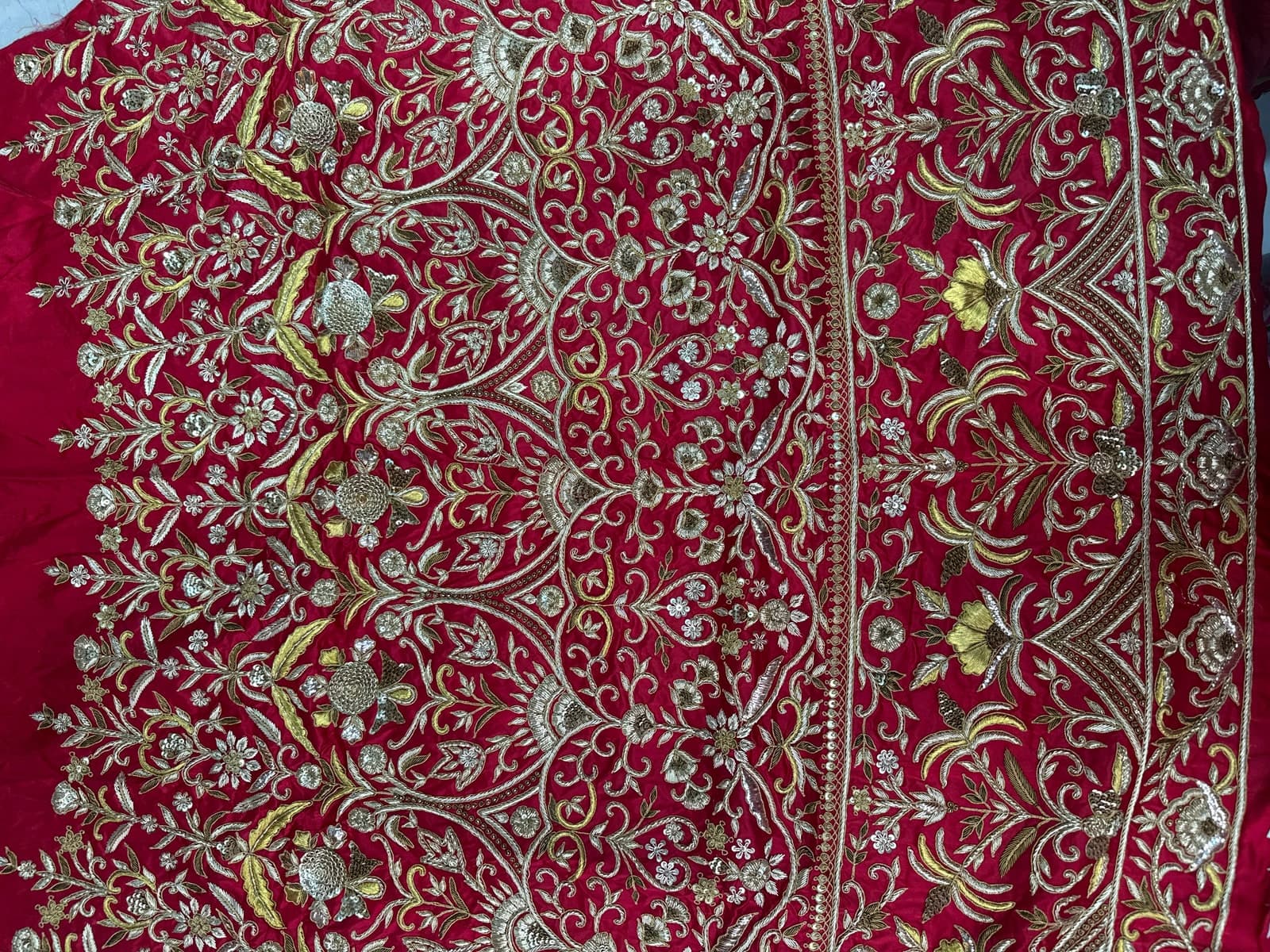
| Dabka / zardozi | ₹30,000 – ₹95,000 | Coiled-wire relief; springs back when pressed with a thumbnail |
| Real-silver tari | ₹60,000 – ₹2,00,000+ | Asli chandi thread — can be polished like jewellery years later |
The four things that actually move the price
Density of work. A border-only poshak and an edge-to-edge jaal can differ by ₹40,000 with identical materials — the difference is simply months of a karigar's time on the adda.
Metal in the thread. Plated zari is priced like thread; real silver is priced like silver, weighed and receipted. This single line explains most "why is this one triple the price?" conversations at our counter.
The kali count. Each kali is a panel of the ghaghra. Sixteen kali makes a wearable everyday flare; twenty-four gives the full bridal swing; thirty-two is regal and heavy, and every extra panel is more cloth and more border to work. That's why a 32-kali bridal piece starts where festive poshaks end.
The base cloth. Satin is the workhorse. Pure silk and velvet cost more and carry heavy work better; velvet also photographs the deepest. Chiffon lightens both the poshak and, usually, the bill.
Running the numbers for your own combination takes a minute on our poshak price calculator — it uses this same arithmetic.
Rajputi bari price — what to budget
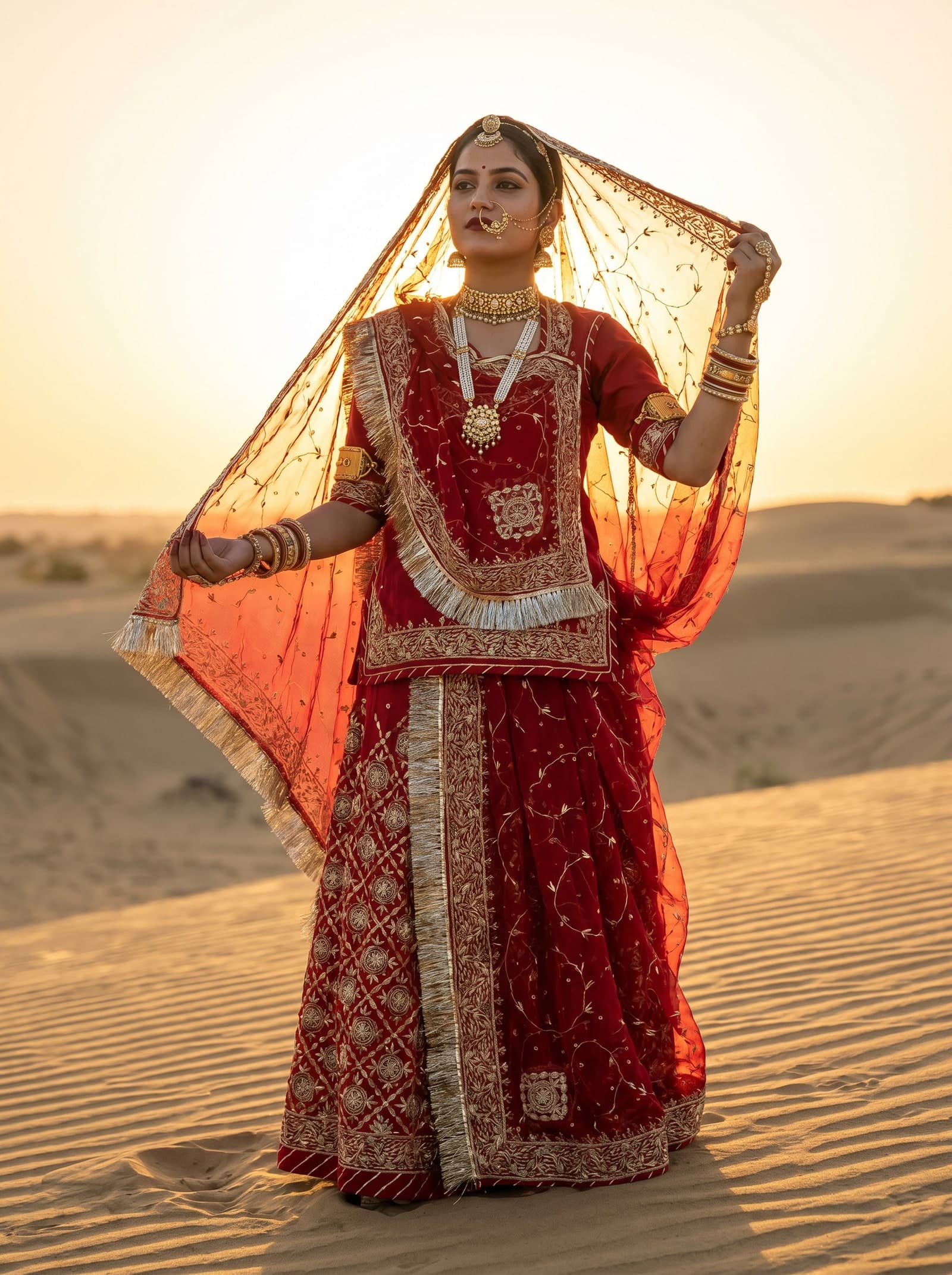
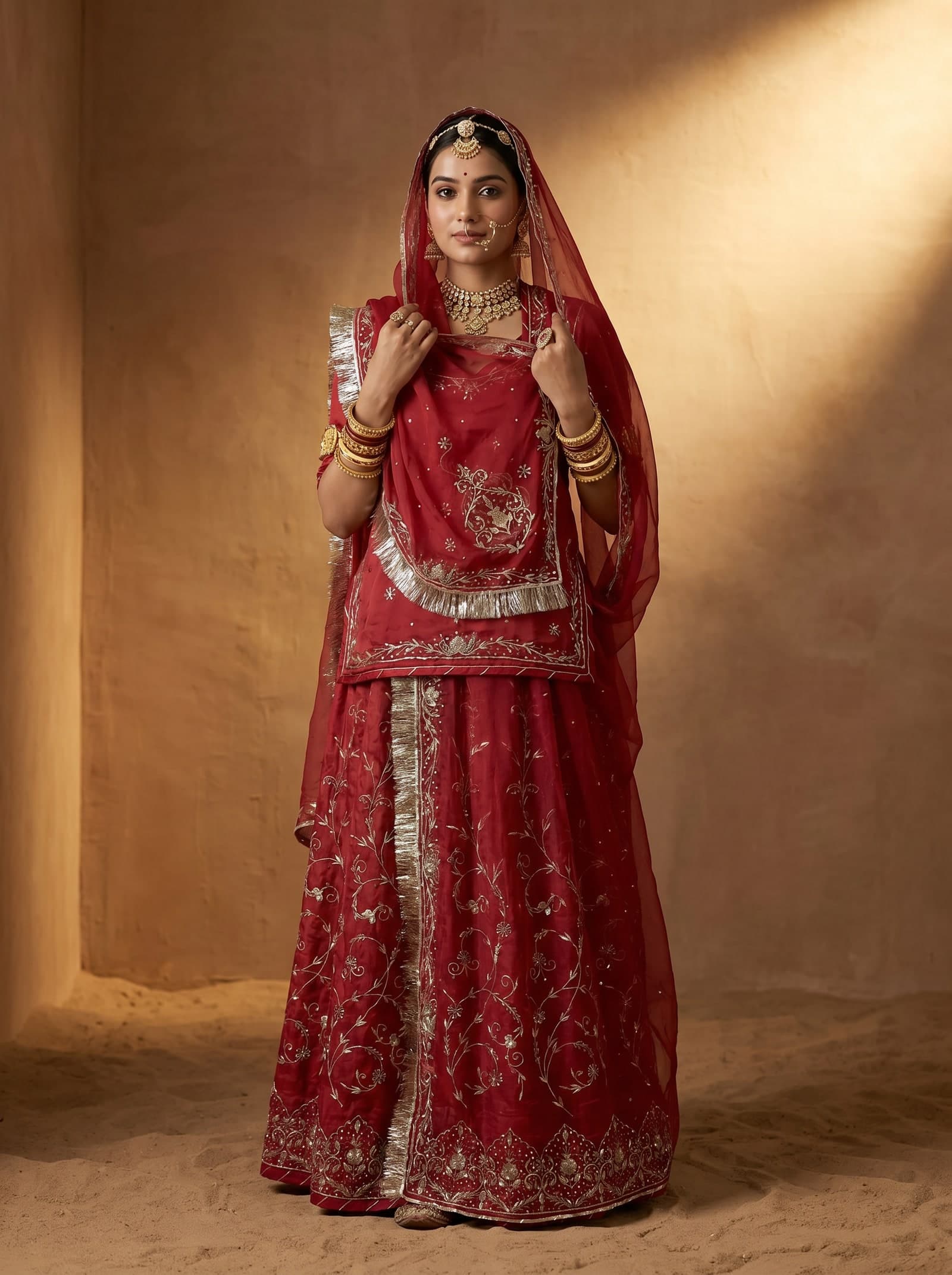
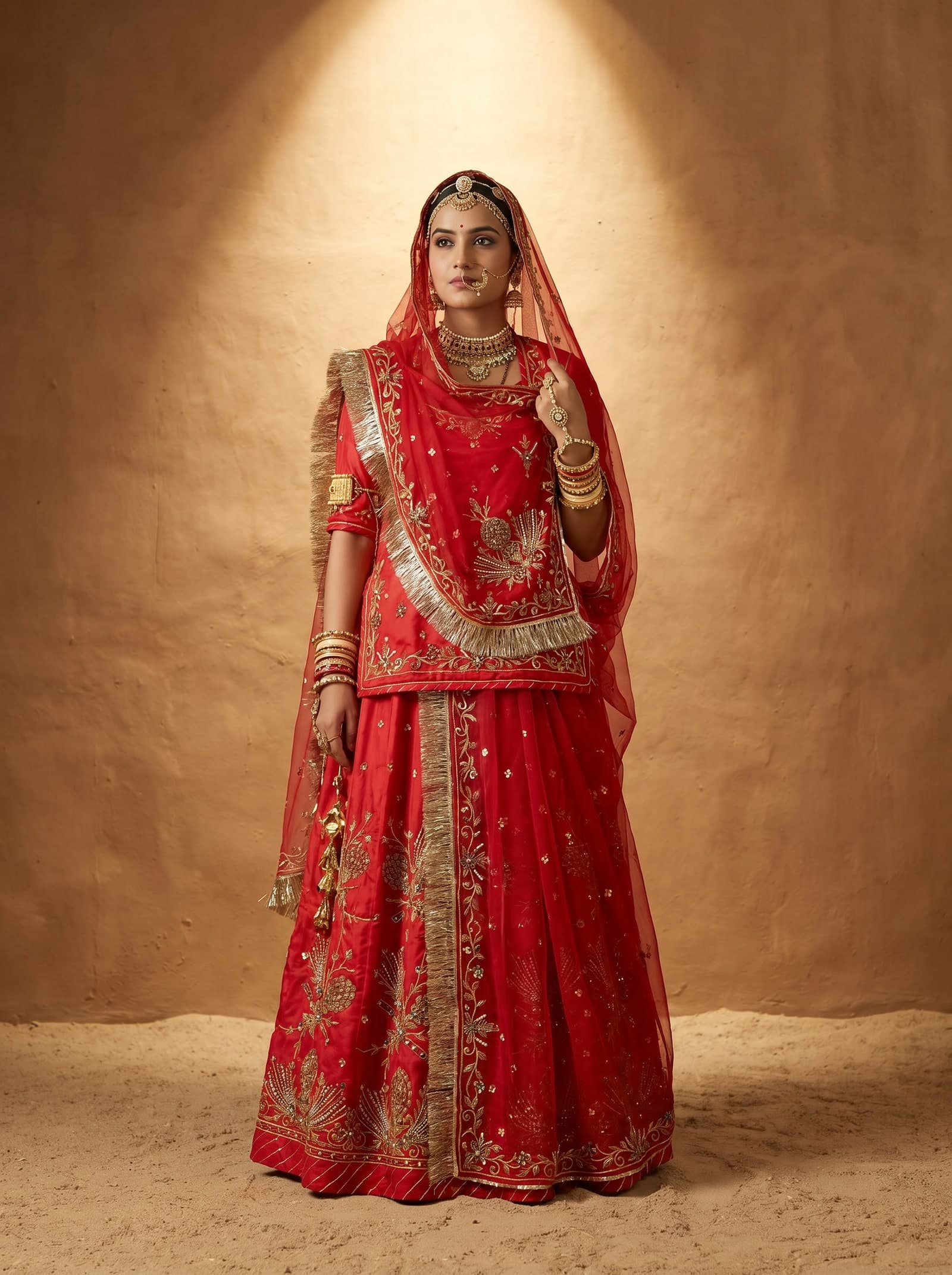
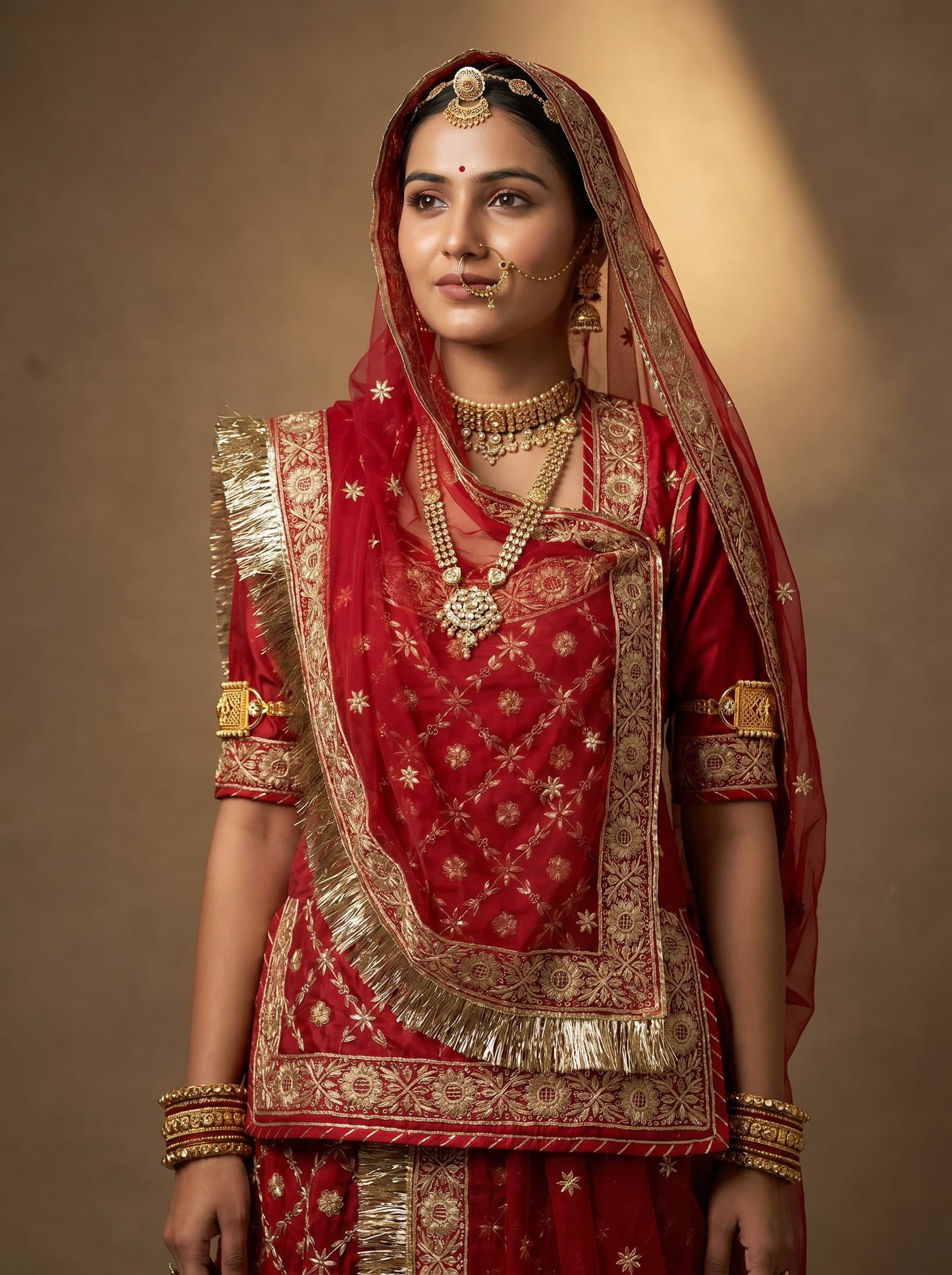
For the bari — the bridal poshak worn at the phere — budget ₹20,000 to ₹95,000 for genuine handwork. On our racks today the range runs from ₹20,400 for a dabka dori-jaal piece to ₹94,500 for crimson worked edge to edge in antique golden zari; the wider market stretches past ₹2,00,000 for real-silver commissions.
Spend where it shows: the odhna (closest to your face in every photograph) and the ghaghra border (what moves through the phere). A modest kanchli under a magnificent odhna reads far richer than the reverse.
We've written a full bari poshak guide — what it is, who gifts it, how to choose one — if the phere are coming.
What each price band looks like
Rajputi poshak under ₹5,000 — what you're actually buying
Plenty of poshaks sell for ₹1,500–5,000, and for daily wear, school functions and first Teej they're a perfectly sensible buy. Just know what they are: machine embroidery on synthetic satin. The tell is the reverse of the cloth — machine work shows uniform tram-lines of thread; handwork shows knots, joins and a human rhythm.
Where we'd draw the line is the wedding. A bride photographed for a lifetime in a piece that goes dull by the first anniversary is the one economy that never ages well. Buy the ₹4,000 poshak cheerfully for Gangaur; borrow or commission the real thing for the phere.
And a rule that holds across every price band: a seller who states prices plainly — on the tag, on the website — is a seller who isn't embarrassed by them.
Frequently asked
Last reviewed: 17 May 2026 · Verified by the DivineTatva expert panel
What is the price of a rajputi poshak?
In 2026, a genuine hand-worked rajputi poshak costs ₹15,000–₹50,000 for festive wear and ₹20,000–₹95,000 for bridal (bari) pieces. Machine-embroidered poshaks for daily wear run ₹4,000–₹15,000. Real-silver work starts around ₹60,000 and can exceed ₹2,00,000.
What is the price of a rajputi bari?
A rajputi bari poshak — the bridal set worn for the phere — typically costs ₹20,000 to ₹95,000 for genuine handwork, depending on the density of embroidery, the kali count of the ghaghra, and whether the thread carries real silver. Heavily worked or real-silver commissions go past ₹2,00,000.
What is the price of a 32 kali rajputi poshak?
A 32-kali rajputi poshak generally costs ₹50,000 to ₹1,20,000. The 32 panels take roughly a third more cloth than a 24-kali ghaghra and every panel's border must be worked by hand, which is why the price sits above standard bridal pieces.
Why are some rajputi poshaks under ₹5,000?
Because they are machine-embroidered on synthetic satin — which is fine for daily and festive wear, as long as it's priced and described honestly. Check the reverse of the cloth: machine work shows uniform thread lines, handwork shows knots and joins. Hand embroidery alone takes weeks, so it cannot exist at that price.
How much does real-silver poshak work cost?
Poshaks worked in asli chandi (real silver) thread start around ₹60,000 and commonly reach ₹2,00,000+, because the silver is weighed and billed like the metal it is. The upside: decades later the work can be re-polished like jewellery, which is why these pieces become heirlooms.
Is a made-to-order poshak more expensive than ready-made?
Usually only slightly — you're paying for the same karigar hours either way. At our atelier a made-to-order poshak takes about 38 days and is cut to your measurements at the same list price; what you save is the alteration bill and the compromise.
Can I get a rajputi poshak under ₹1,000?
Yes — but know what it is: printed or lightly machine-embroidered synthetic satin, sold on marketplaces like Meesho and Flipkart. Fine for a school function or a one-time theme event. It is not handwork, and the gota is plastic ribbon — it will not survive many wears or a single careful wash.
What does a rajputi poshak under ₹3,000 look like?
Between ₹1,500 and ₹3,000 you get better machine embroidery on heavier satin, usually with synthetic gota and a printed odhna. A sensible buy for daily wear, Gangaur or a teej gathering. For a wedding — especially the phere — this band photographs flat; that is where genuine handwork earns its price.
Prices reviewed at the atelier, July 2026. If a quote you've received somewhere doesn't fit these ranges — high or low — send it to us on Instagram @thegrandabhaneri and we'll tell you honestly what you're looking at.