Rajputi Poshak in Jodhpur
If you are looking for a rajputi poshak in Jodhpur, come to BJS Colony. Our store stands at Gali No. 33, No. 7, Link Road, near Ramdev Vatika and just past the RTO office. Say RTO to any auto driver and he will drop you at the gate. We open at 10 in the morning and shut at 8, every day of the week. The number is +91 96363 66904, and @abhaneri_jodhpur will show you what came in this week if you would rather look before you travel.
This city has always shopped for a poshak in one particular way. You start in Tripolia Bazar, drift down into Sardar Market under the clock tower, turn over forty odhnas and buy the thirty-eighth. We have no wish to replace that morning. Those lanes taught most of us what a good border looks like. Our shop is quieter and further out, and everything on the table is our own work rather than bought in.
Most of what we keep here is bari, the heavy poshak a bride wears while the whole family is watching. Fifteen shades of lal on the current rack, three rani pinks, one shaded red-orange, priced between Rs 20,400 and Rs 94,500. The gota is asli chandi, real silver, because that is what our family has used for seven generations and nobody here has found a reason to stop.
Anything made to order is built in our Jaipur workshop across roughly 38 days and then brought to Link Road for fitting and finishing, so you try it on in your own city rather than on somebody's shop floor two hundred kilometres away. If you have already moved away from Marwar, send your measurements and we will ship: India, and 42 countries beyond it.
- Jodhpur store
- Gali No. 33, 7, Link Road, near Ramdev Vatika & RTO Office, ZSB, BJS Colony, Jodhpur 342006
- Phone
- +91 96363 66904
- Hours
- 10 AM to 8 PM, all seven days
- @abhaneri_jodhpur
- Made to order
- Cut and hand-worked in our Jaipur workshop over about 38 days, then fitted at Link Road
- Bari poshak range
- Rs 20,400 to Rs 94,500 on our published rack
- House signature
- Asli chandi gota, real silver by weight, never coated ribbon
- Delivery
- Anywhere in India, and 42 countries abroad
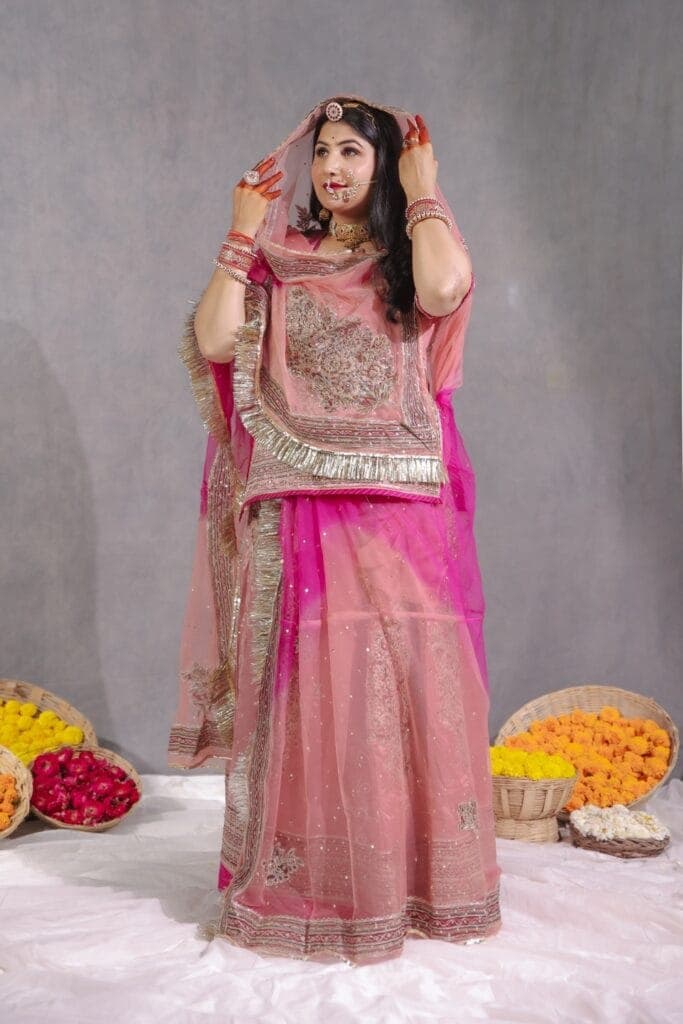
Designer Baby Pink Rajputi Poshak
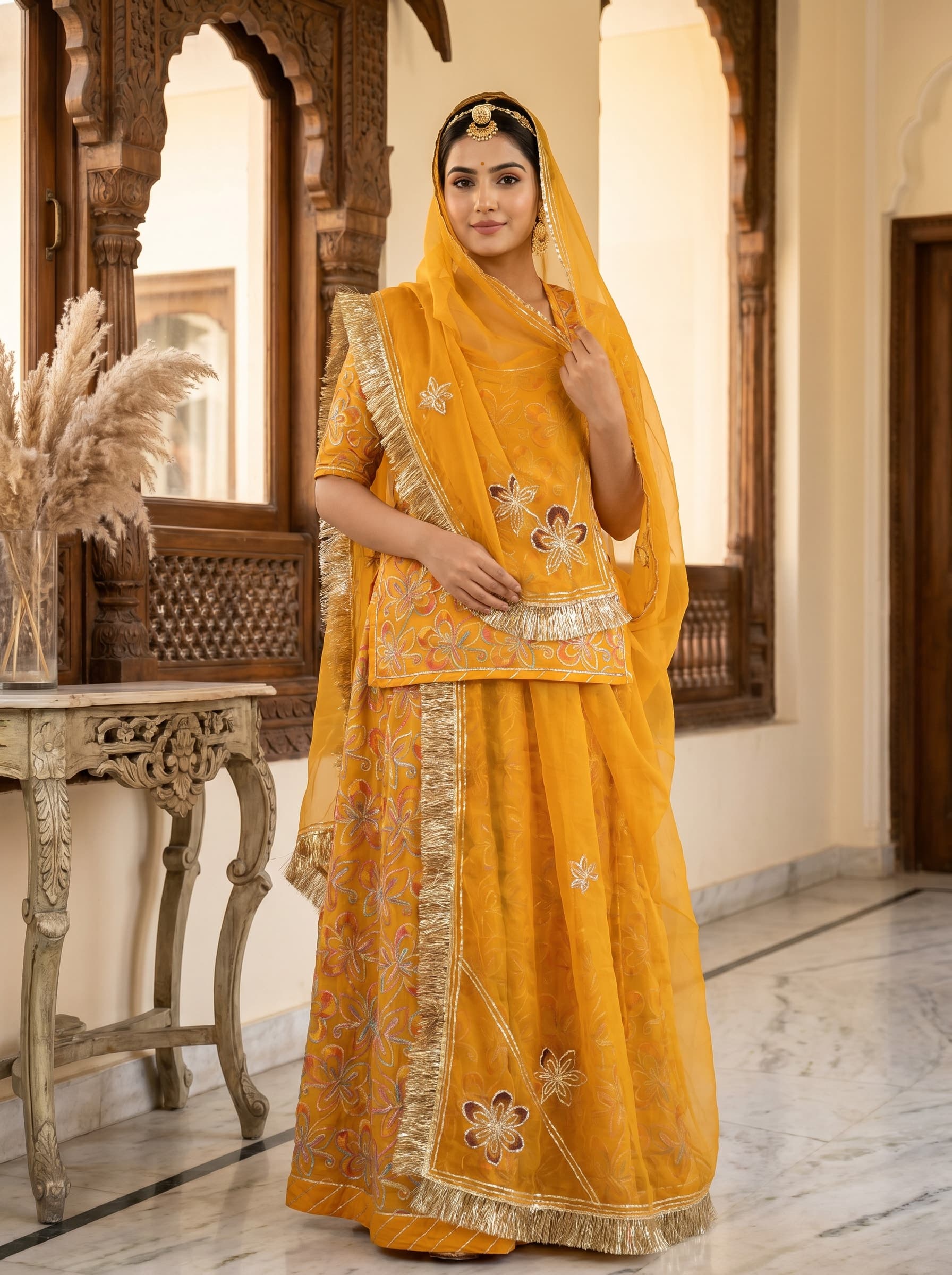
Marigold Yellow Floral Suit
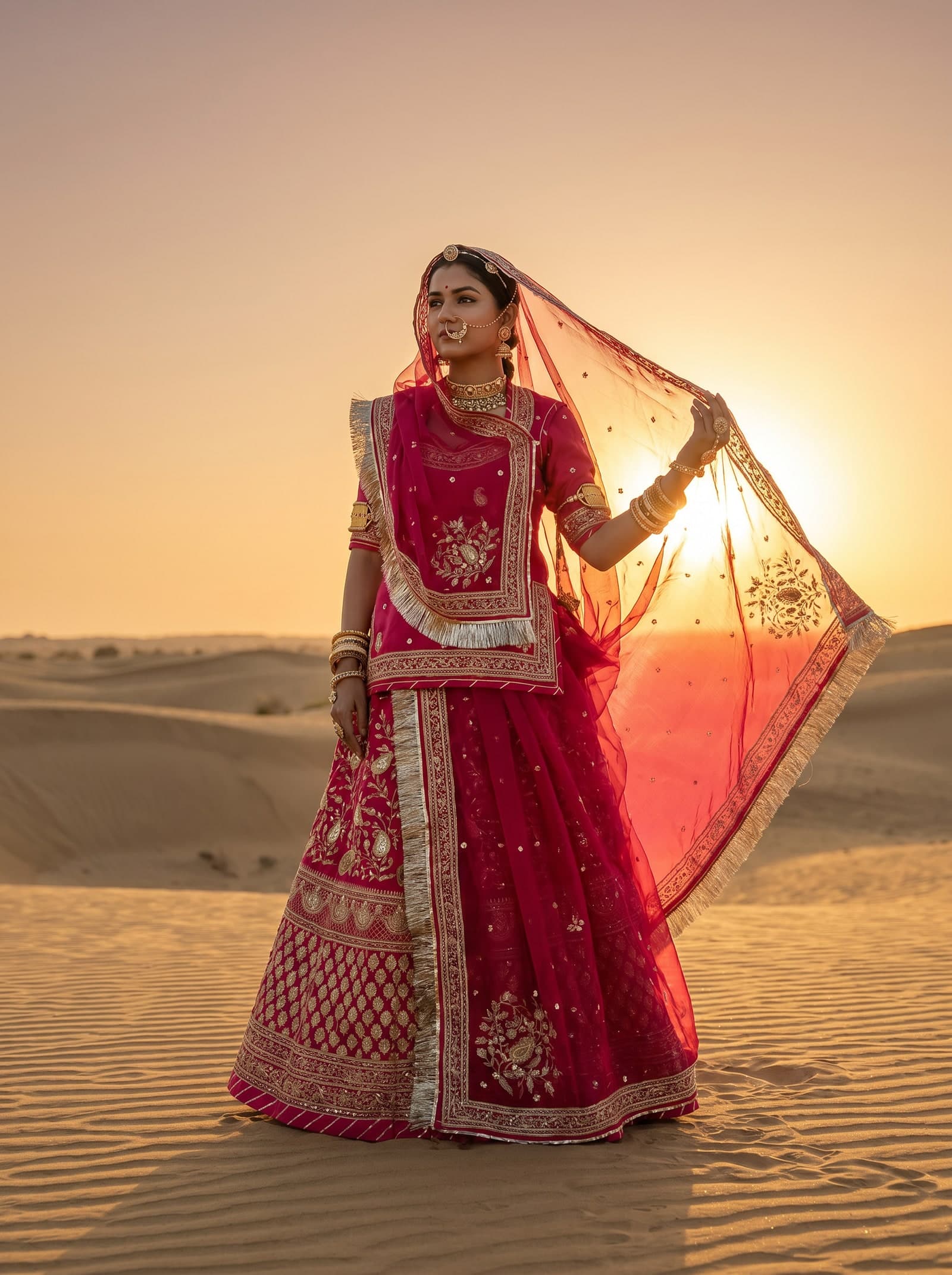
Rani Pink Bari Rajputi Poshak — Aari Zardozi
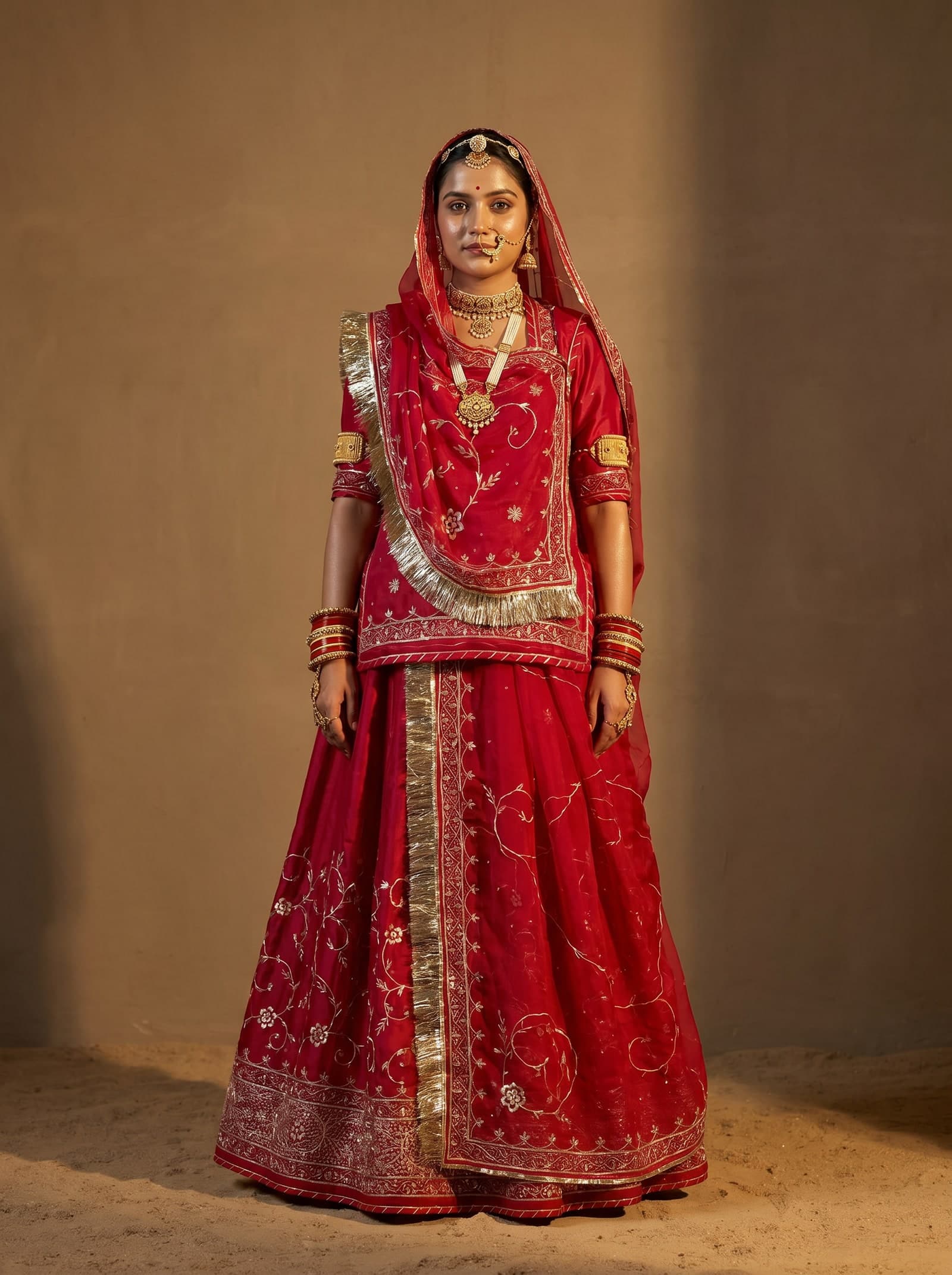
Red Bari Rajputi Poshak — Dabka
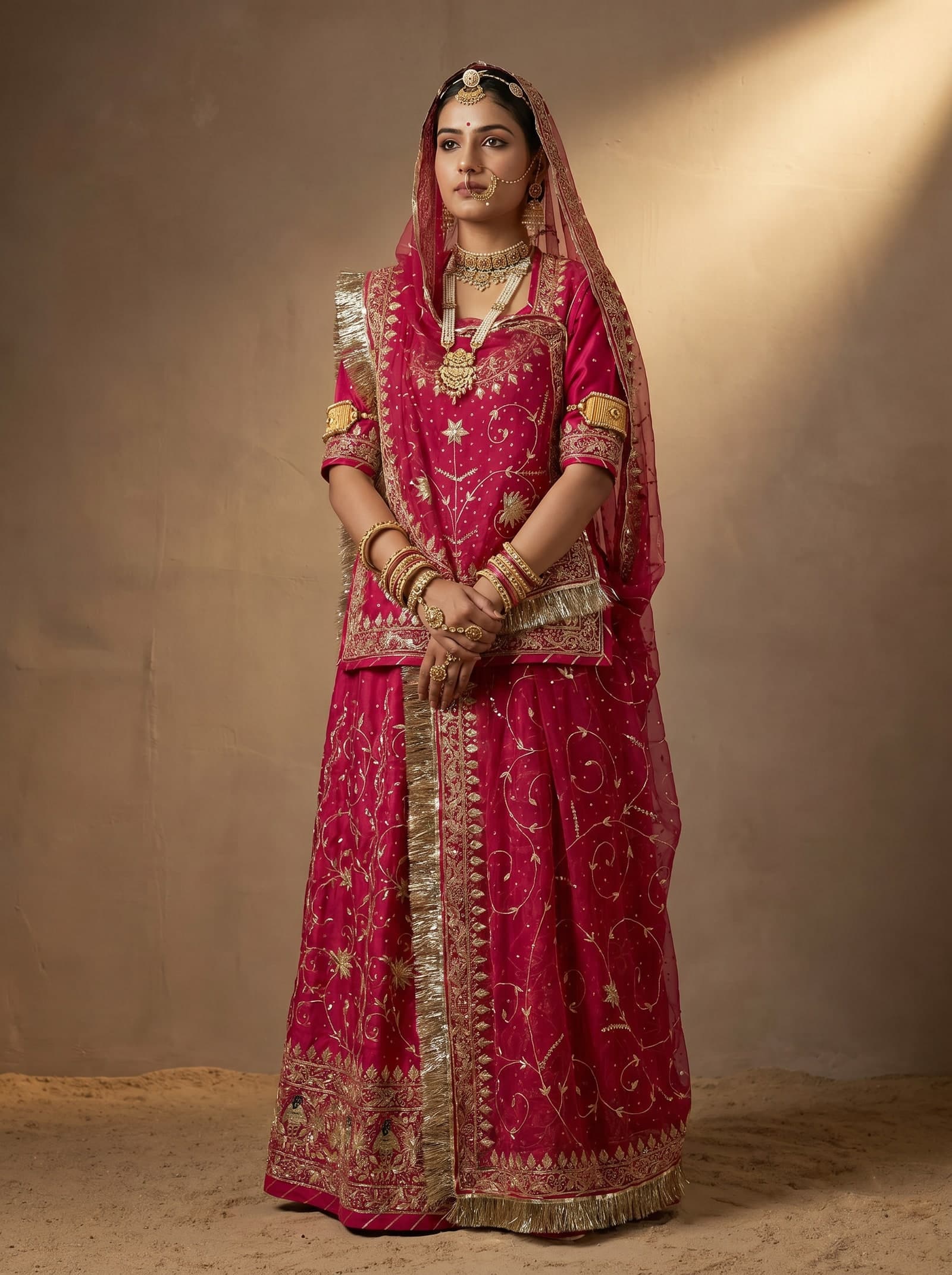
Rani Pink Bari Rajputi Poshak
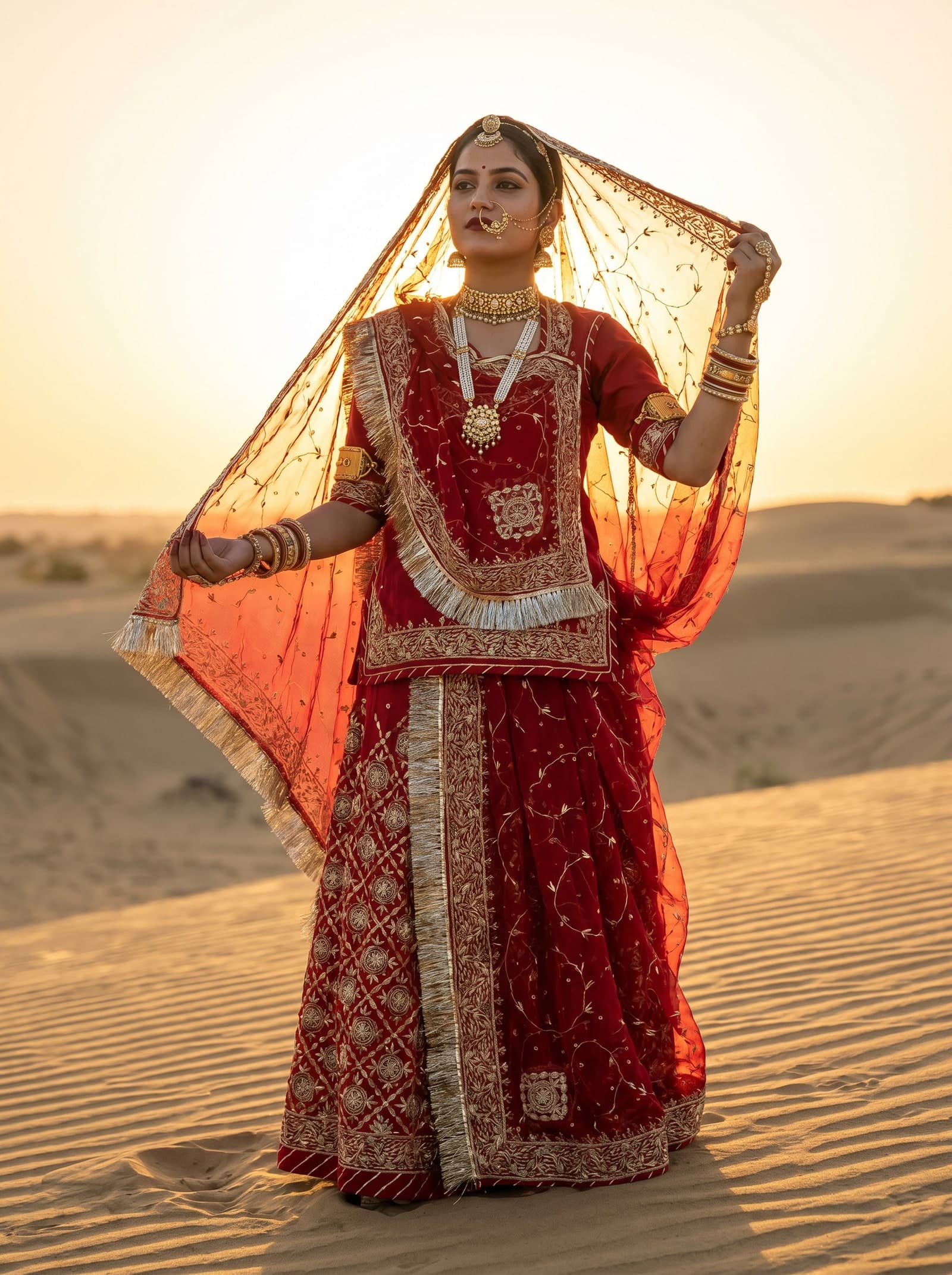
Deep Red Velvet Bari Rajputi Poshak
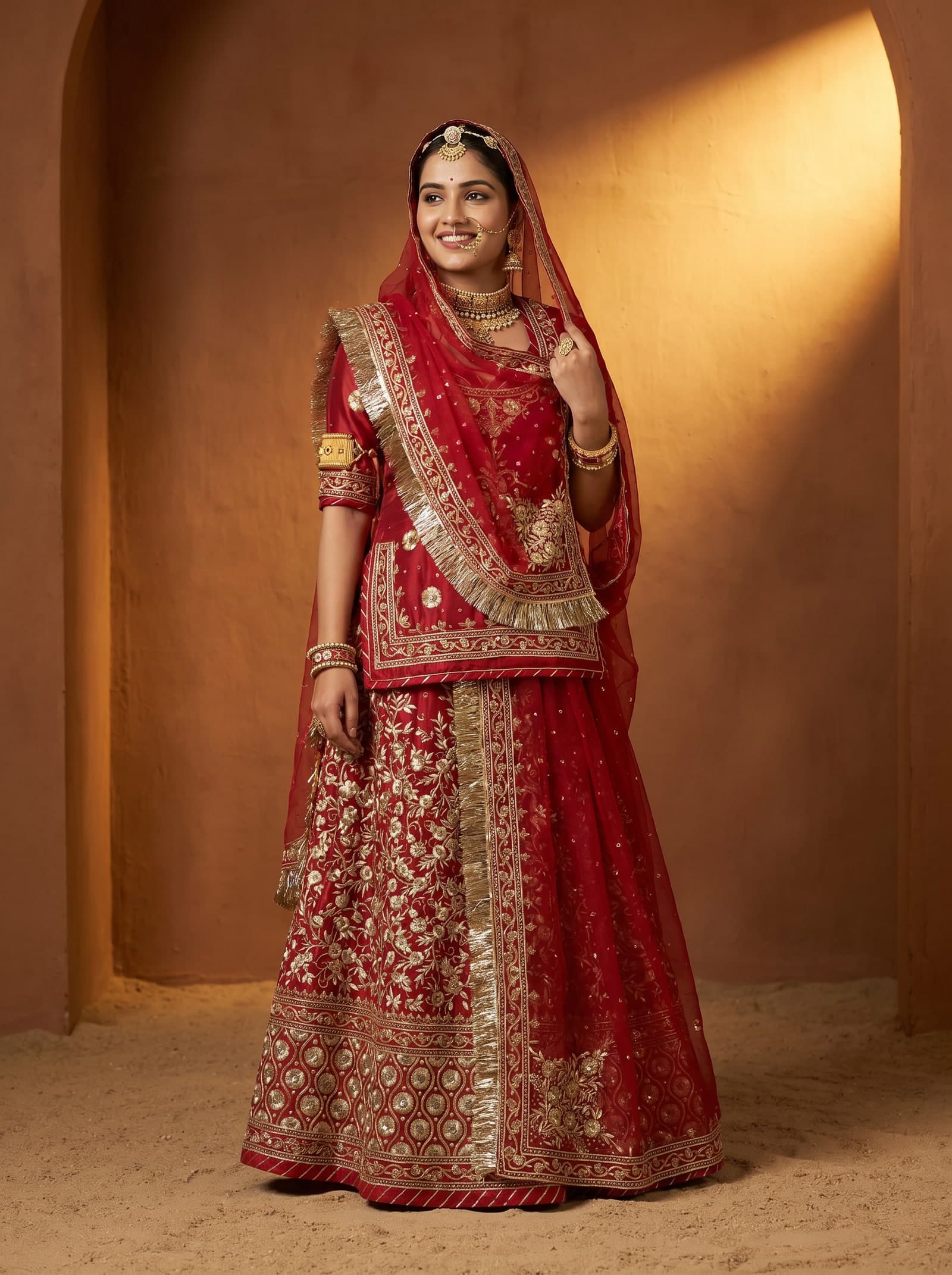
Red Bari Rajputi Poshak — Zari Jaal
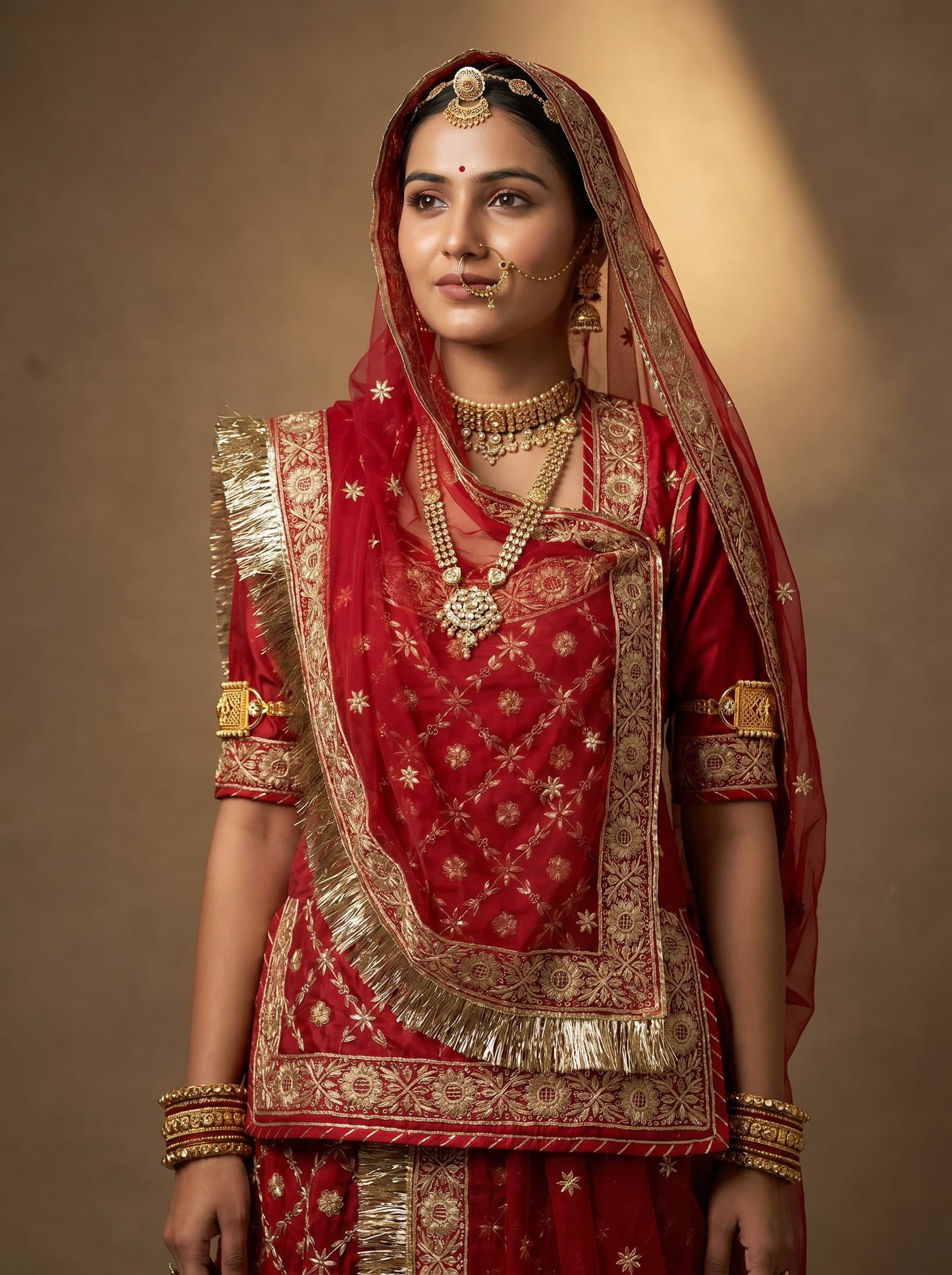
Red Bari Rajputi Poshak — Antique Zari
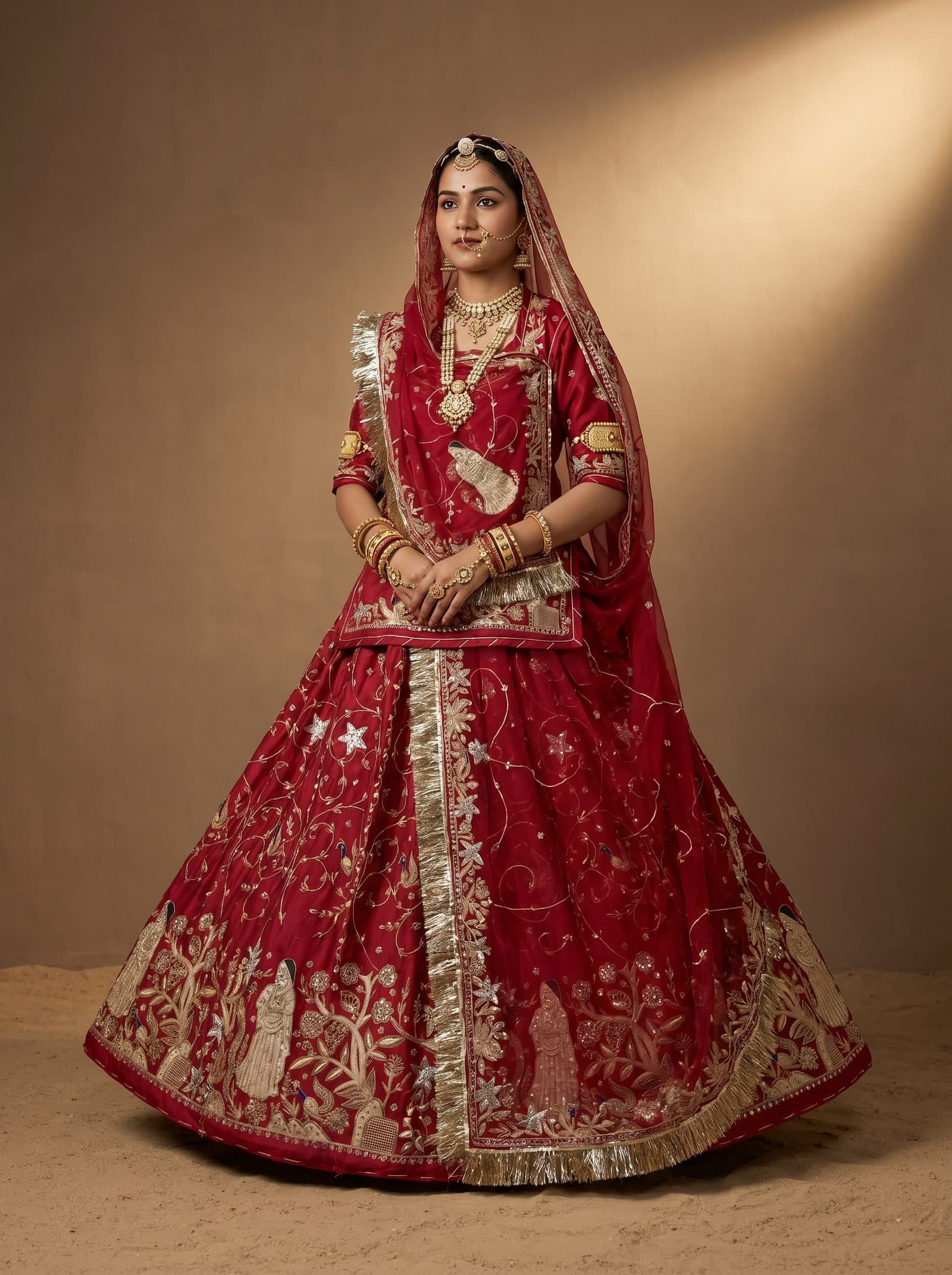
Red Bari Rajputi Poshak — Pichwai Motif
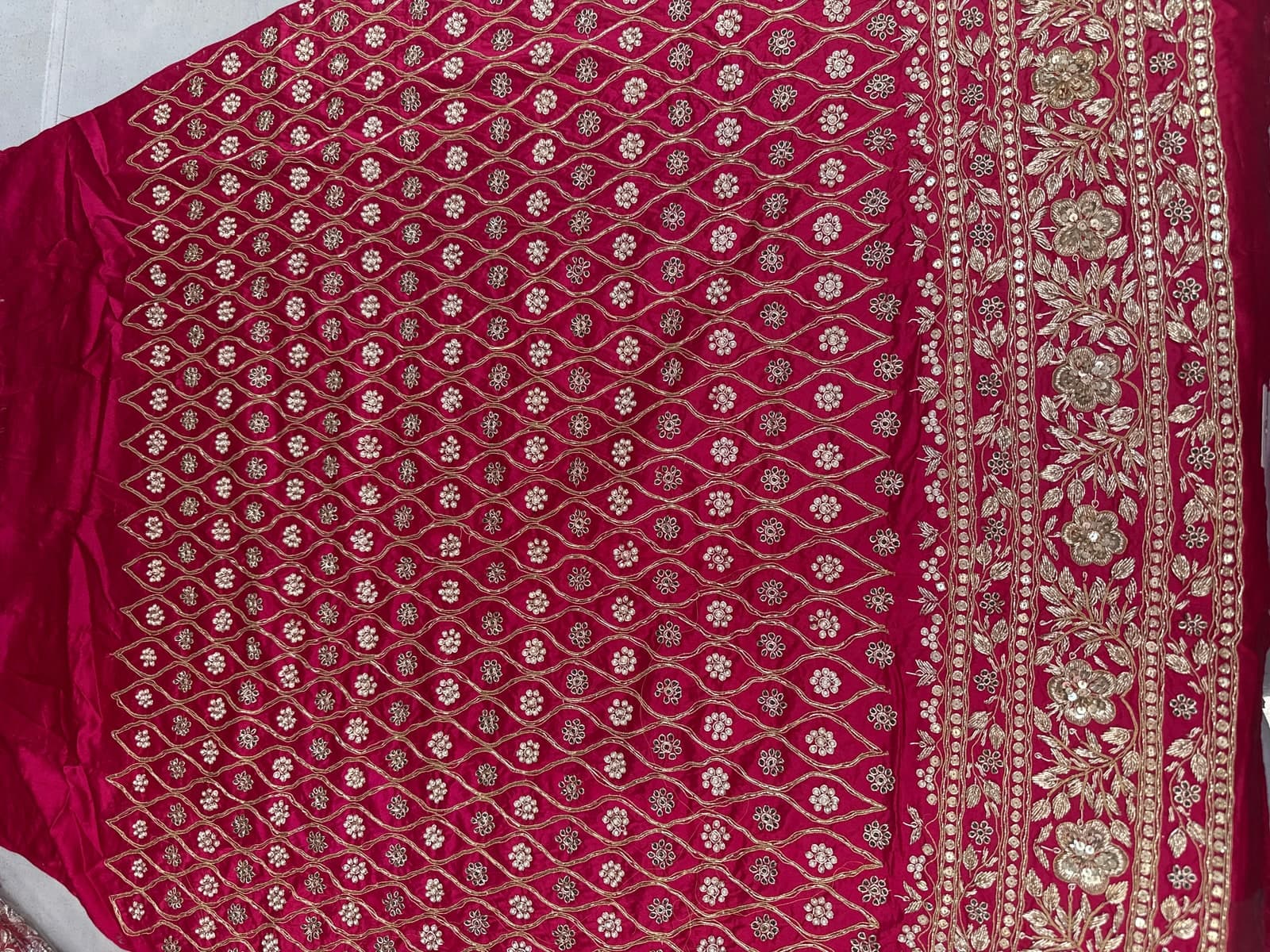
Rani Pink Bari Rajputi Poshak — Gota Jaal
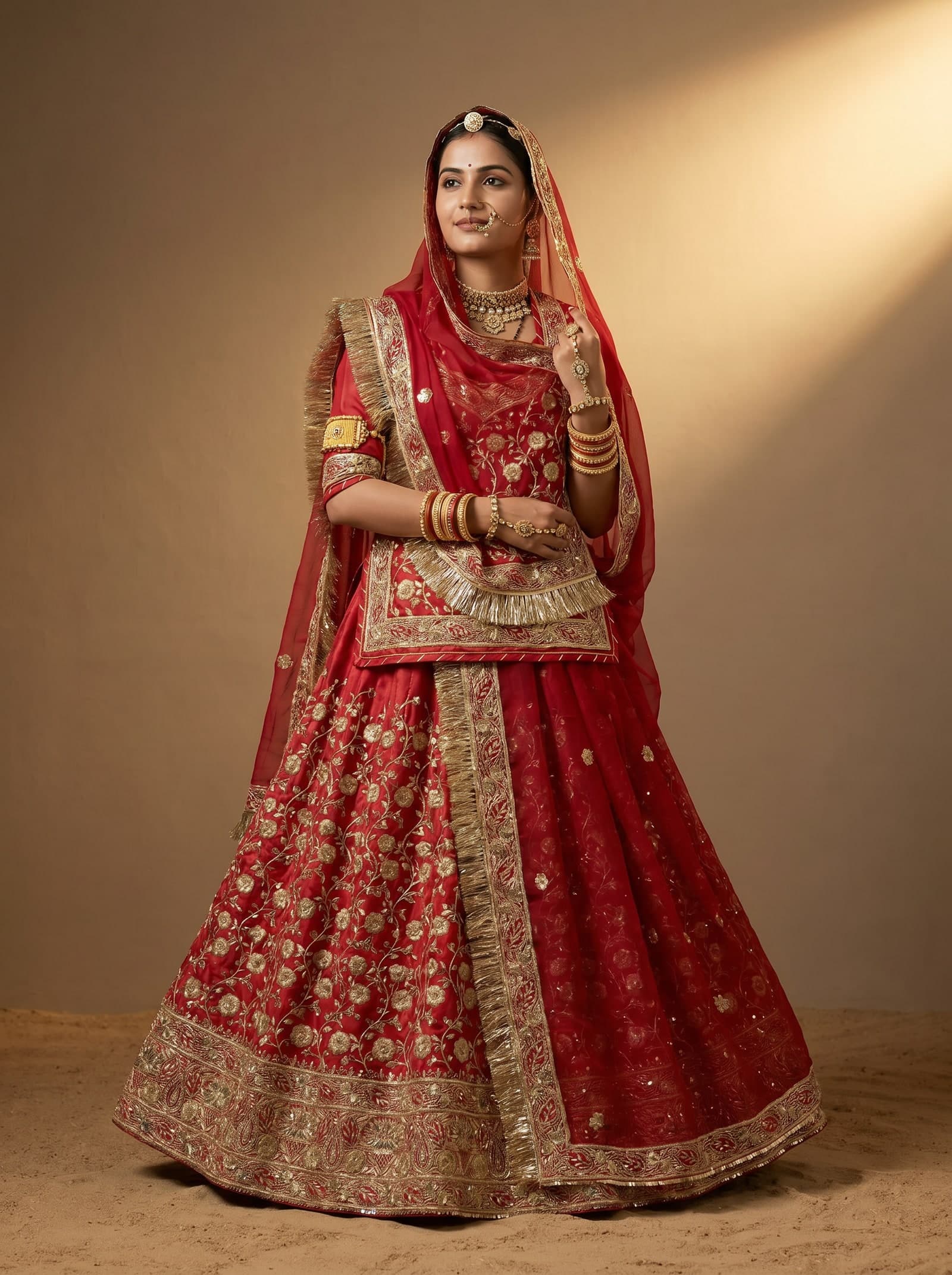
Red Bari Rajputi Poshak — Floral Zari
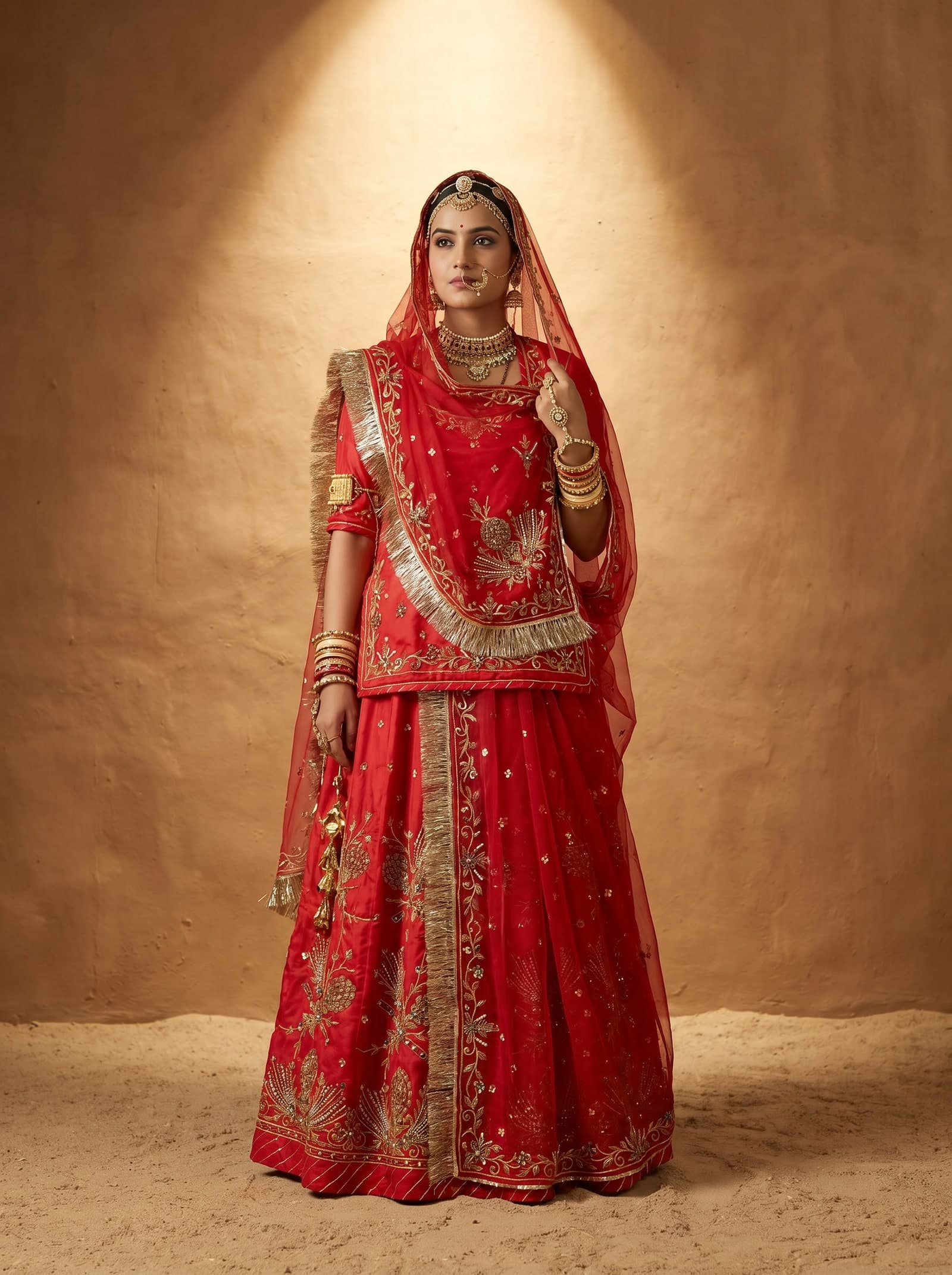
Scarlet Red Bari Rajputi Poshak
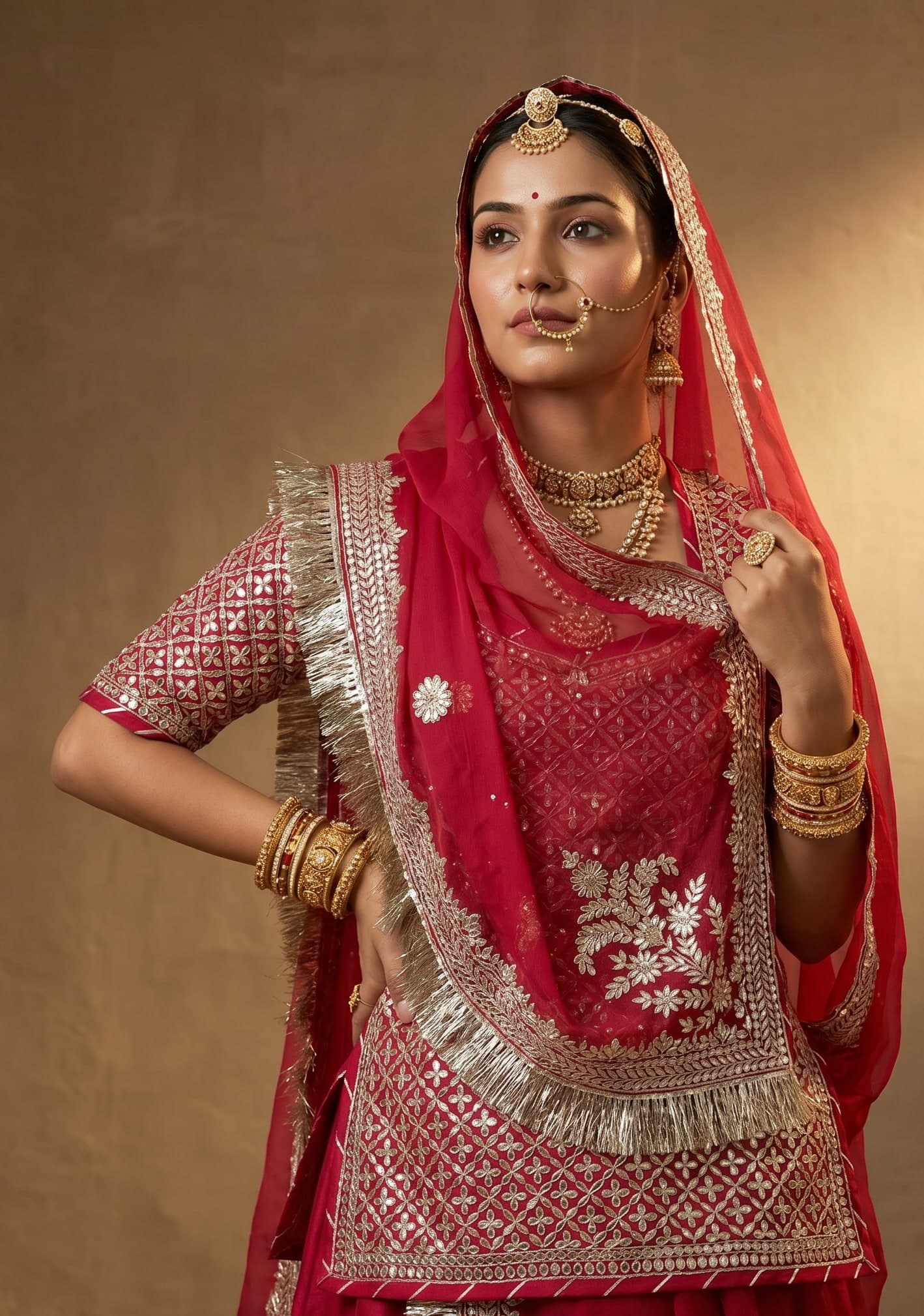
Red Bari Rajputi Poshak — Gota Patti
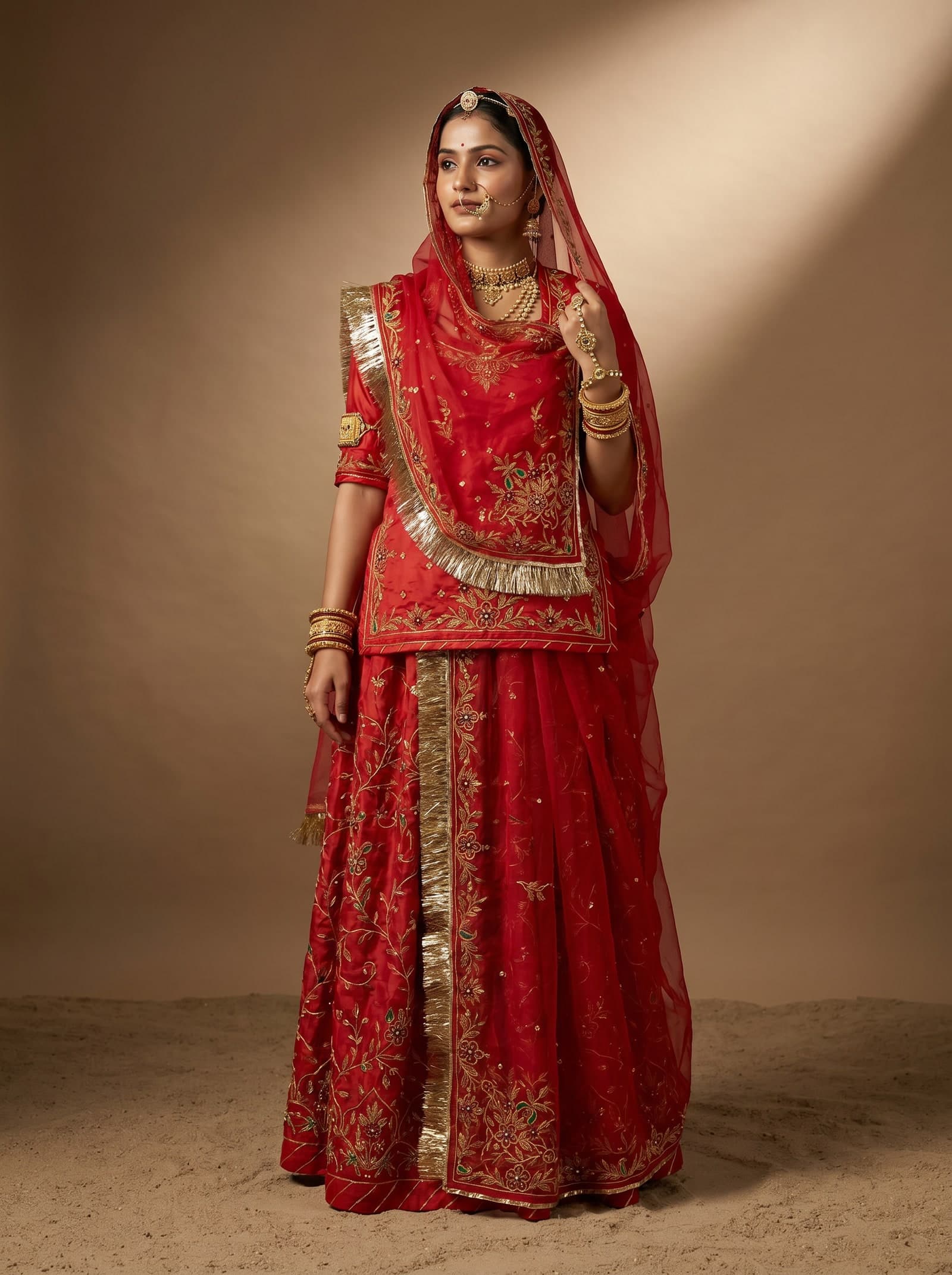
Red Bari Rajputi Poshak — Antique Samla & Dori Jaal
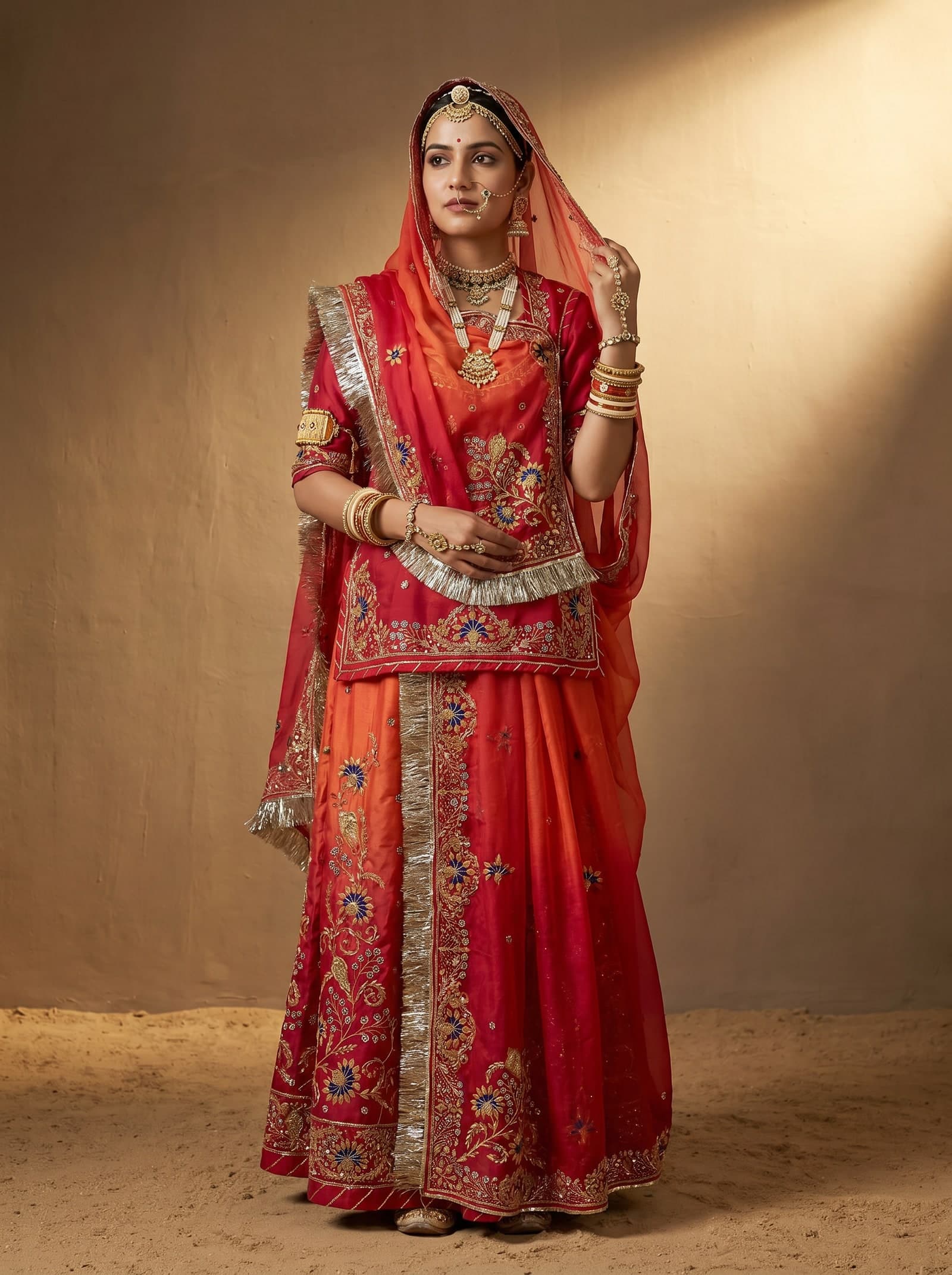
Red-Orange Shaded Bari Rajputi Poshak — Golden Dabka
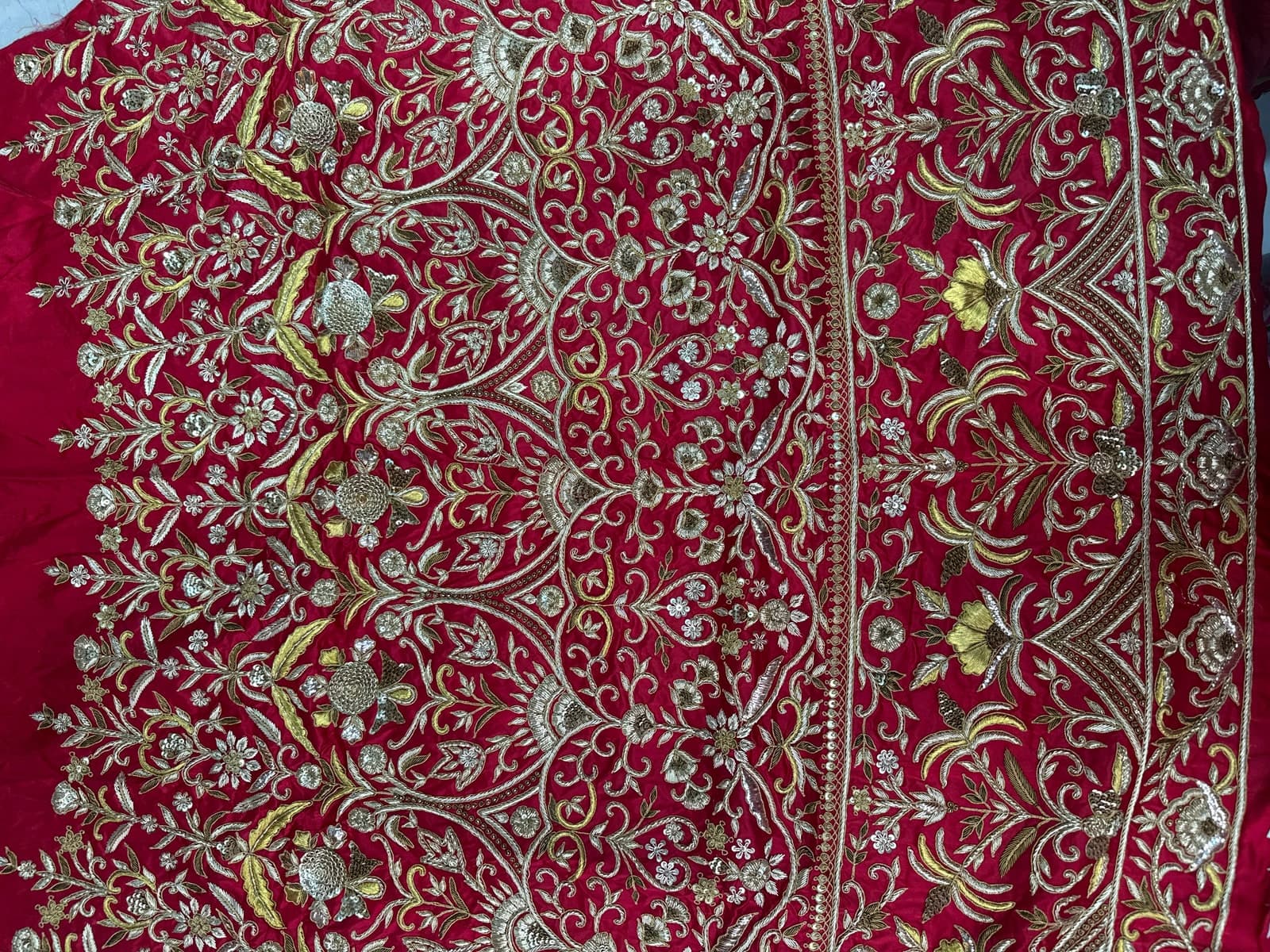
Crimson Bari Rajputi Poshak — Antique Golden Zari
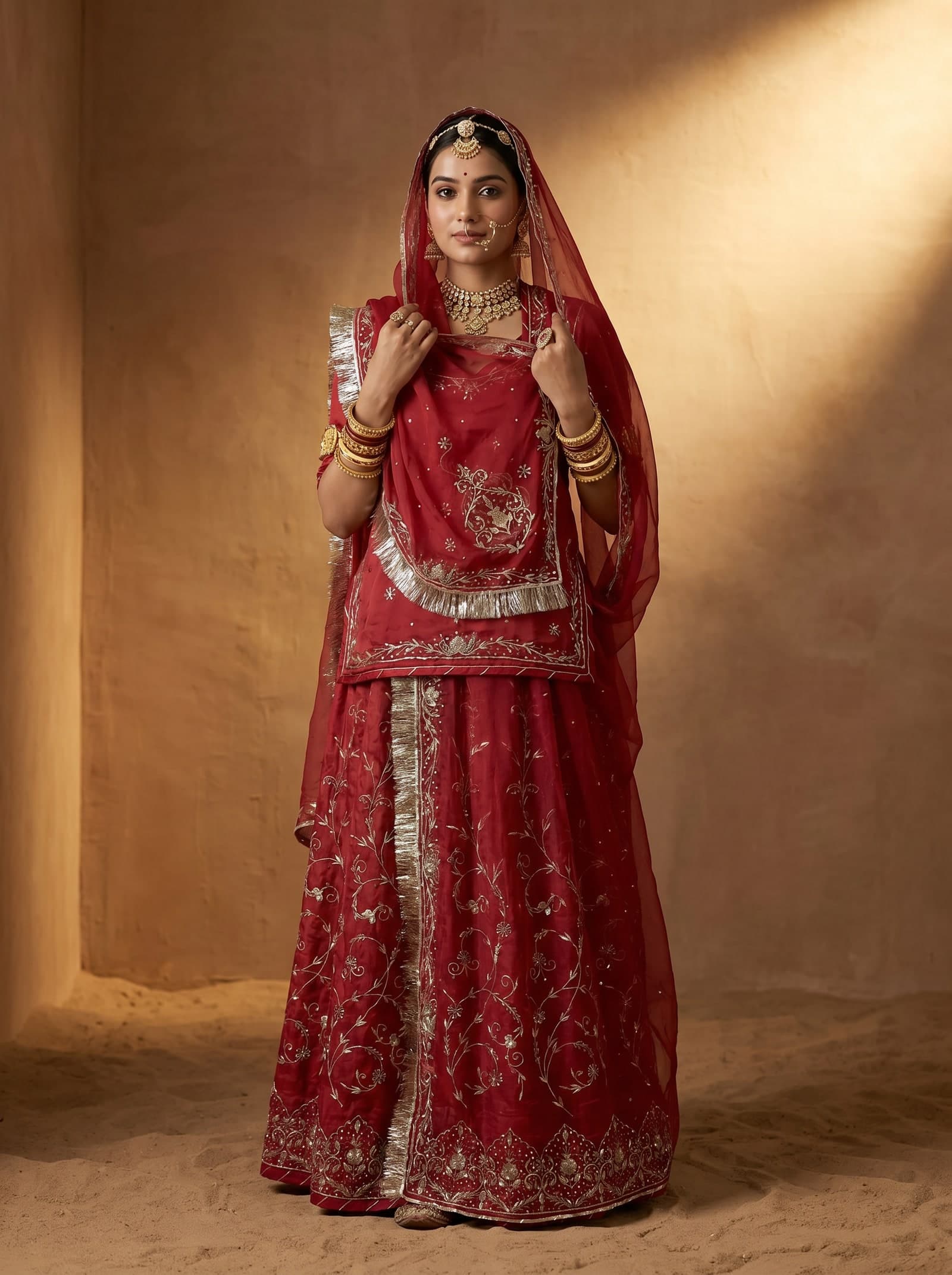
Red Bari Rajputi Poshak — Dabka & Dori Jaal
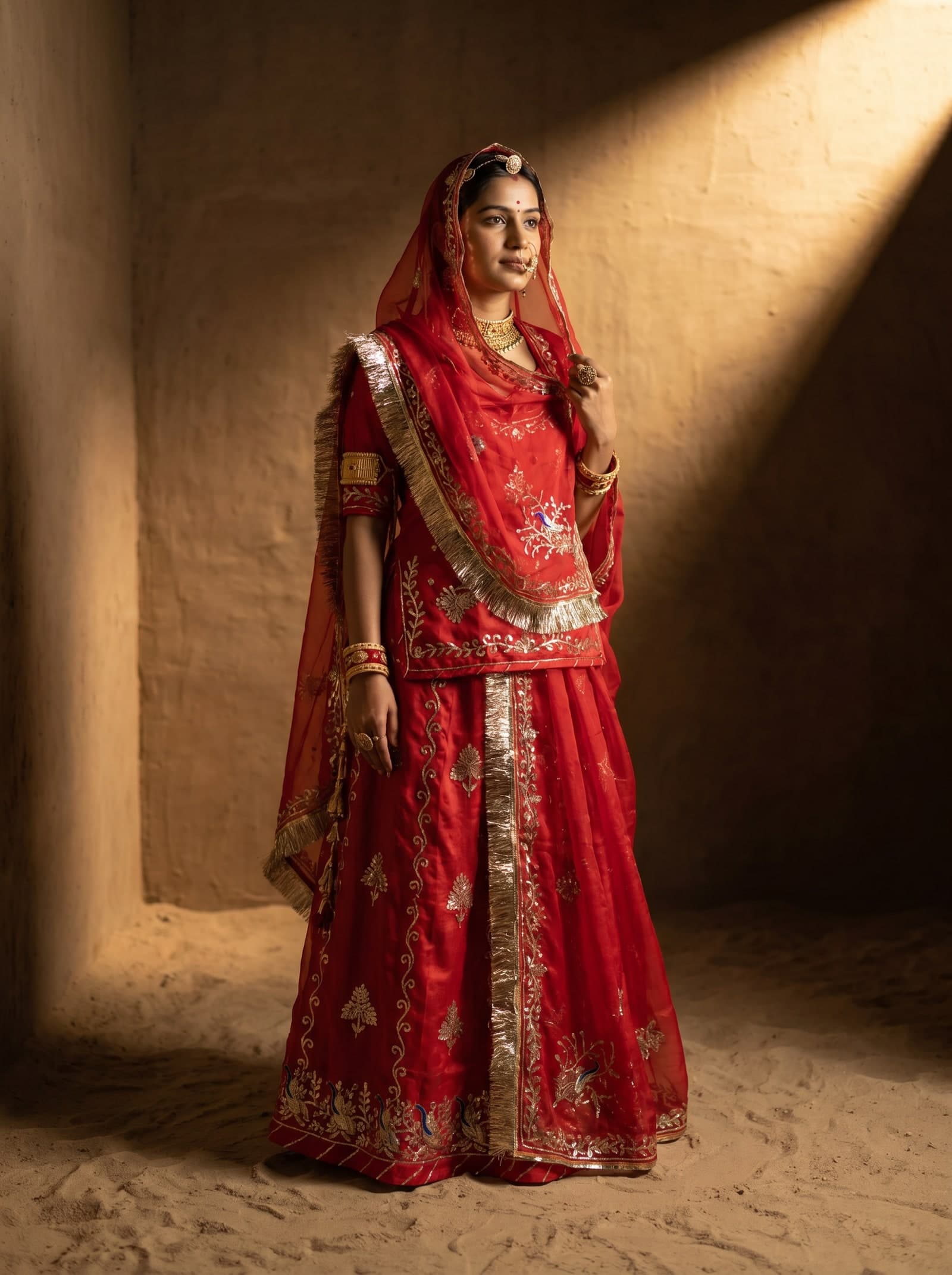
Scarlet Red Bari Rajputi Poshak — Aari Tari
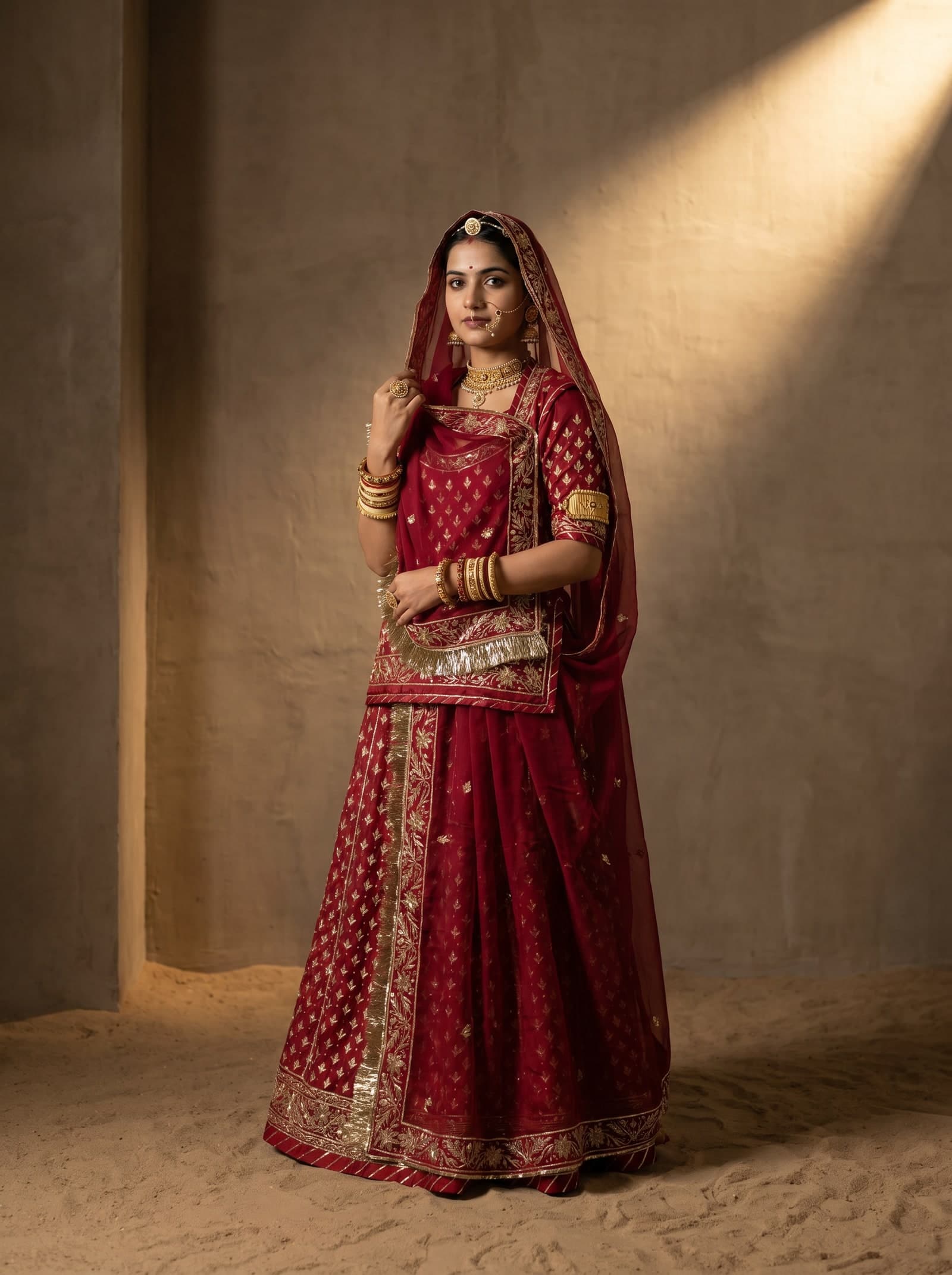
Deep Red Bari Rajputi Poshak — Dabka
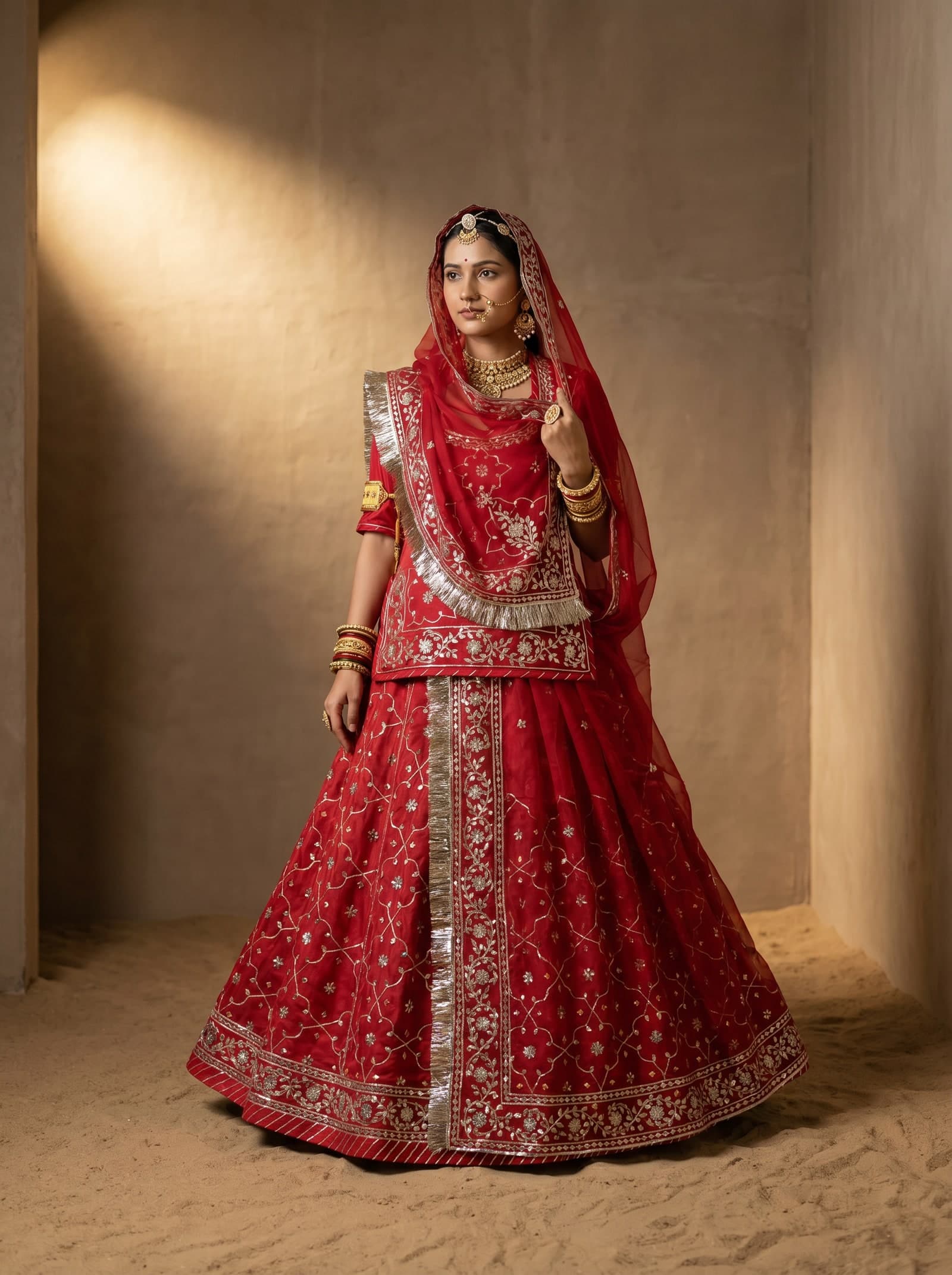
Red Bari Rajputi Poshak — Kachi Patti & Copper Sikhiya
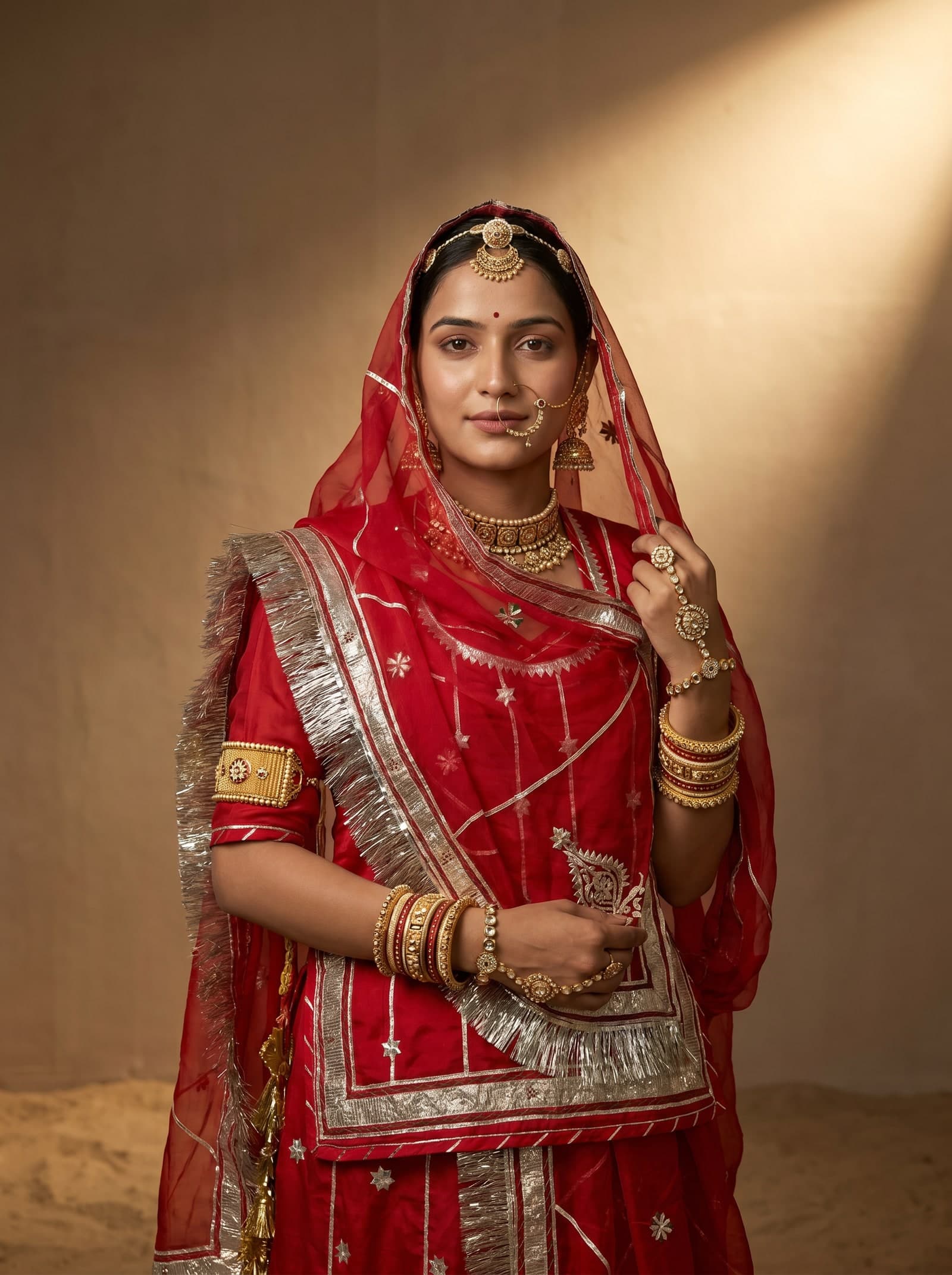
Red Bari Rajputi Poshak — Copper Lappa & Kachi Patti
A Jodhpur customer picks differently from a Jaipur one, and after enough years behind a counter you stop arguing with it. Marwar likes weight at the edge. The kor of the odhna runs broader here, gota-kiran doubled where Jaipur is happy leaving it single, and danka turns up on kanchli and kurti far more often than it does in our Jhotwara shop. Danka is the flat silver plate, hammered thin as a fingernail and tacked down with one knot so it tilts and throws light back at whoever is holding the camera. Mothda bandhej as well, the fat lentil-sized dots, usually on a maroon or piliya ground. Ask for something light in Jodhpur and you will still be handed a border you can feel between two fingers.
The blue city does its own thing to colour. Under all that indigo lime-wash lal goes deeper, firozi turns clean and cold, and a rama green that looks sullen indoors sits beautifully on a terrace at four in the afternoon. From Gangaur through Teej the city moves to bandhej and lehriya in cotton and thin georgette, because nobody is wearing eight kilos of tissue through a Marwar June.
So we cut differently for summer. A hot-weather poshak is not a bridal one with the tilla taken off. The kali count comes down, we line the ghaghra in mulmul instead of stiffening it with can-can so the ghera falls rather than stands, and the magji at the hem is piped narrow, two fingers instead of four. The kanchli gets a longer dori at the back for the days when nothing sits right by noon.
Now the bride. A Marwari wedding day starts long before anyone sees the poshak. Haldi in piliya or aam-pila, the odhni thin enough to take wet turmeric without sulking. Then mehndi. Then the banna-banni evening, when the family finally shows what it has spent. The bari, the poshak that comes from the boy's house, is the one that ends up in every photograph: full ghaghra, often 24-kali, kanchli and kurti above it, and an odhna with a border deep enough to hold its own shape when she pulls it over her head for the milni. Aad at the throat, borla or rakhdi at the parting, bajuband on the arms, kamarbandh at the waist, mojari that nobody photographs and everybody complains about by the third hour. One thing we do quietly on the heavy pieces: a 24-kali ghaghra in real gota carries real weight, so we set a doubled cotton band inside the waist under the naada. It stops the drawstring cutting a line into her by the time the phere begin. Nobody notices it. That is the point.
Our Jodhpur brides almost always ask for asli chandi gota rather than the plastic-coated stuff, and their mothers are usually the reason. Real silver comes to us by weight and it behaves like silver: it dulls to a warm grey over a decade, it can be brought back with imli and a soft cloth, and if the poshak is ever taken apart the gota is worth something to the gota-wala. Coated ribbon flakes at the fold in five years and is worth nothing at all. We say this at the counter and let people decide.
The making happens in Jaipur. Our 214 karigars work out of the same workshop our family has used for seven generations, and a made-to-order poshak takes roughly 38 days on the adda, thread pulled taut across the wooden frame by lamplight, tari and danke set by hand, nothing hurried to hit a date we cannot honestly hit. The room smells of fresh gota and machine oil and somebody's chai going cold on the windowsill. The piece then travels to Link Road for the last part: fitting, kanchli adjustment, hem, and the small arguments about odhni length that happen with almost every family. Each one is numbered and signed, and it goes home in our heritage trousseau box.
If you have already left Jodhpur for Ahmedabad, Delhi, Dubai or Houston, send measurements and we will ship it to you. We post to 42 countries, and a good number of those parcels began as a phone call to this shop from somebody's bua.
Questions, answered
Where can I buy a rajputi poshak in Jodhpur?
Our Jodhpur store is in BJS Colony, at Gali No. 33, No. 7, Link Road, near Ramdev Vatika and the RTO office. Tell the auto driver RTO Office, Link Road and he will know it without further explanation. We are open 10 AM to 8 PM every day and the number is +91 96363 66904. The city's older poshak trade sits around Tripolia Bazar and Sardar Market near the clock tower, which is worth a morning if you enjoy turning over forty odhnas before choosing one.
Is there a rajputi poshak wholesale market in Jodhpur?
The wholesale end of the trade runs through the Tripolia and Sardar Market lanes, and that is genuinely where shopkeepers buy. We are not part of it and would rather say so plainly. The Grand Abhaneri is an atelier: pieces are cut to order for one wearer, numbered and signed, so there is no dozen rate and no wholesale counter here.
What does a Jodhpur rajputi bridal poshak cost at your shop?
Our published bari poshaks run from Rs 20,400 to Rs 94,500. Commissioned bridal work goes past Rs 2,00,000 once the odhna is covered edge to edge in real-silver gota and tilla. What moves the price is hours rather than yardage: kali count, whether the ground is tari or danke, how much of the border is set by hand. Bring a number to the counter and we will show you honestly what it buys.
How long does a made-to-order poshak take?
About 38 days. The work is done in our Jaipur workshop and the piece then comes to Link Road for fitting and finishing, so keep six to seven weeks clear before the shaadi date. If your date is closer than that, come and talk to us instead of ordering online. Sometimes a published piece can be altered and sometimes it cannot, and we will tell you which.
Do you have cotton rajputi dresses for summer?
Jodhpur summers ask for cotton bandhej and lehriya, and the city is right about that. Our published catalogue leans heavily bridal at the moment, so lighter cotton pieces are cut to order for you rather than picked off the rack. For everyday Gangaur and Teej wear the old bazaar shops do it well and cheaply. We say that at the counter too.
How is a Jodhpur poshak different from a Jaipur one?
Marwar taste carries more weight at the edge. Borders run broader, gota-kiran is often doubled, and danka work appears on kanchli and kurti far more than it does in Jaipur. Mothda bandhej is a Jodhpur habit as well. We cut for both cities and have no interest in pretending one style suits everyone.
I do not live in Jodhpur anymore. Can I still order?
Yes. Send measurements on WhatsApp at +91 98290 17524 or write to concierge@grandabhaneri.com, and we will walk you through taking them properly, shoulder by shoulder, because most home measurements come in short at the armhole. We ship across India and to 42 countries. Many of those parcels began with a family who used to shop on Link Road.