Rajputi Poshak in Jaipur
There are three ways to buy a Rajputi poshak in Jaipur and they are not the same purchase. The old-city shops sell finished pieces off the rack, cut to a standard size and priced to move. The wholesale lanes sell by the dozen to shopkeepers, and to a walk-in bride only reluctantly. An atelier cuts the kanchli, kurti, ghaghra and odhna to one body and lays the gota down by hand. We are the third kind, so this page is written that way.
We keep two shops in the city. Jhotwara is Shop 7, Khatipura Road, opposite Goverdhan Sky, Fateh Colony, Indrapura, Jhotwara, Jaipur 302012, phone +91 77424 58740. Sanganer is 210, Swami Vihar, Shiv Shakti Nagar, Sanganer, Jaipur 302019, phone +91 98290 24503. Both open at ten in the morning and shut at eight.
Come to Jhotwara if a wedding is being shopped for. The bari poshaks hang together there, and fifteen shades of lal under one light is how most brides finally work out which red is theirs; on a screen the difference is nothing, on a hanger it is obvious. Sanganer is the quieter room. Measurements taken properly, a trial, a long discussion with your mother about how much asli chandi gota a phera poshak really needs, all of it without a shop full of people at your shoulder. Ring ahead for a Saturday in the shaadi months.
On price, plainly. Our bari poshaks run from Rs 20,400 to Rs 94,500 today, and pieces carrying heavy asli chandi gota and tilla go past two lakh. A poshak advertised at three thousand rupees with silver gota printed on the tag does not have silver on it. Silver is sold by weight in Chandpole and weight has a floor price. That may be the most useful sentence on this page.
- Jhotwara store
- Shop 7, Khatipura Road, opp. Goverdhan Sky, Fateh Colony, Indrapura, Jhotwara, Jaipur 302012
- Jhotwara phone
- +91 77424 58740
- Sanganer store
- 210, Swami Vihar, Shiv Shakti Nagar, Sanganer, Jaipur 302019
- Sanganer phone
- +91 98290 24503
- Hours
- 10 AM to 8 PM, both Jaipur shops
- Made to order
- About 38 days from the day measurements are final
- Price band
- Rs 20,000 to Rs 2,00,000+ (bari poshaks currently Rs 20,400 to Rs 94,500)
- Concierge
- concierge@grandabhaneri.com, WhatsApp +91 98290 17524
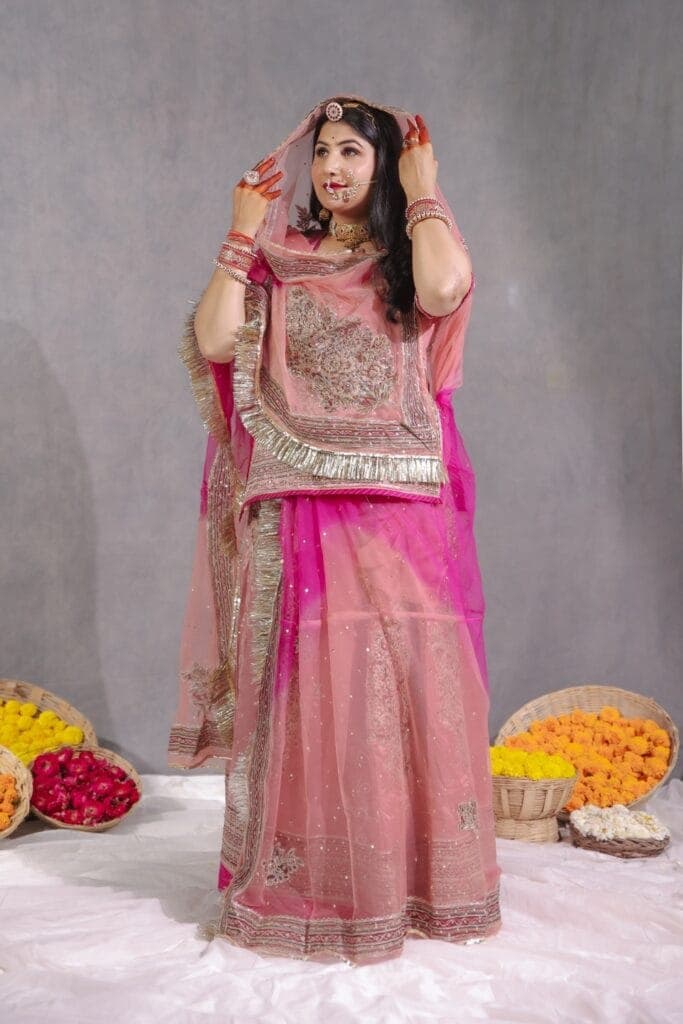
Designer Baby Pink Rajputi Poshak
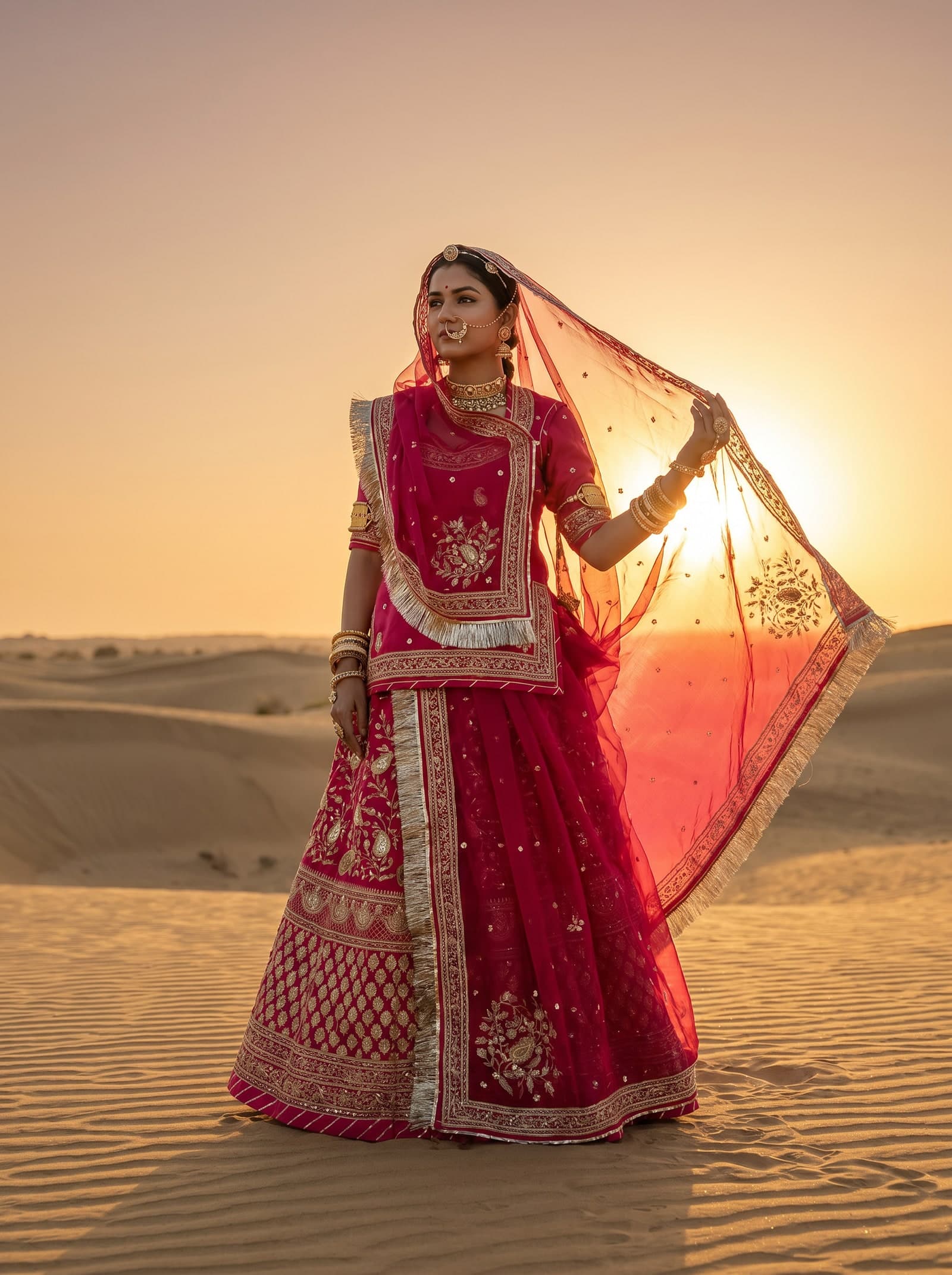
Rani Pink Bari Rajputi Poshak — Aari Zardozi
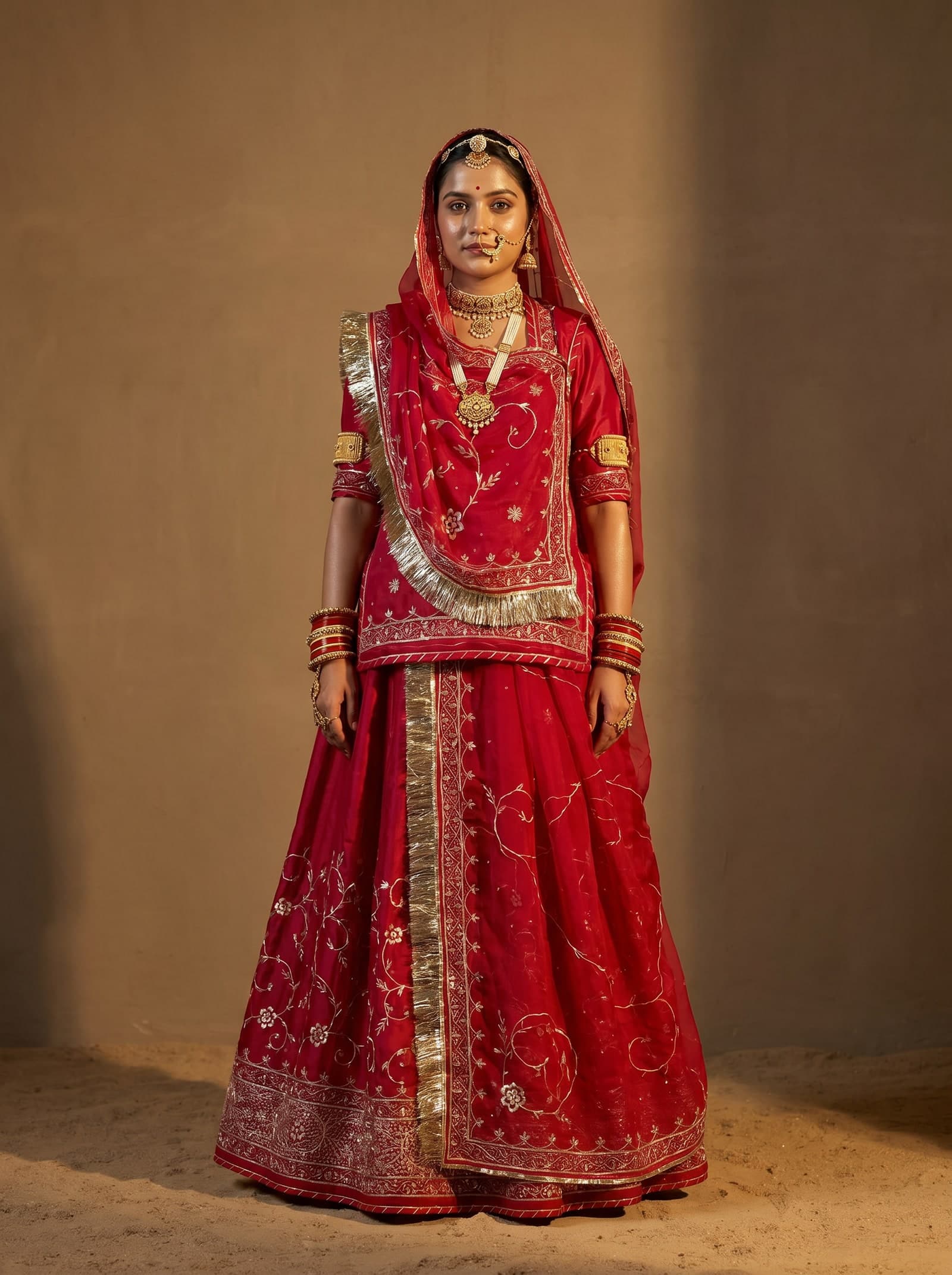
Red Bari Rajputi Poshak — Dabka
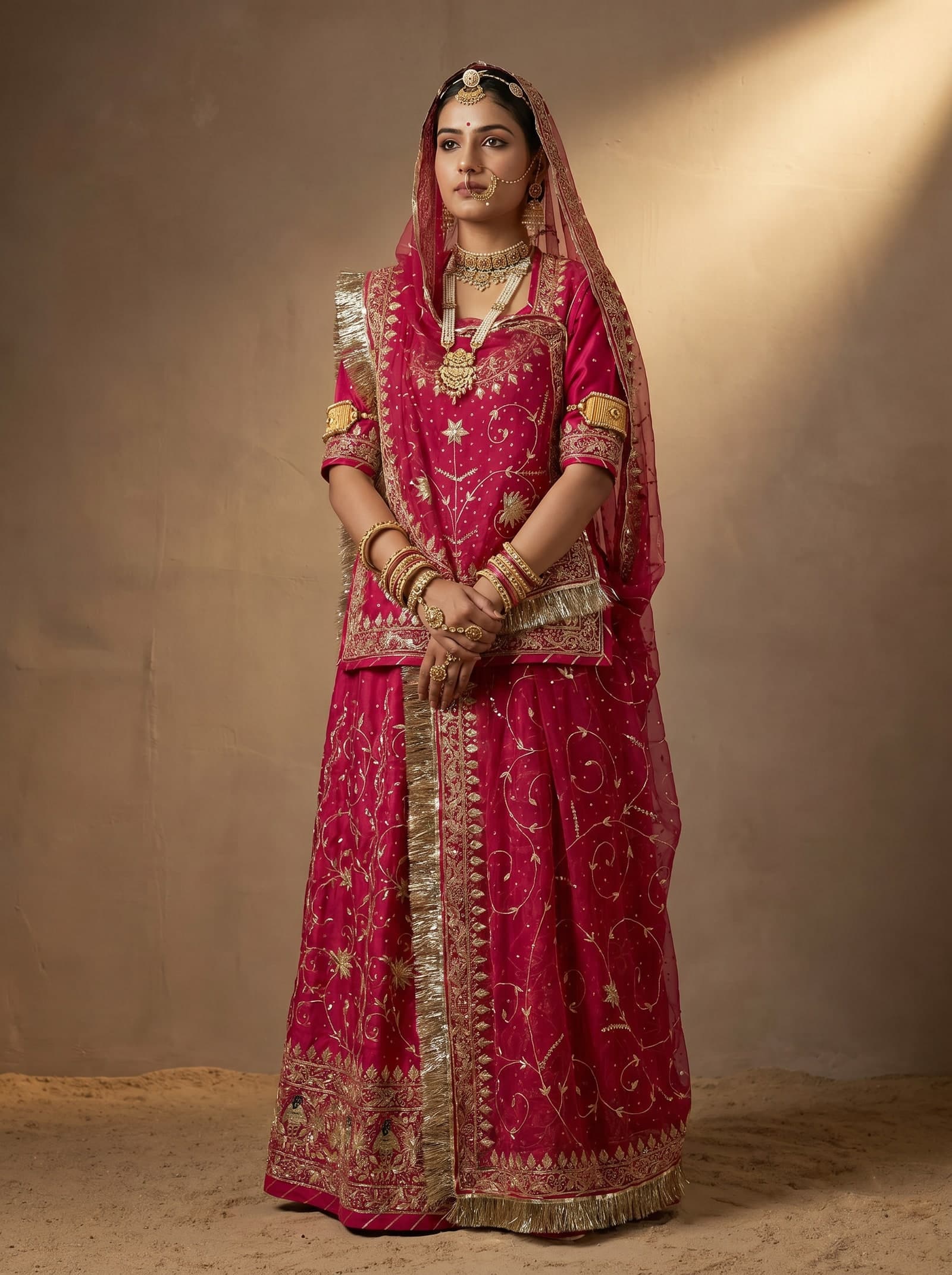
Rani Pink Bari Rajputi Poshak
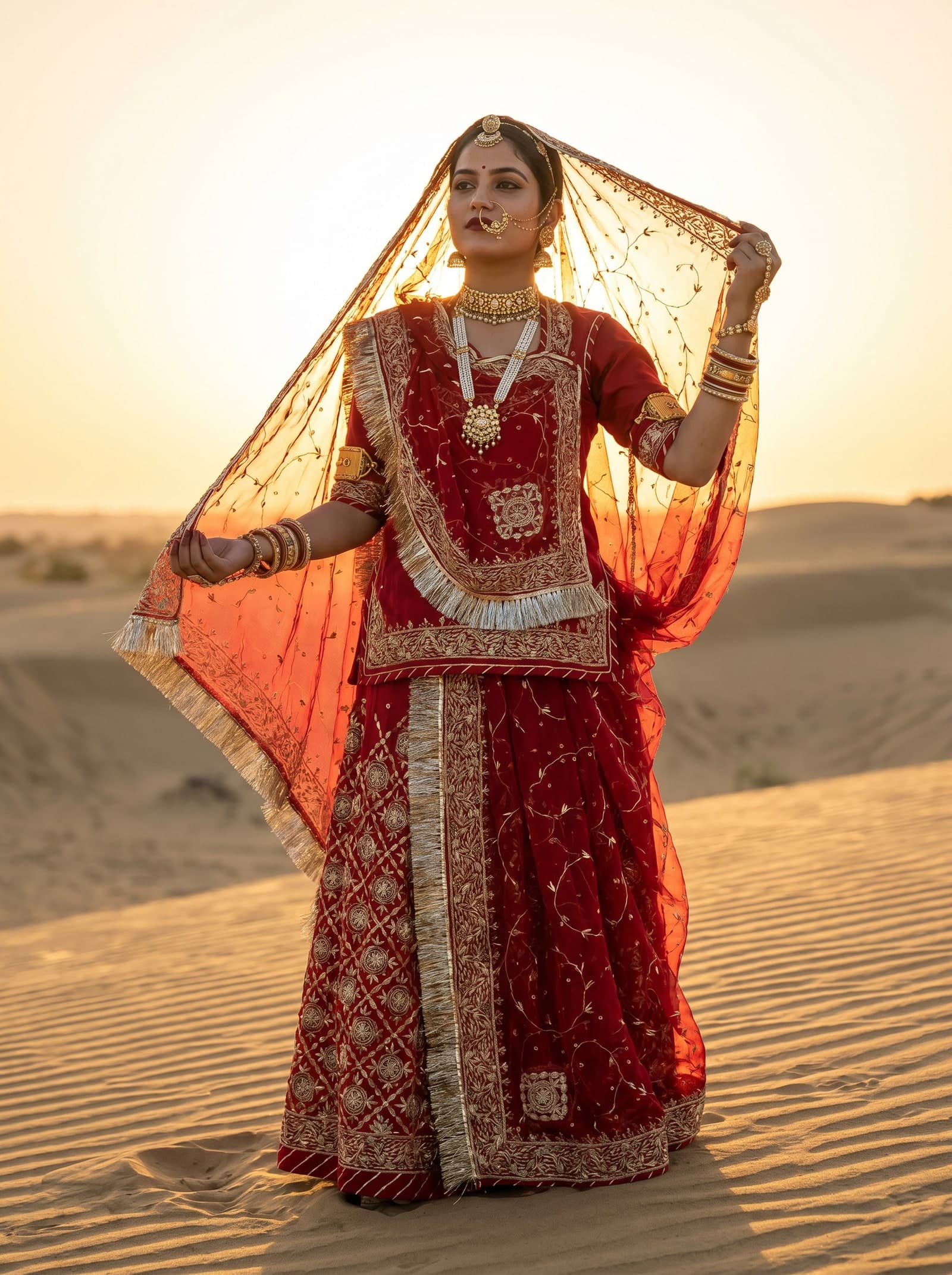
Deep Red Velvet Bari Rajputi Poshak
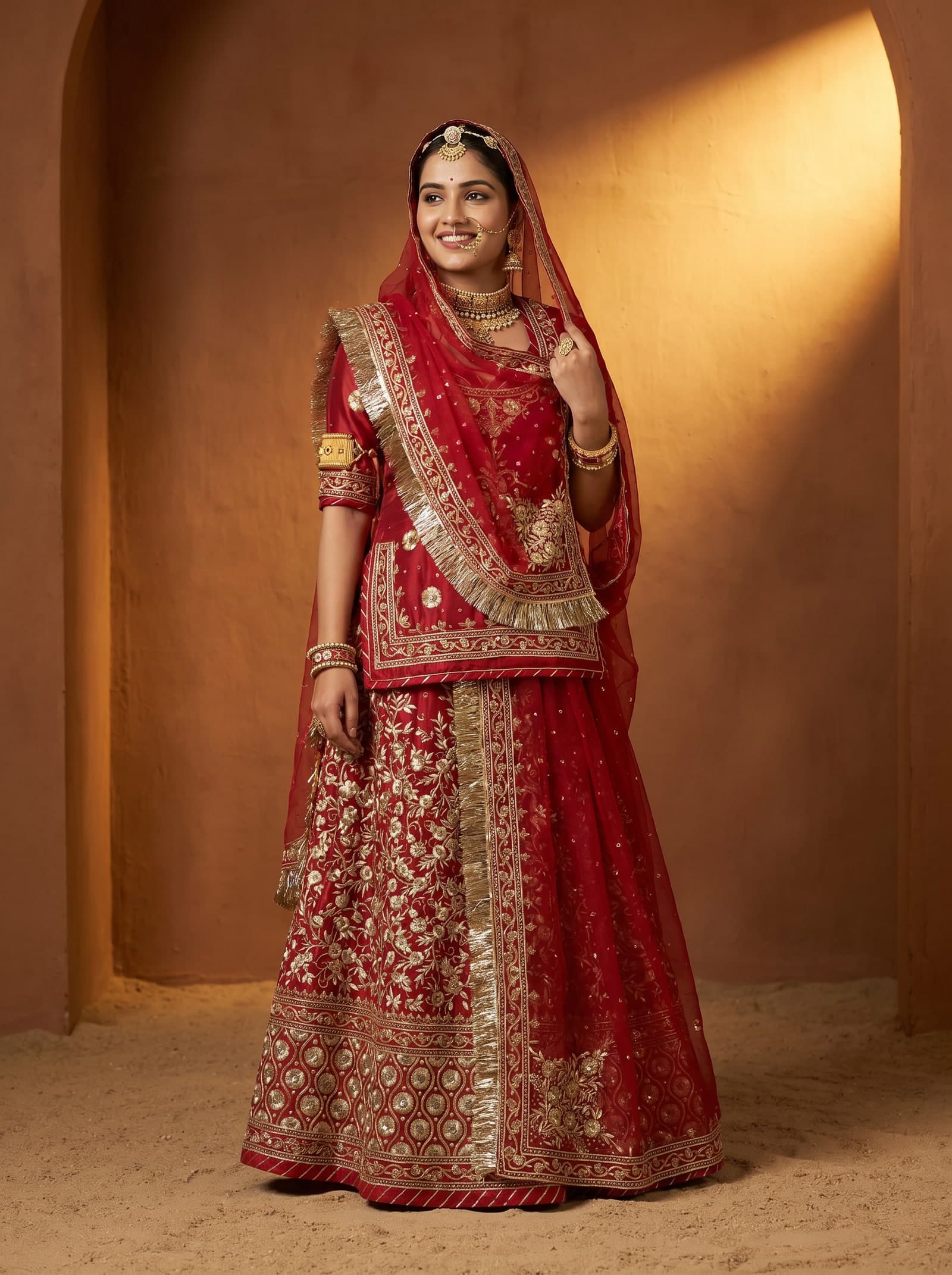
Red Bari Rajputi Poshak — Zari Jaal
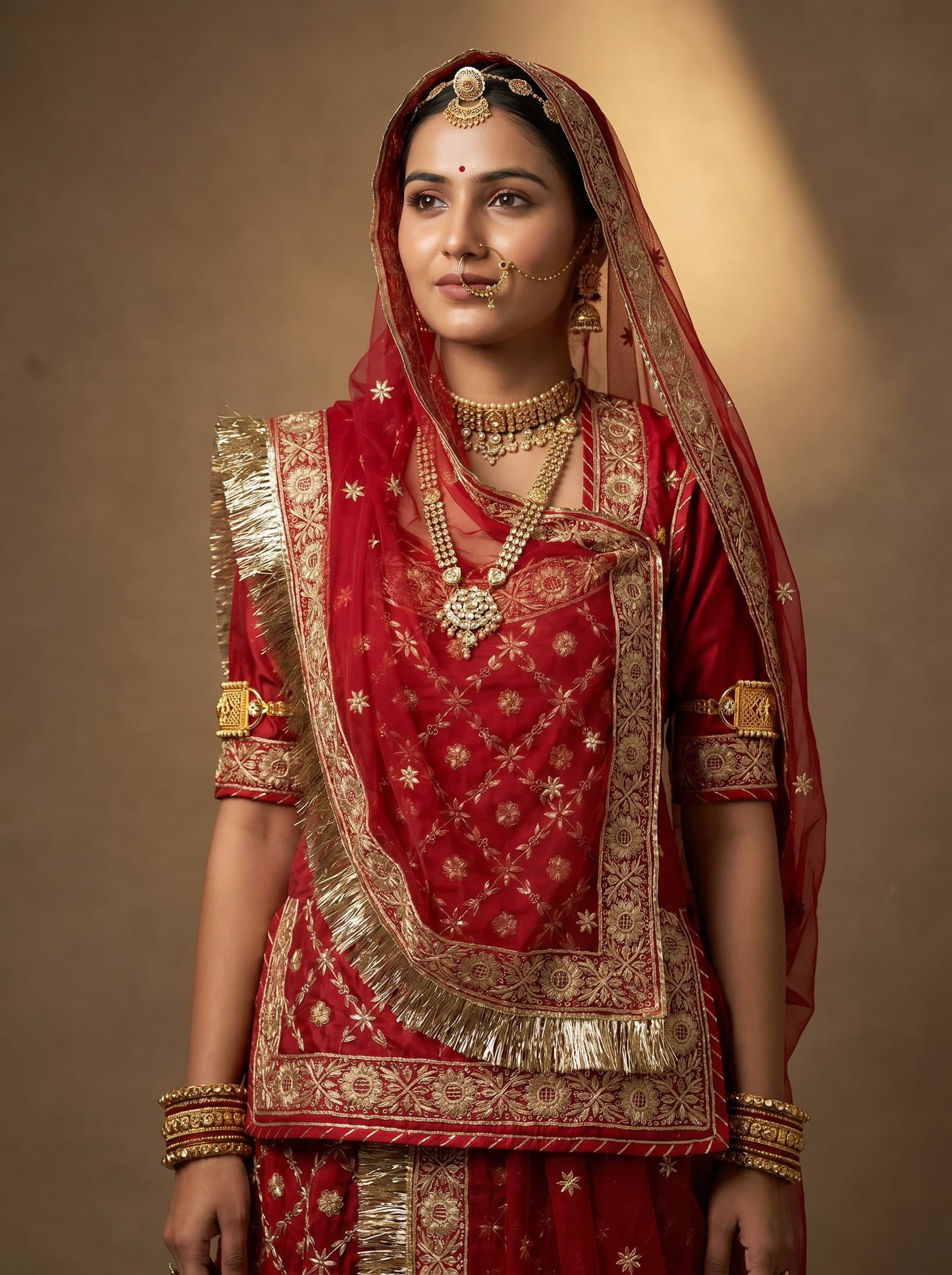
Red Bari Rajputi Poshak — Antique Zari
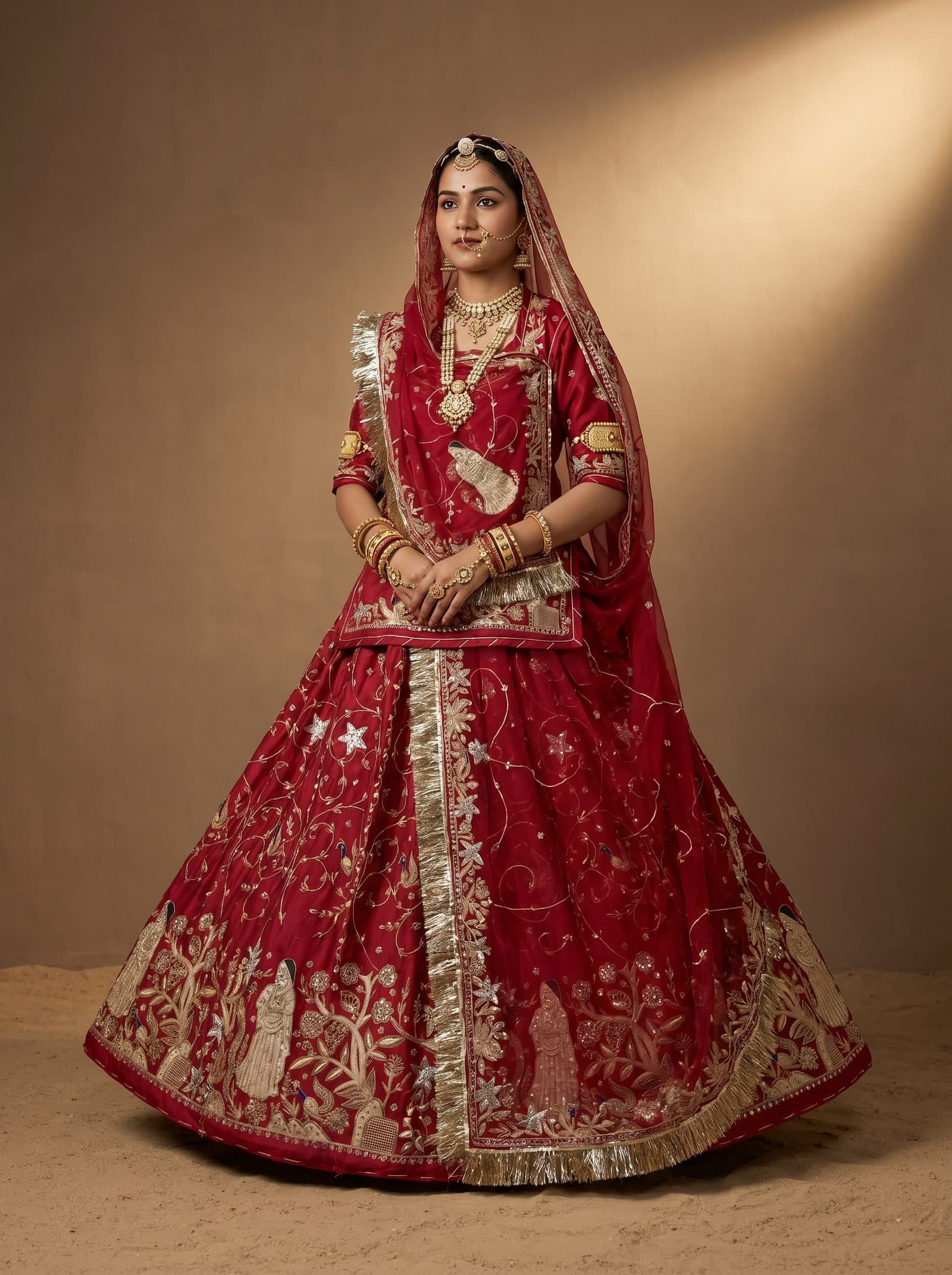
Red Bari Rajputi Poshak — Pichwai Motif
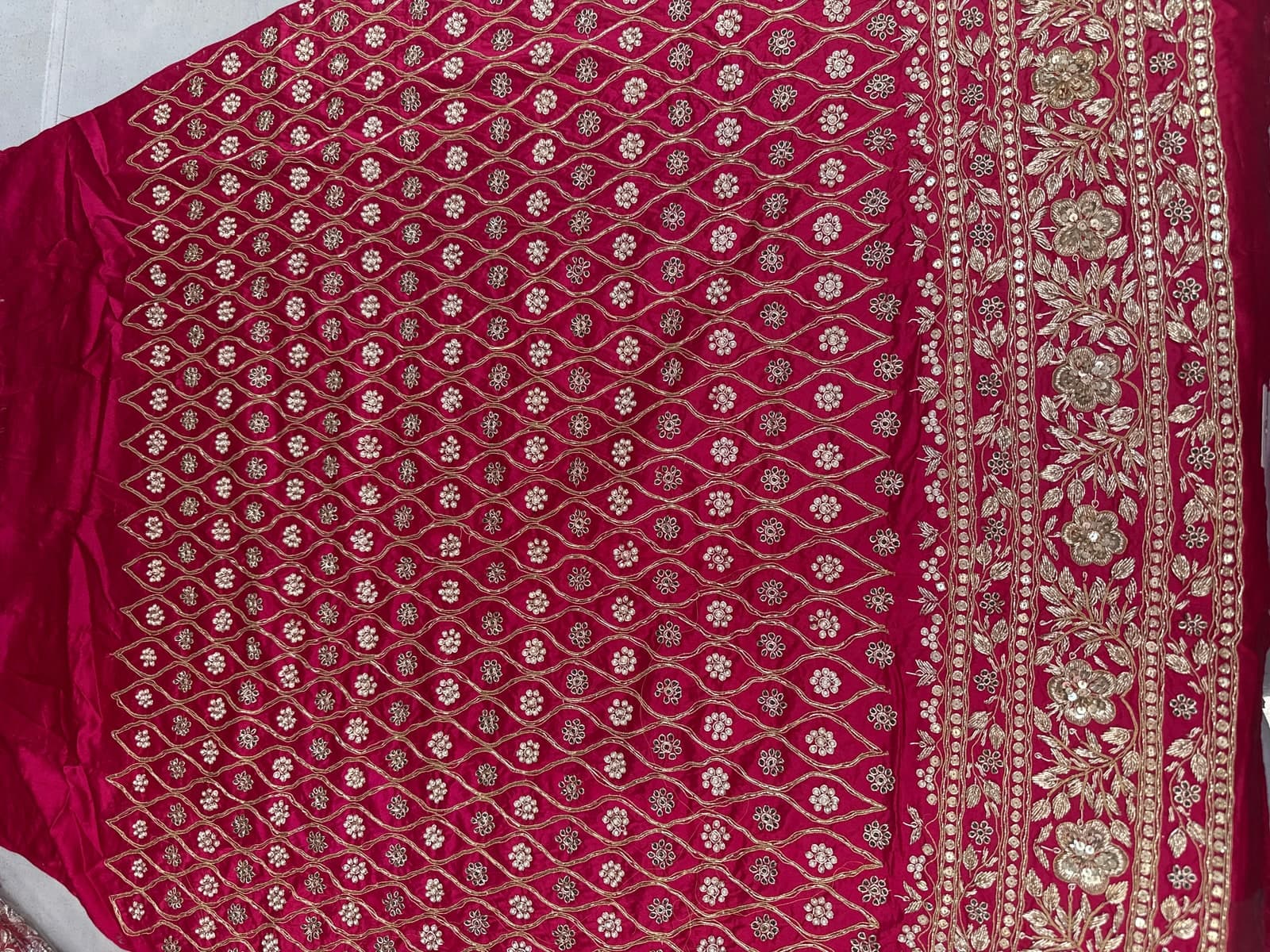
Rani Pink Bari Rajputi Poshak — Gota Jaal
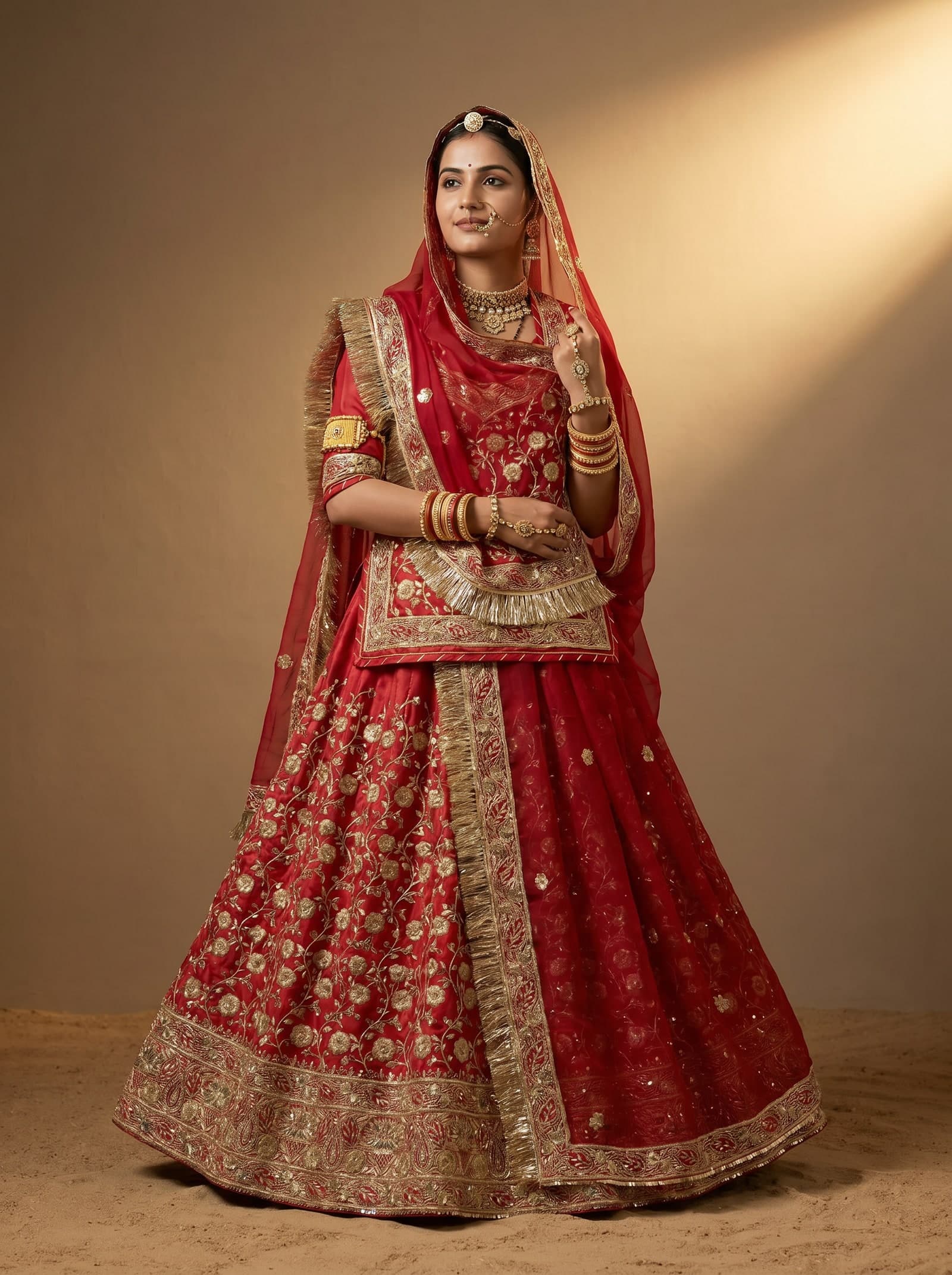
Red Bari Rajputi Poshak — Floral Zari
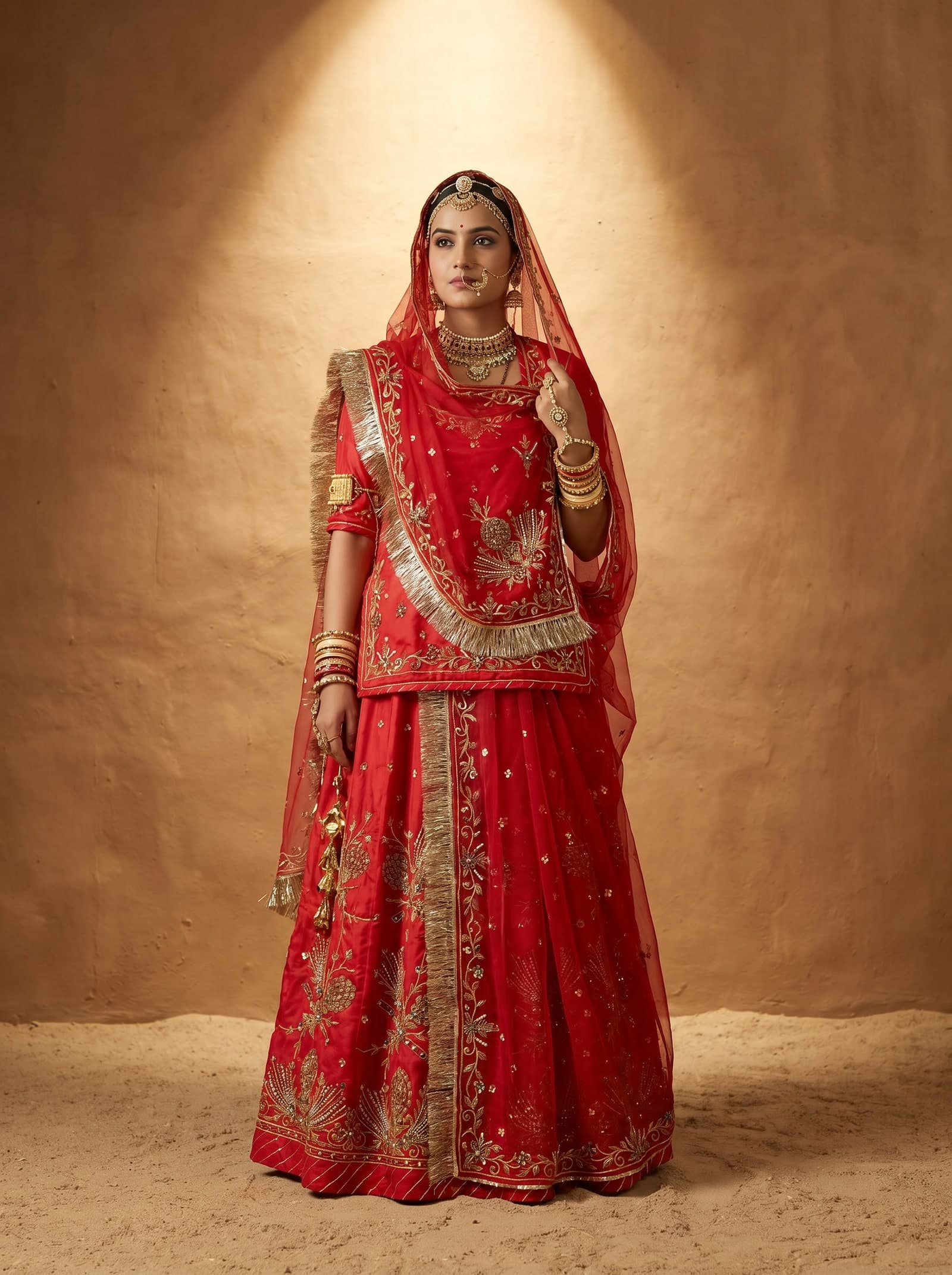
Scarlet Red Bari Rajputi Poshak
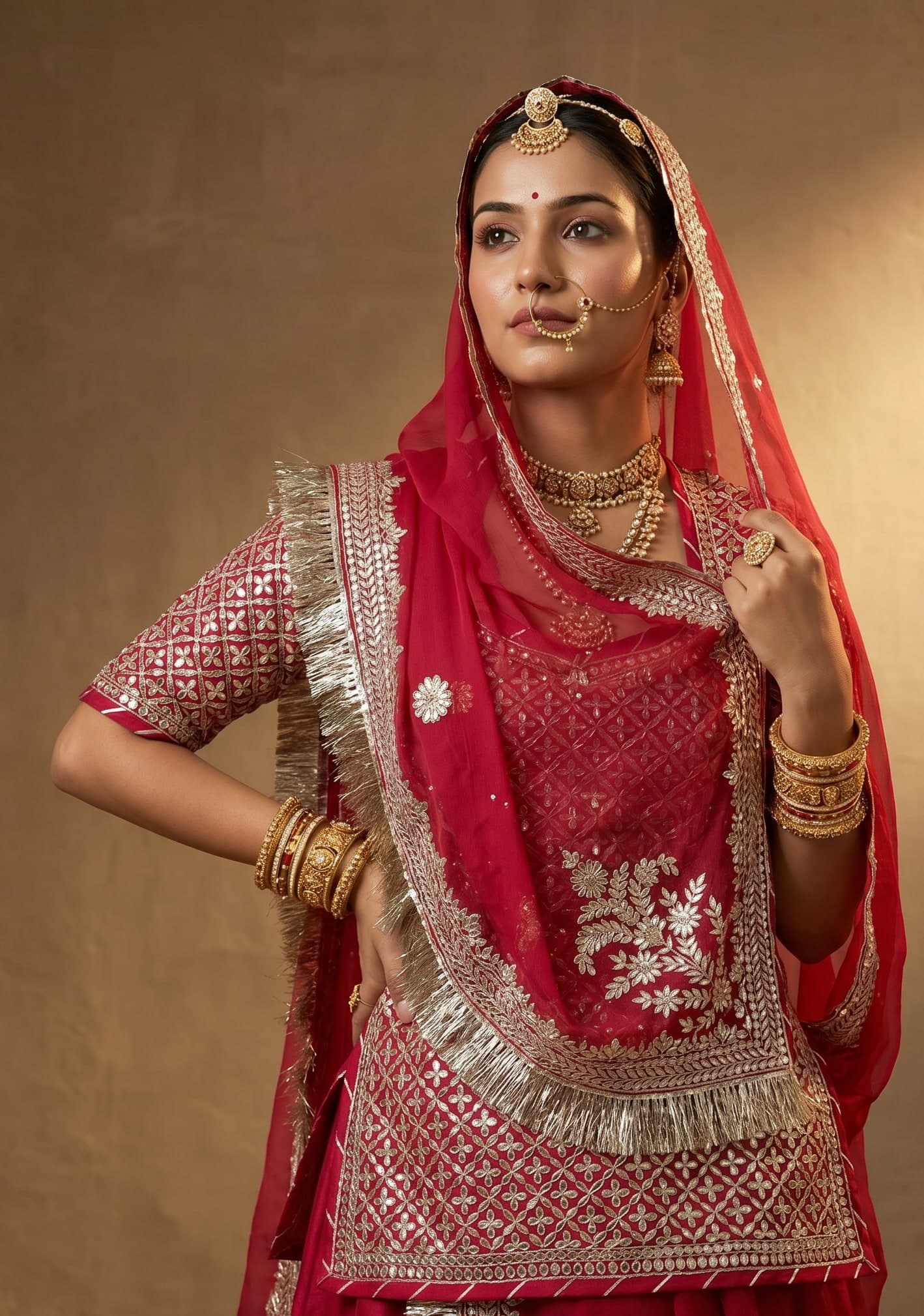
Red Bari Rajputi Poshak — Gota Patti
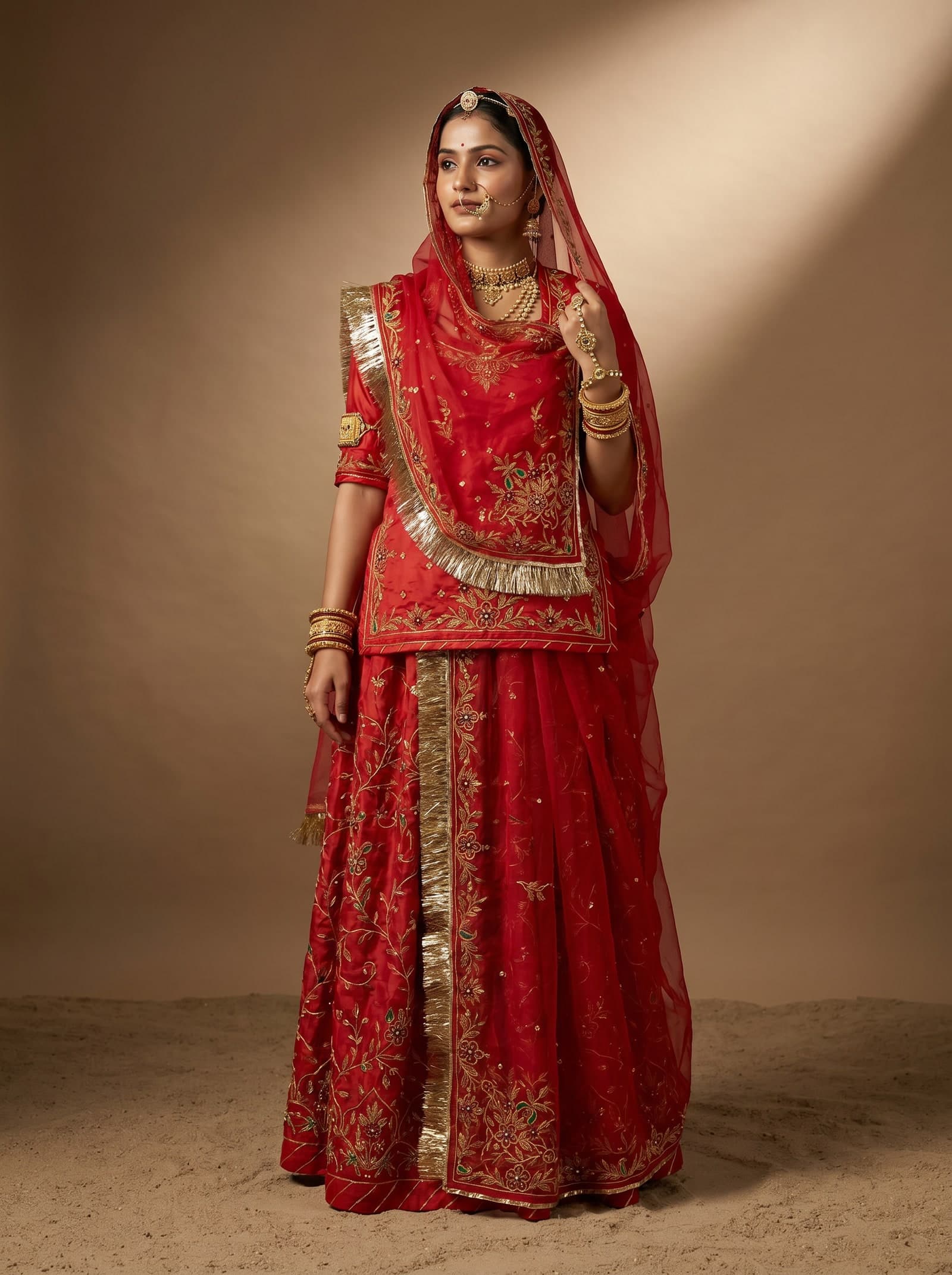
Red Bari Rajputi Poshak — Antique Samla & Dori Jaal
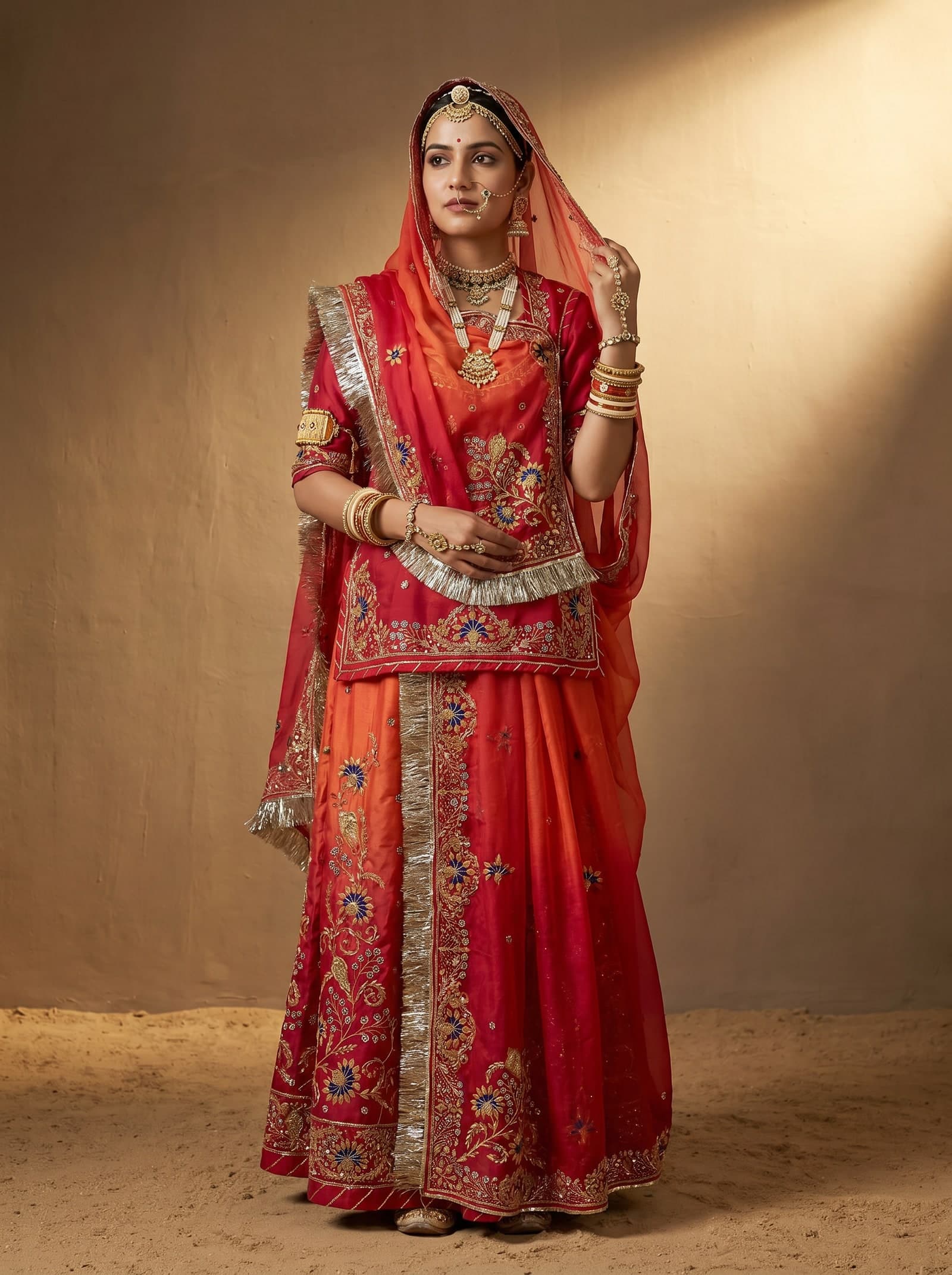
Red-Orange Shaded Bari Rajputi Poshak — Golden Dabka
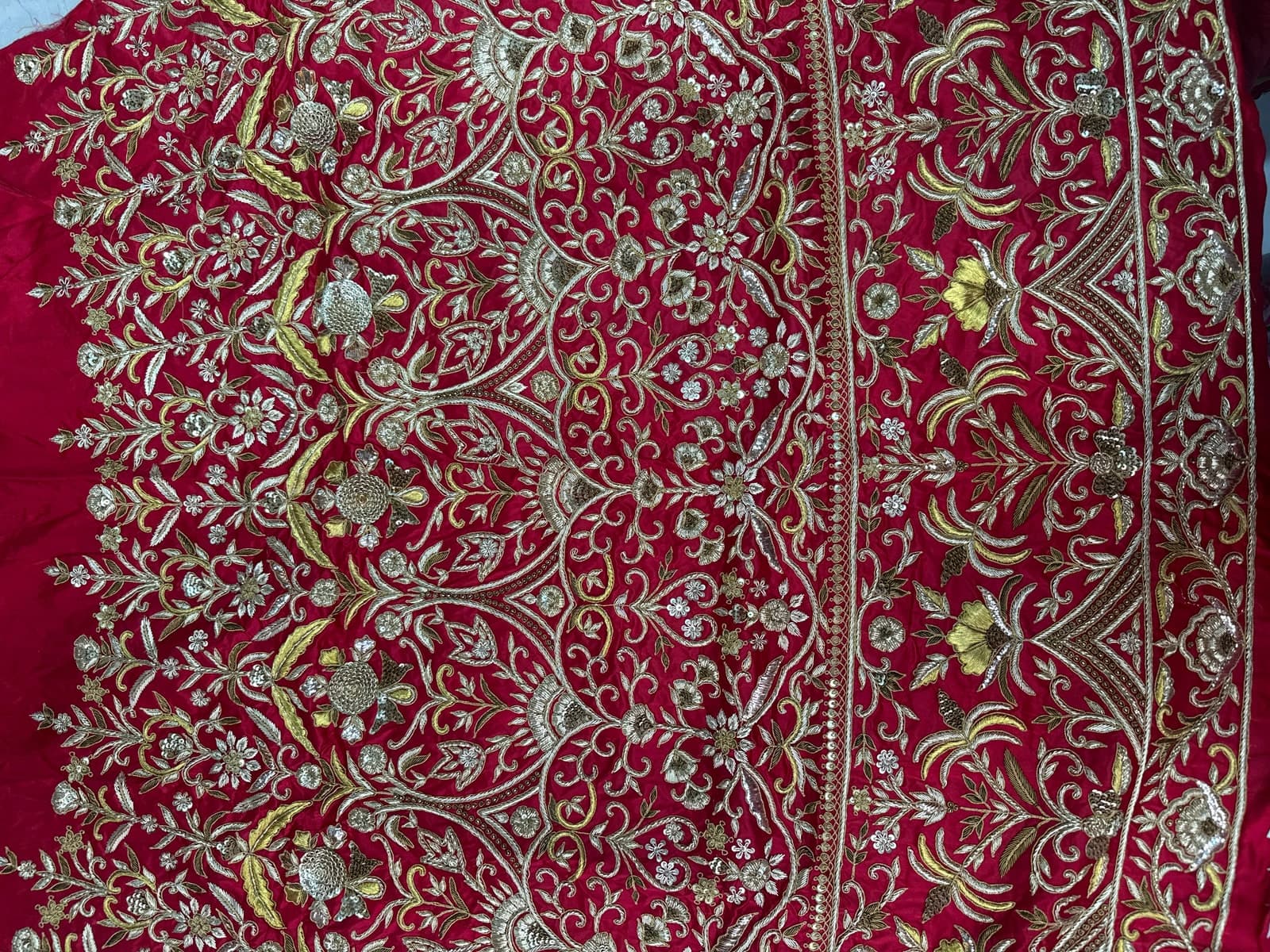
Crimson Bari Rajputi Poshak — Antique Golden Zari
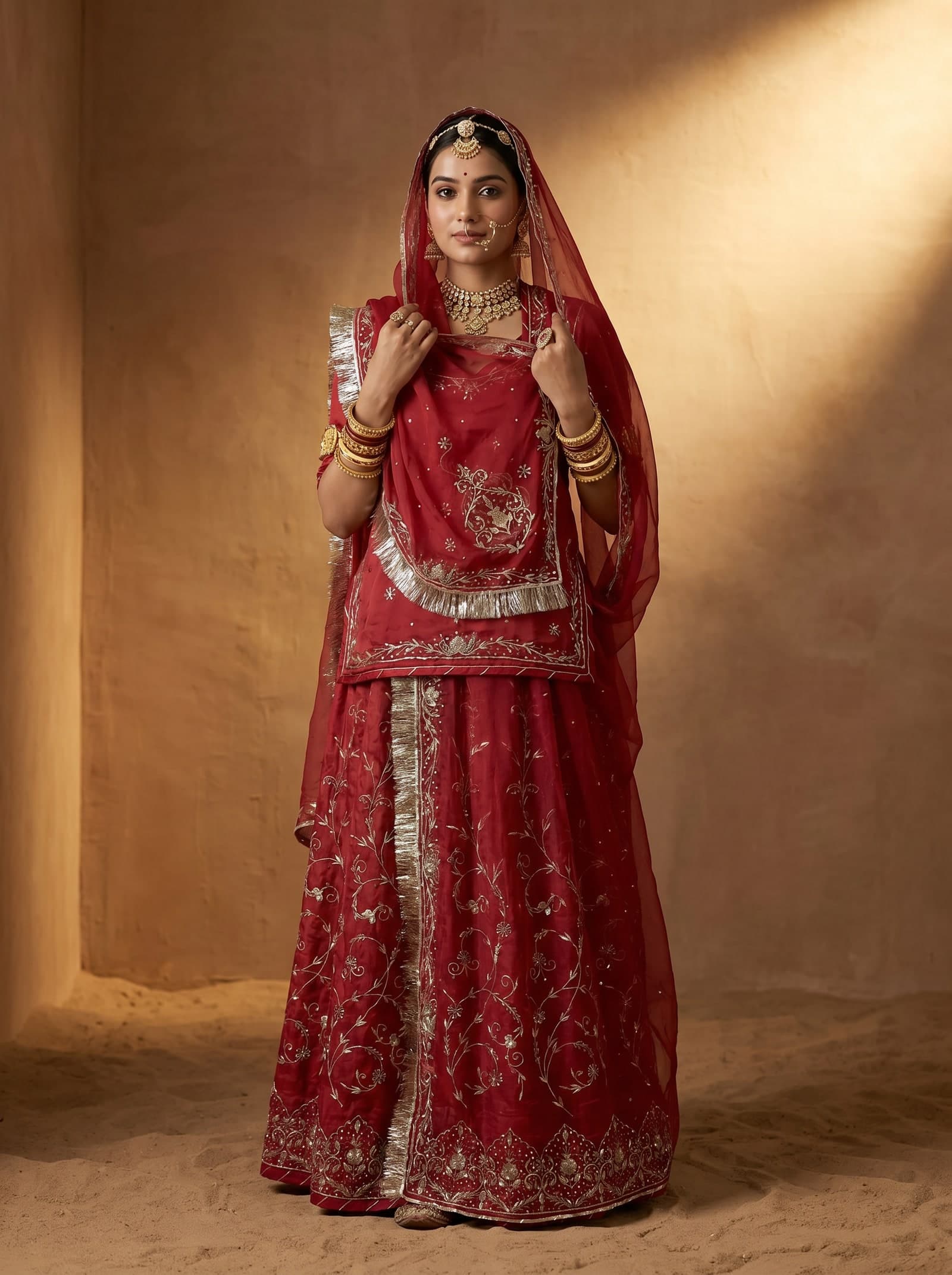
Red Bari Rajputi Poshak — Dabka & Dori Jaal
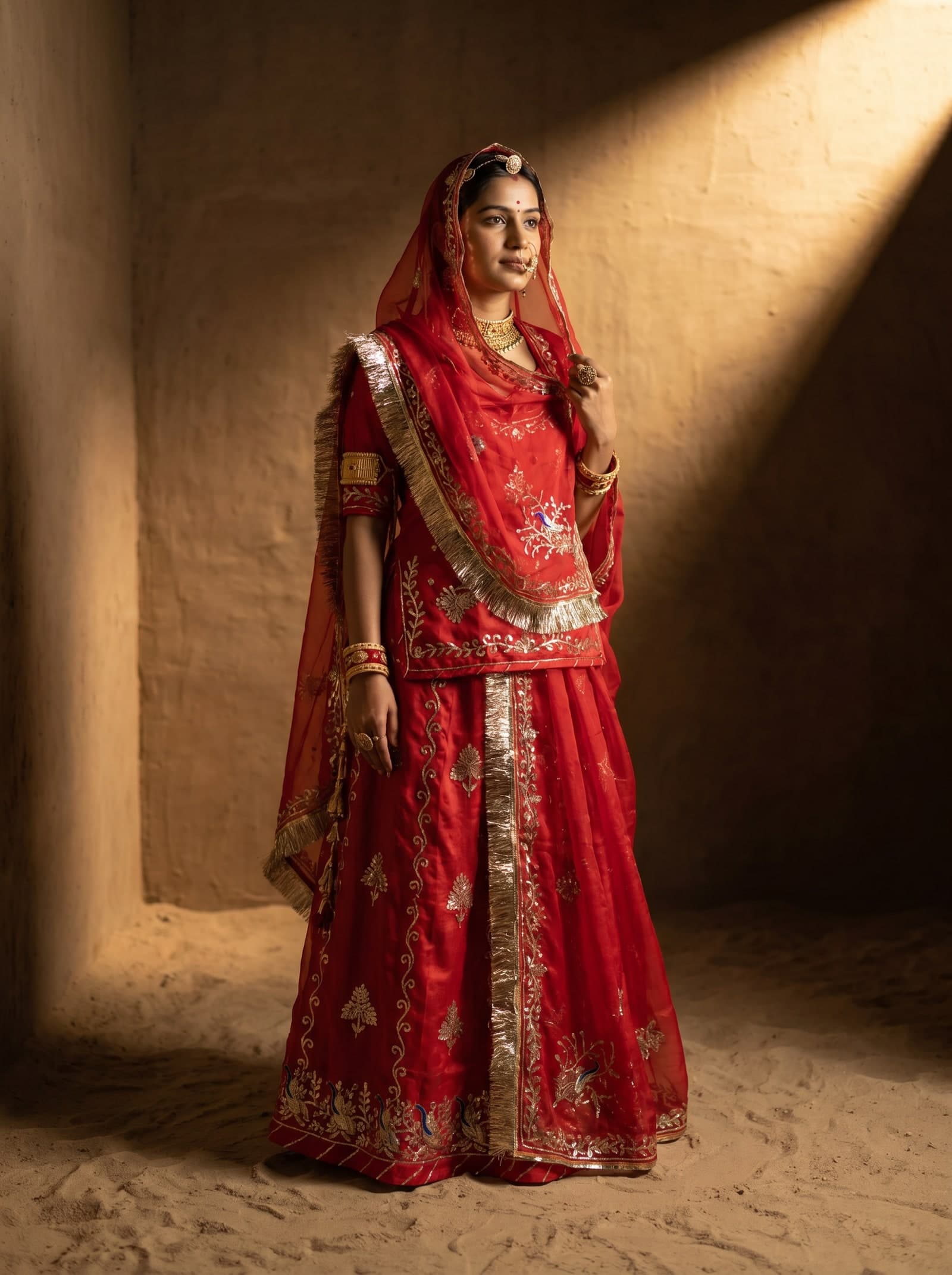
Scarlet Red Bari Rajputi Poshak — Aari Tari
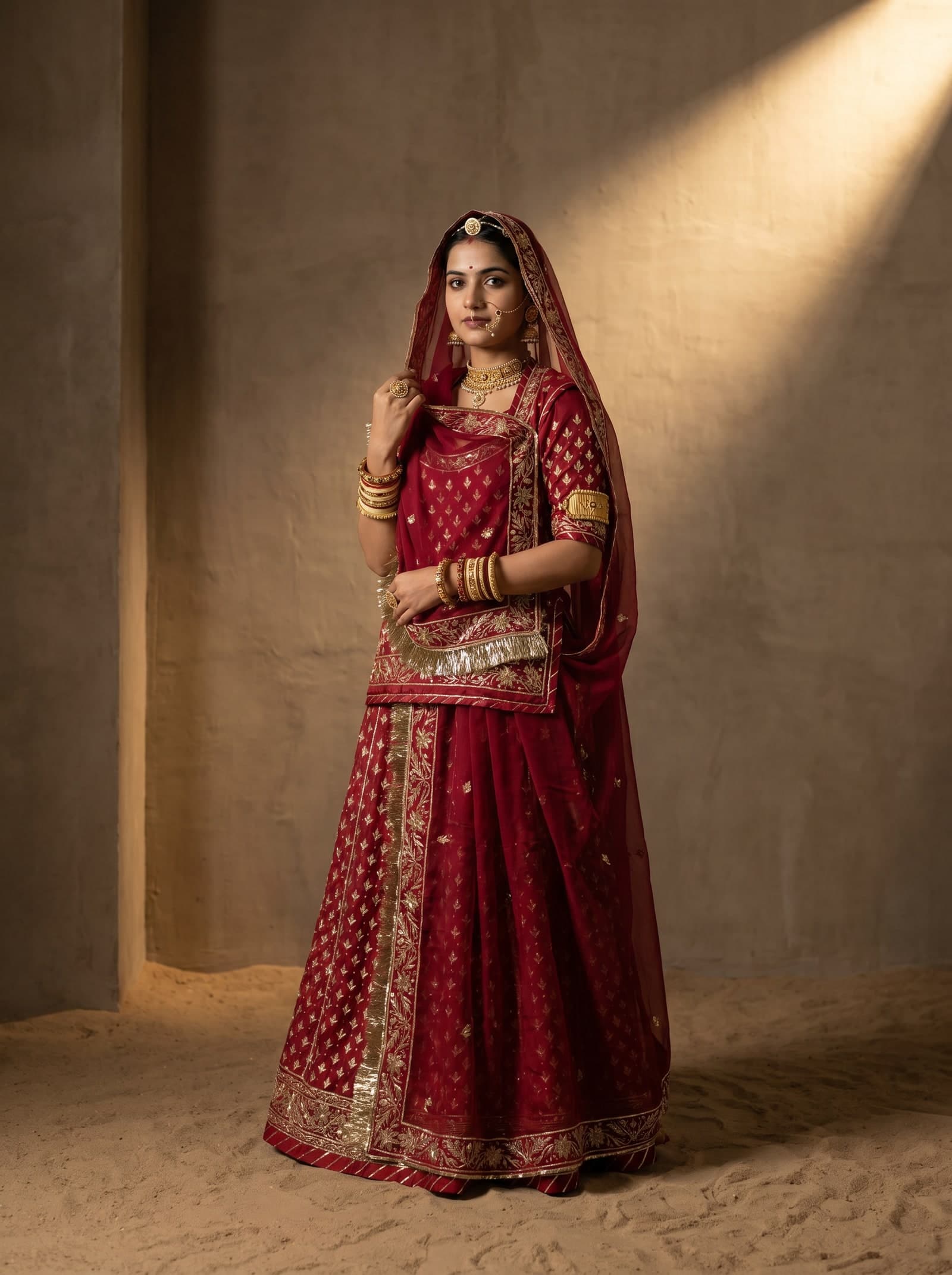
Deep Red Bari Rajputi Poshak — Dabka
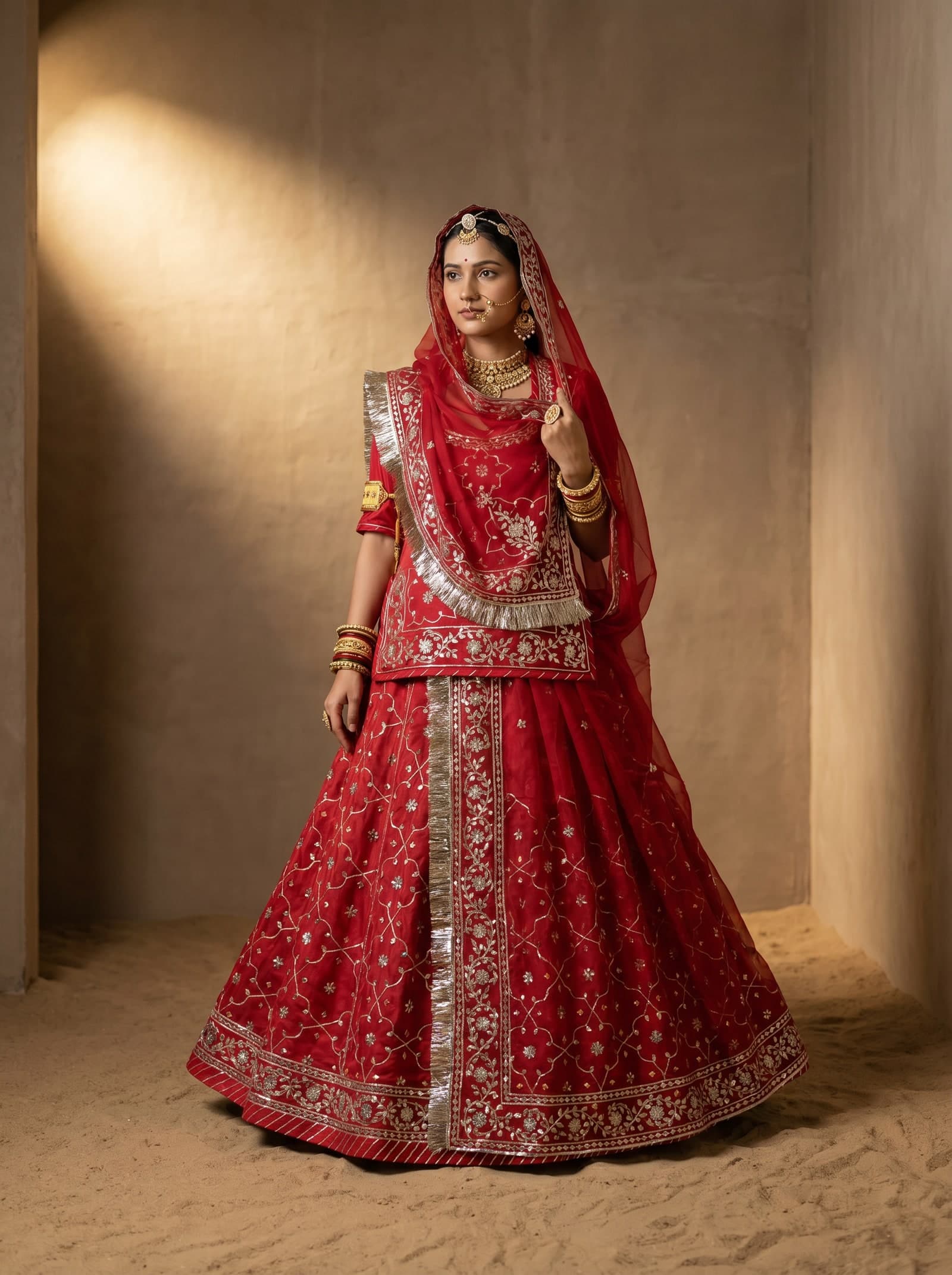
Red Bari Rajputi Poshak — Kachi Patti & Copper Sikhiya
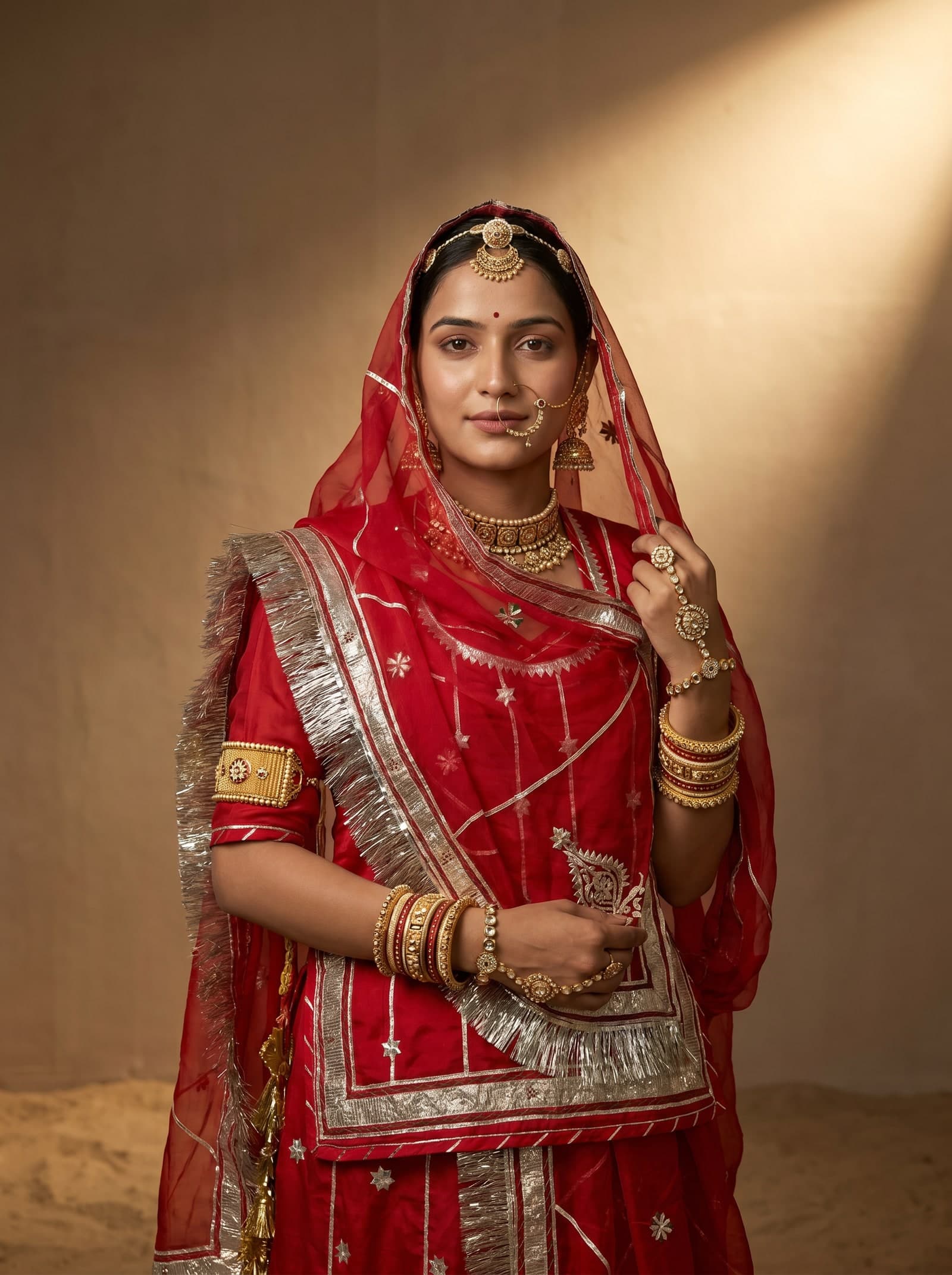
Red Bari Rajputi Poshak — Copper Lappa & Kachi Patti
About the market itself, since most poshak pages skip it and simply show you pictures. Johari Bazaar is jewellery country — borla, rakhdi, aad, bajuband — and a fair number of poshak shops sit above and behind the jewellers there. Bapu Bazaar and Nehru Bazaar are for fabric by the metre, lehriya and bandhej odhni, mojari. Chandpole and the lanes running off it hold the gota, kiran and trimming wholesalers who supply nearly every workshop in the city, ours included. Real gota there is weighed on a small brass scale before it is cut, which explains most of why one poshak costs four times another. Walk all of it in one afternoon if you have the day free. We would tell you to do it even if you never buy from us.
Overpaying happens in a few predictable places. Plated gota sold as asli chandi. A rack piece marked up because somebody said the word designer out loud. A large discount cut from an MRP that was invented so it could be cut. So turn the odhni over before you agree to anything and read the kor from the reverse, where nothing is meant to be seen. Real silver gota lies flat, takes a fold and holds it, and goes to a soft grey that comes back with a cotton cloth. The imitation stays too bright, blackens rather than dulls, and lifts at the edge after one season in a steel trunk. Then pick the ghaghra up. A 24-kali ghaghra with honest work has a weight in the hand and a swing you can feel long before she turns in it.
Colour gets chosen by the ritual, not by a mood board. Lal for the phera, and lal is not one colour: our bari rack currently runs fifteen reds, from a deep blood shade to a lighter one that photographs warmer, three rani pinks, and one piece that shades red into orange down the ghaghra. There is also a designer poshak in baby pink for brides who want out of the red family altogether, and a marigold-yellow floral suit for the piliya and haldi mornings. If you are shortlisting from photographs at home, hold the shade up against your skin at a window in daylight. Shop tube light flatters every red equally, which is exactly the trouble with it.
Stitching is where the money actually goes. Measurements are taken at either shop, or over WhatsApp with one of us on the phone telling you where to hold the tape and how tight to pull it across the kanchli. From the day they are final a poshak takes roughly 38 days, and most of that is not sewing. The fabric goes onto a wooden adda, stretched until it sounds hollow when you tap it, and a karigar sits with it laying tari, danka or mukesh line by line, usually late in the day once the workshop has gone quiet and the lamp is pulled close. Kalis are counted out and laid on the floor before a single cut, so the ghera falls even and the hem sits level when she stands. The magji along the odhni kor is turned by hand, and that alone is a day's work on a heavy piece. There are 214 karigars with us, seven generations of the same family behind them, and none of it goes faster without showing.
Every finished poshak is numbered, signed, and folded into a heritage trousseau box, which is the part mothers usually photograph before the bride does.
For anyone reading this from Bikaner, Delhi, Dubai or Houston: we ship across India and to 42 countries, and a good number of our bari poshaks leave Jaipur in a box to be opened by a banni who never stood in either shop. Send measurements, let us check them back with you before anything is cut, and the concierge stays with you on WhatsApp through the 38 days with photographs of your piece on the adda whenever you ask for them. It is not the same as holding the silk first. It is close enough that we keep doing it.
Questions, answered
Where is the rajputi poshak market in Jaipur?
It sits across a few areas rather than in one market. Johari Bazaar for the jewellery, borla and rakhdi and aad, with poshak shops above and behind the jewellers. Bapu and Nehru Bazaar for fabric, lehriya and bandhej odhni, mojari. Chandpole for gota, kiran and trimmings, which is where the rest of the city buys its raw material. Jhotwara, where we sit, has a cluster of poshak shops of its own.
Can I buy from a rajputi poshak wholesale market in Jaipur?
You can visit, but very few wholesalers will sell you a single poshak at a wholesale rate. Their business is ten kanchlis to a retailer in Bikaner, not one to a bride. If a shop offers you one piece and calls the price wholesale, that is retail with a story attached to it. For a single bridal poshak, compare one atelier against another instead of against a bulk rate you were never going to be given.
Do you have a rajputi poshak shop in Jhotwara and in Sanganer?
Yes, both. Jhotwara is Shop 7, Khatipura Road, opposite Goverdhan Sky, Fateh Colony, Indrapura, Jaipur 302012, phone +91 77424 58740. Sanganer is 210, Swami Vihar, Shiv Shakti Nagar, Jaipur 302019, phone +91 98290 24503. Both run 10 AM to 8 PM. Jhotwara keeps more bari poshaks on display; Sanganer is the calmer room for measurements and trials.
How much does a rajputi poshak cost in Jaipur?
Ours begin around Rs 20,000, with bari poshaks currently between Rs 20,400 and Rs 94,500, and the heavier real-silver work crossing Rs 2,00,000. Three things move the number: the base fabric, how much of the gota is asli chandi rather than plated, and the hours the piece spent on the adda. Silver is bought by weight, so that part of the price has a floor nobody can go under. Every product page carries its price, and the poshak price calculator gives you a range before you pick up the phone.
Do you stitch to measurement, and how long does it take?
We cut to measurement rather than to size, so the kanchli, kurti, ghaghra and odhna are made for one body. Reckon on about 38 days from the day the measurements are final. If your shaadi date is tighter than that, say so on the phone before you choose the work, because some handwork can be planned around a deadline and some genuinely cannot.
Do you do rajputi poshak stitching, or should I look for tailors near me?
We are an atelier, not a job-work stitching counter, so the tailoring happens as part of making the poshak in our own Jaipur workshop with our karigars. If you are in the city, walk into Jhotwara or Sanganer with a date in mind and we start from measurements the same day. Fit adjustments on a poshak we made are part of the job, not a separate errand you pay for.
I do not live in Jaipur. Can I still order?
Yes. We ship across India and to 42 countries. If Jodhpur is nearer, our shop there is at Gali No. 33, 7, Link Road, near Ramdev Vatika and the RTO Office, BJS Colony, Jodhpur 342006, phone +91 96363 66904. Otherwise send measurements on WhatsApp at +91 98290 17524, we check them with you before anything is cut, and photographs follow while the piece is on the adda. Ask the concierge for a delivery date before you commit it to a wedding week, since timelines outside India vary by destination.