Rajputi Jewellery, Piece by Piece: Borla, Rakhdi, Aad & What Each One Means
Rajputi jewellery is a complete head-to-toe system — around fifteen named pieces, each with its own place, from the borla at the parting of the hair to the bichhiya on the toes. It is worn in an order, chosen with intent, and in the old houses it was always real silver or gold, because it doubled as the family's wealth.
We dress brides for a living, and half the questions at our counter are really jewellery questions — what is the round thing on the forehead called, what goes with an aad, is this chandi or polish? So here is the whole system, piece by piece, in the order a Rajputi bride actually puts it on. Keep it open the next time a shopkeeper starts naming things quickly.
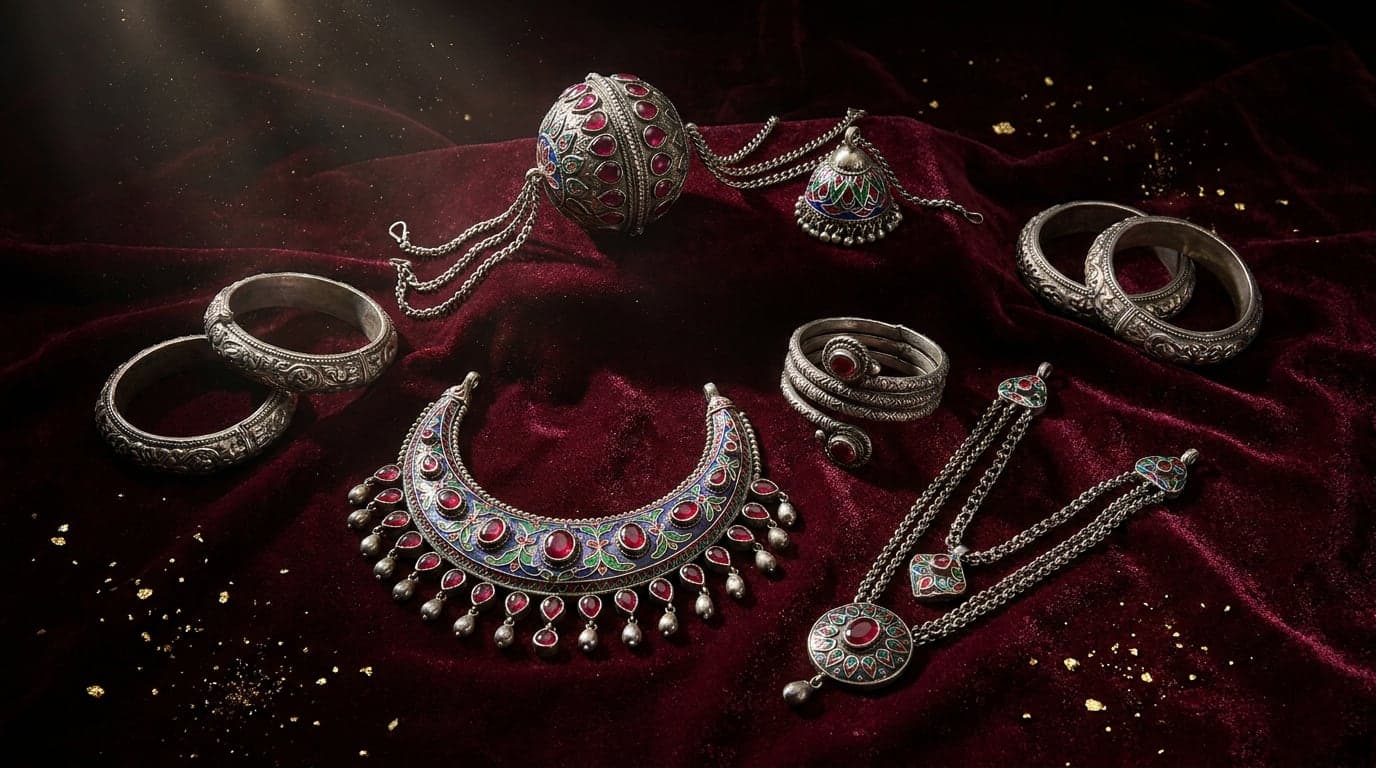
Head to toe — the order of Rajputi jewellery
Rajputi shringar moves downward. The head first: borla at the centre parting, its chains — the matha patti — running back over the hair, sometimes a sheeshphool pinned behind. Then the face: the nath or the smaller besar at the nose, heavy jhumka or karnphool at the ears.
The neck carries the most weight, in layers: the aad sits highest and stiffest, the timaniya (some houses say tevta) below it, a kanthi close to the throat, and a long moti haar falling over everything. Arms next — bajuband above the elbow, gokhru and chuda at the wrist, the punchi with them, a hathphool across the back of the hand. The kamarbandh at the waist. Payal and bichhiya last, at the feet.
Nobody wears all fifteen daily. A bride wears most of them once, at the phere — and then the set goes into the trousseau box and comes out piece by piece for the rest of her life: the borla for Teej, the kanthi for a milni, the whole aad maybe twice more, at weddings where she wants the room to know exactly which house she came from.
Every piece of Rajputi jewellery, named
The working list — what shopkeepers, mothers-in-law and wedding photographers all mean when they say it.
| Borla | The spherical maang-tika at the hair parting — the signature Rajputi piece |
| Rakhdi | The older name for the borla's round head; many houses use the words interchangeably |
| Matha patti | Chains framing the forehead, anchored to the borla |
| Sheeshphool | A flower-form ornament pinned flat to the back of the hair |
| Nath / Besar | Nose ring with a pearl chain to the ear; the besar is its smaller cousin |
| Aad | The stiff square-crescent collar at the base of the neck — the grandest piece |
| Timaniya (Tevta) | A three-panel choker worn below the aad |
| Kanthi | A close, simpler necklace at the throat |
| Moti haar | The long pearl rope that falls over all the necklaces |
| Bajuband | Armlet tied above the elbow, over the poshak sleeve |
| Gokhru / Chuda | Heavy wrist kadas and the bridal bangle set |
| Punchi (Pochi) | Small linked bracelets worn beside the chuda |
| Hathphool | Chained rings across the back of the hand |
| Kamarbandh | The waist chain that holds the odhna's fall in place |
| Payal & Bichhiya | Anklets and toe rings — silver always, never gold, out of respect |
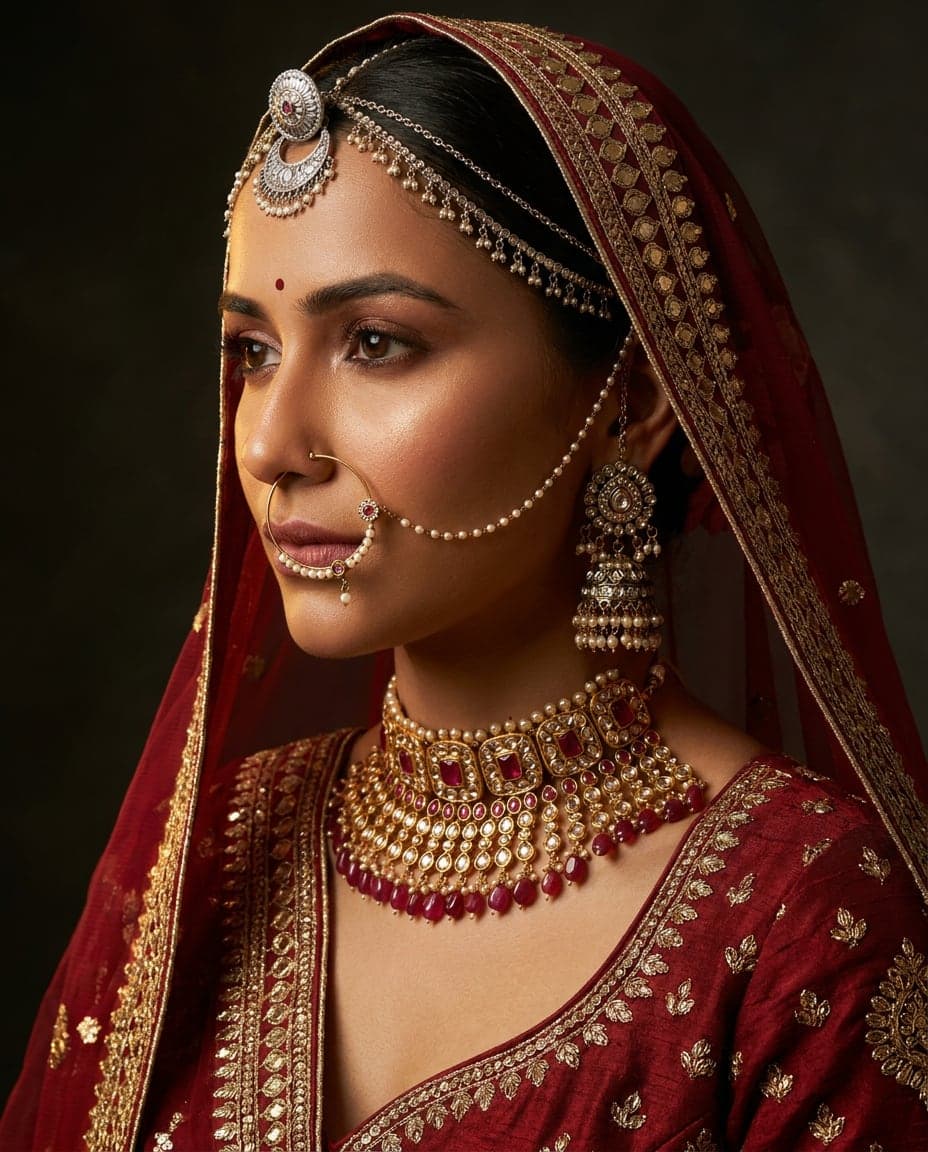
The five pieces everyone asks about first
- 01Borla — the round one
The sphere at the hair parting is the fastest way to read a woman as Rajputi from across a courtyard. Round because it echoes the sun, worn after marriage as a mark of suhaag. Sizes run from a pea to a plum; the older the house, the heavier the borla, as a rule.
- 02Aad — the great collar
A stiff, hinged square or crescent that sits at the base of the throat, usually kundan or red-stone work on silver or gold. It does not drape — it holds its shape, which is why it photographs like armour. The aad is the piece brides borrow from grandmothers, and the one most worth buying real.
- 03Rakhdi
Strictly, the round head of the borla itself — but in Jodhpur and much of Marwar the whole forehead piece is called rakhdi. If a shopkeeper uses both words in one sentence, he means the same object twice. Now you know.
- 04Bajuband — the armlet
Tied above the elbow over the poshak's sleeve, once the place a Rajput woman kept visible proof of her house's silver. It reads best on plain sleeves — heavy sleeve embroidery and a bajuband fight each other, so pick one.
- 05Nath — the ring at the nose
The bridal nath is large, left-side, with a fine chain sweeping to the hair above the ear. The besar is its small everyday cousin. If you wear spectacles, rehearse with the nath once before the wedding day — every bride laughs at this advice until she doesn't.
Real silver or polish — reading the metal honestly
Most "Rajputi jewellery" sold online today is white-metal alloy with silver polish. There is nothing wrong with that at ₹800 for a borla — it lets a college girl wear Teej properly, and we're glad it exists. It becomes wrong when it's priced and described as chandi.
Three honest tests. Weight — silver is dense; a real aad has a presence in the palm that alloy can't fake. The hallmark — since 2021 India hallmarks silver too; look for the purity mark on clasps and backs. Age — real silver darkens slowly and evenly and comes back with a polish; plating peels at the edges first, usually inside the clasp where the maker hoped you wouldn't look.
Our own house works in asli chandi — it's in the name of our real-silver collection — and the same logic we wrote about in the poshak price guide applies here: silver is priced like silver, weighed and receipted. A piece bought that way isn't an expense, it's storage. Your grandmother knew this; the trade would rather you forgot.
Matching jewellery to the poshak
The old rule is simple: the jewellery answers the odhna, not the ghaghra. A lal bridal poshak takes red-stone kundan and gold-tone work; rama and dark green sit beautifully under white kundan and pearls; firozi loves silver worn plain. With a heavily worked poshak, thin the necklaces — aad alone, no timaniya — and let the cloth speak. With a plain satin poshak, layer everything you own; that contrast is exactly how the everyday look of Marwar works.
One more rule from the fitting room: put the borla on before you judge anything. The whole face changes — earrings that looked heavy suddenly sit right, and half the necklaces you'd shortlisted go back in the box.
Silver pieces from the atelier
Frequently asked
Last reviewed: 17 May 2026 · Verified by the DivineTatva expert panel
What jewellery does a Rajputi bride wear?
A full Rajputi bridal set runs head to toe: borla (maang-tika) with matha patti on the forehead, nath at the nose, jhumkas, then layered necklaces — aad, timaniya, kanthi and a long moti haar — with bajuband on the arms, gokhru and chuda at the wrists, punchi, hathphool, a kamarbandh at the waist, and payal with bichhiya at the feet.
What is a borla?
The borla is the spherical maang-tika worn at the centre parting of the hair — the signature piece of Rajputi jewellery. Its round head is traditionally a mark of suhaag (married status), and it anchors the matha patti chains that frame the forehead. In much of Marwar the same piece is called a rakhdi.
What is aad jewellery?
The aad is a stiff, hinged collar-necklace — usually a square or crescent of kundan or red-stone work on silver or gold — worn at the base of the throat, above all other necklaces. It is the grandest piece in the Rajputi set and the one most often passed down as an heirloom.
What is the difference between a rakhdi and a borla?
Strictly, the rakhdi is the round ornament itself and the borla is the fuller forehead piece it belongs to — but in everyday speech, especially around Jodhpur, the words are used for the same thing. If a seller lists 'rakhdi-bor', they mean the borla set.
Is Rajputi jewellery made of real silver?
Traditionally yes — real silver (asli chandi) or gold, because jewellery doubled as the family's stored wealth. Today most pieces sold online are silver-polished alloy, which is fine for occasional wear if priced honestly. Check the weight, look for the purity hallmark, and inspect clasps for peeling to tell the difference.
How do you wear a borla with a poshak?
Part the hair at the centre, seat the borla at the parting just above the forehead, and pin its matha patti chains back over the hair on both sides. The odhna then drapes over the head behind it, so the borla stays visible at the hairline — put it on before choosing the rest of your jewellery, as it changes how everything else sits.
Photographed and written at the atelier in Jaipur. If you've inherited a piece and can't name it, send a photo to @thegrandabhaneri on Instagram — naming grandmothers' jewellery is genuinely the best part of our job.