Heavy Rajputi Poshak
A heavy Rajputi poshak is one worked edge to edge rather than at the borders — dabka, zardozi or aari-tari laid across the kanchli, the kurti and every kali of the ghaghra, until the piece has a weight you can feel in your hands before you ever put it on. In Rajasthan this is what a bride wears for the phere, and what the women of the house wear to the weddings that matter.
Every heavy poshak below is built to order in our Jaipur workshop over about 38 days. The work goes on a stretched wooden adda, one karigar to a piece, and the density is what the price is really made of. Nothing here is machine-embroidered, and every price is on the tag.
- What makes it heavy
- Edge-to-edge jaal work rather than border-only
- Typical work
- Dabka, zardozi, aari-tari, gota-patti, zari jaal
- Ghaghra
- 24 to 32 kali for full weight and swing
- Worn for
- Phere, shadi, party wear, the big mehfils
- Price band here
- ₹20,000 – ₹95,000
- Made to order
- About 38 days, cut to your measurements
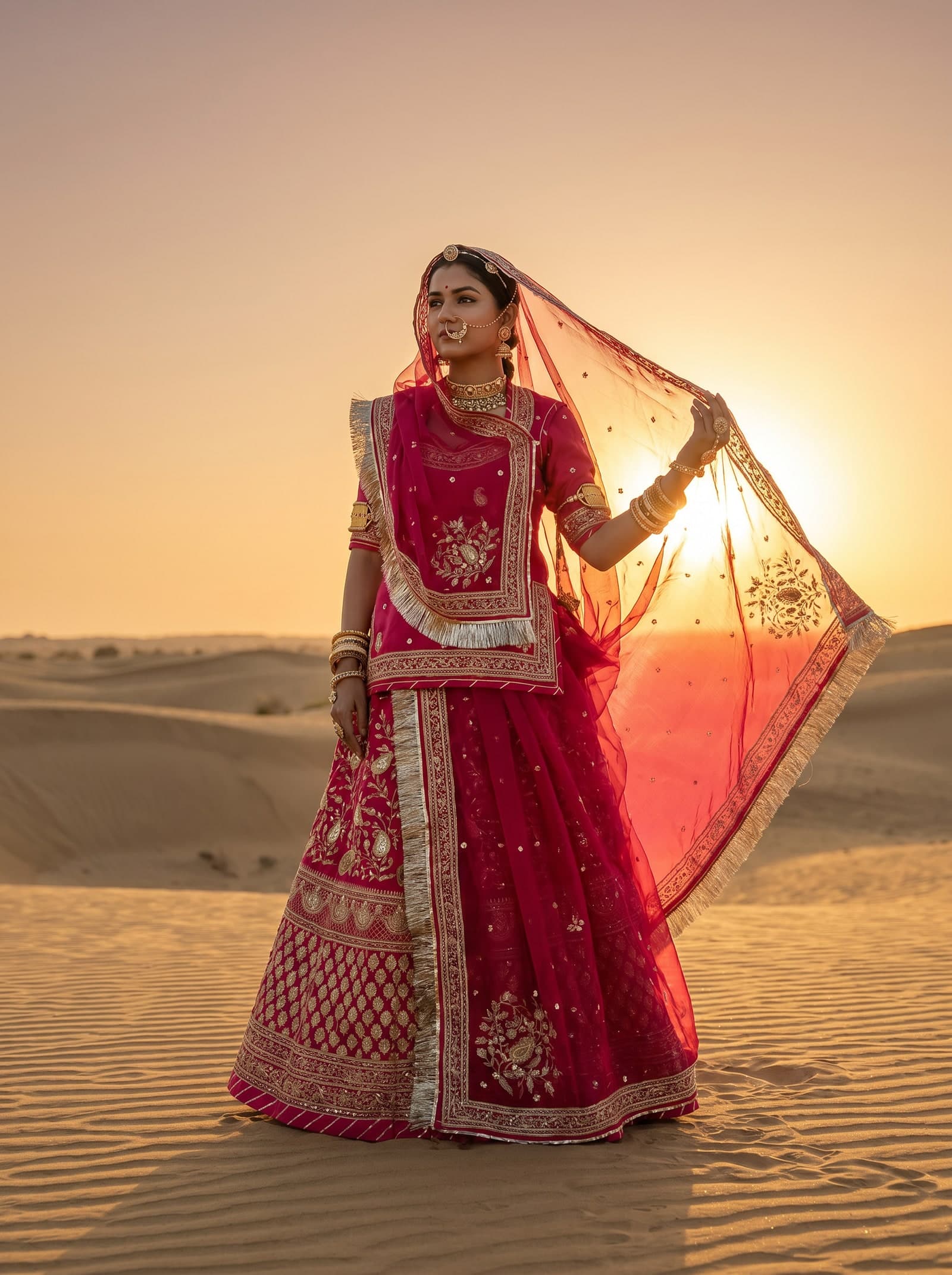
Rani Pink Bari Rajputi Poshak — Aari Zardozi
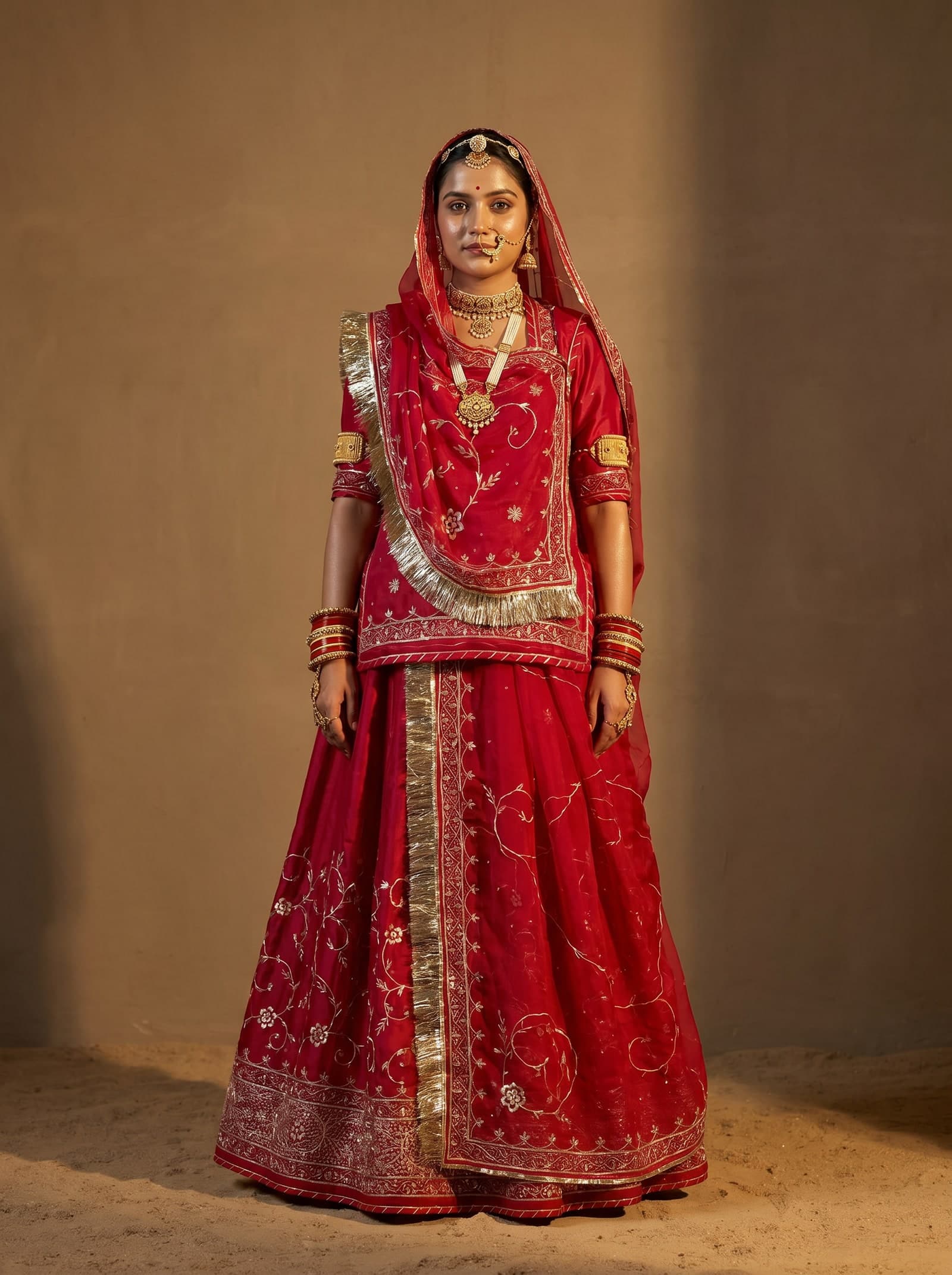
Red Bari Rajputi Poshak — Dabka
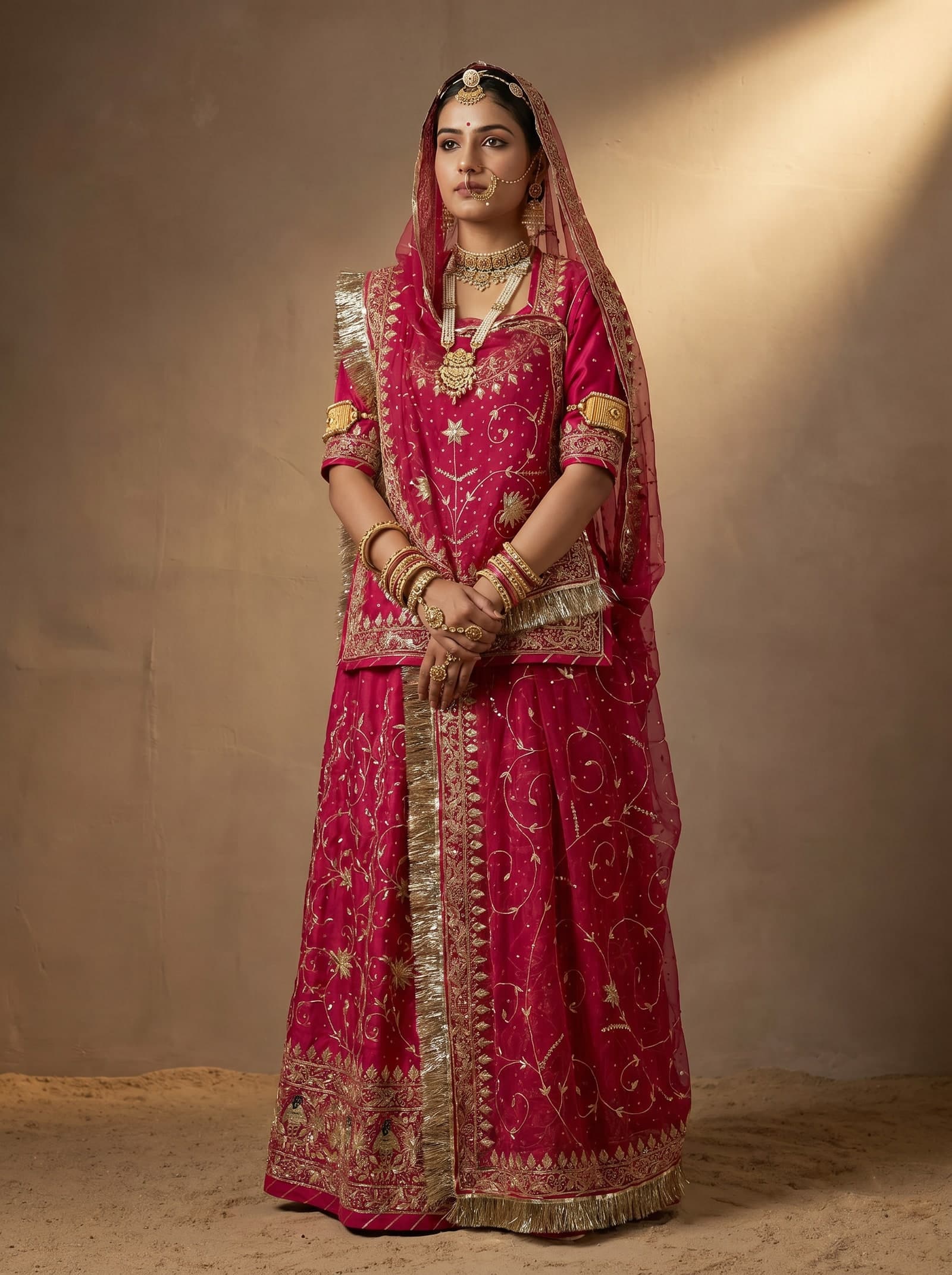
Rani Pink Bari Rajputi Poshak
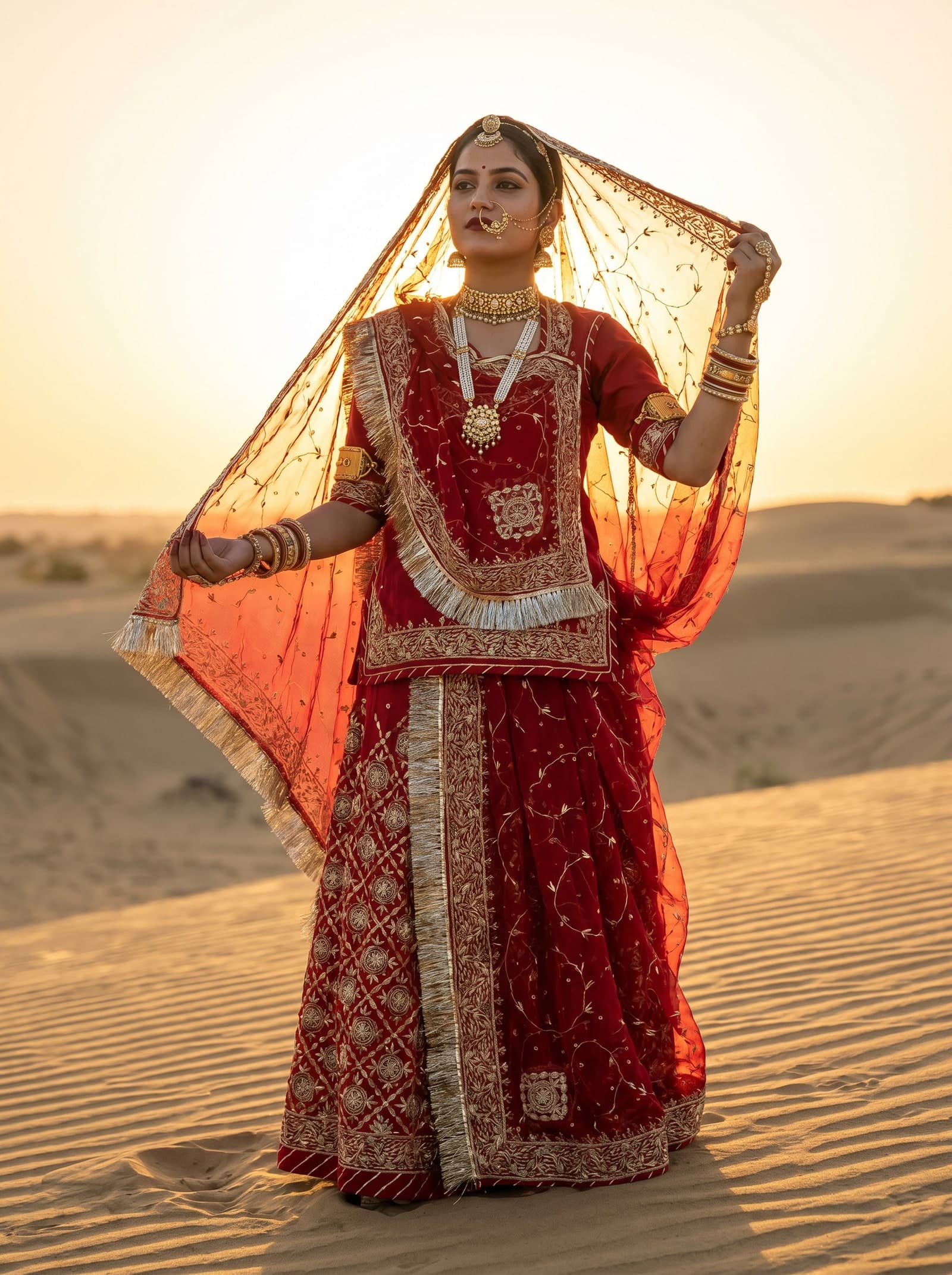
Deep Red Velvet Bari Rajputi Poshak
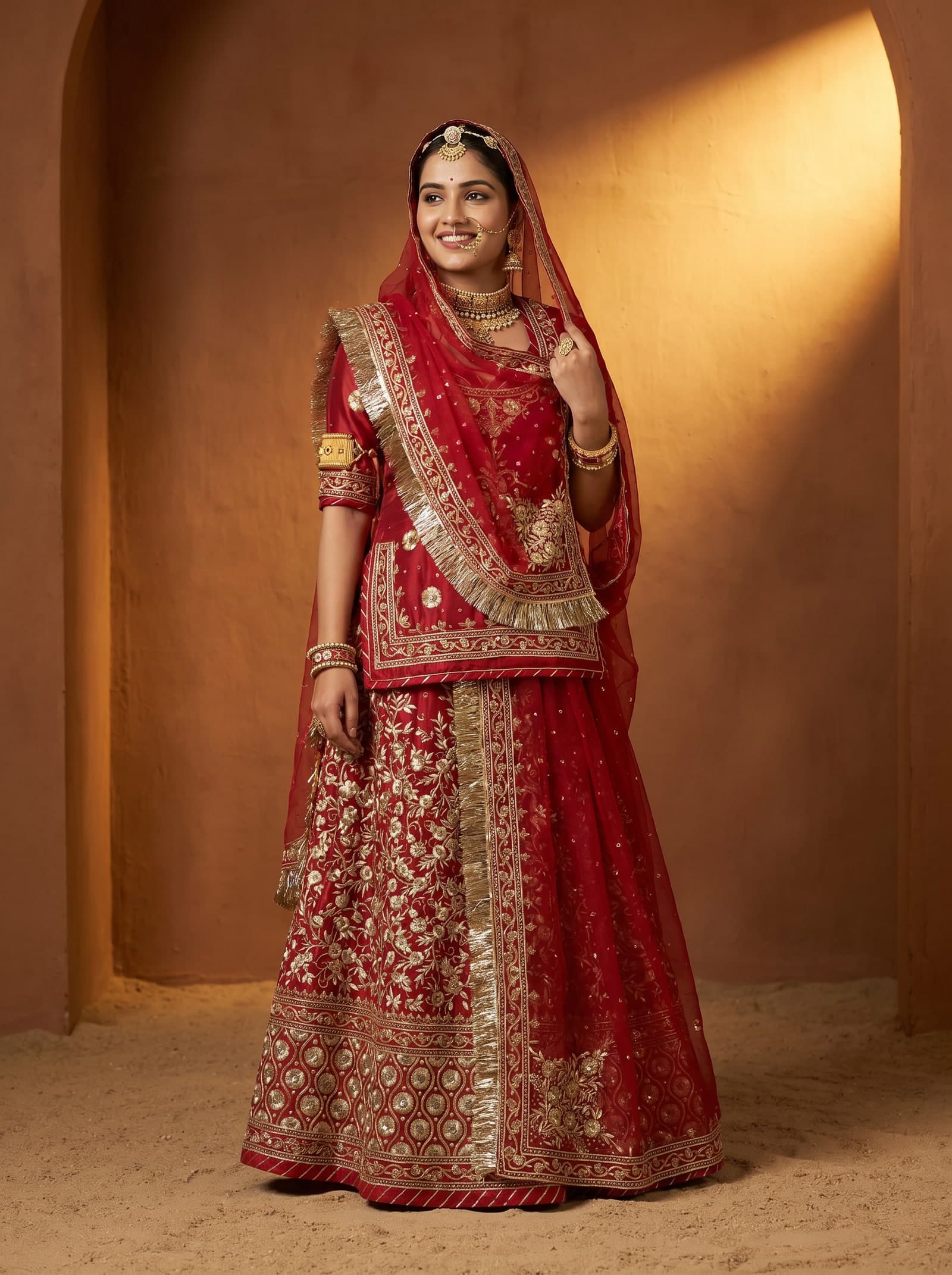
Red Bari Rajputi Poshak — Zari Jaal
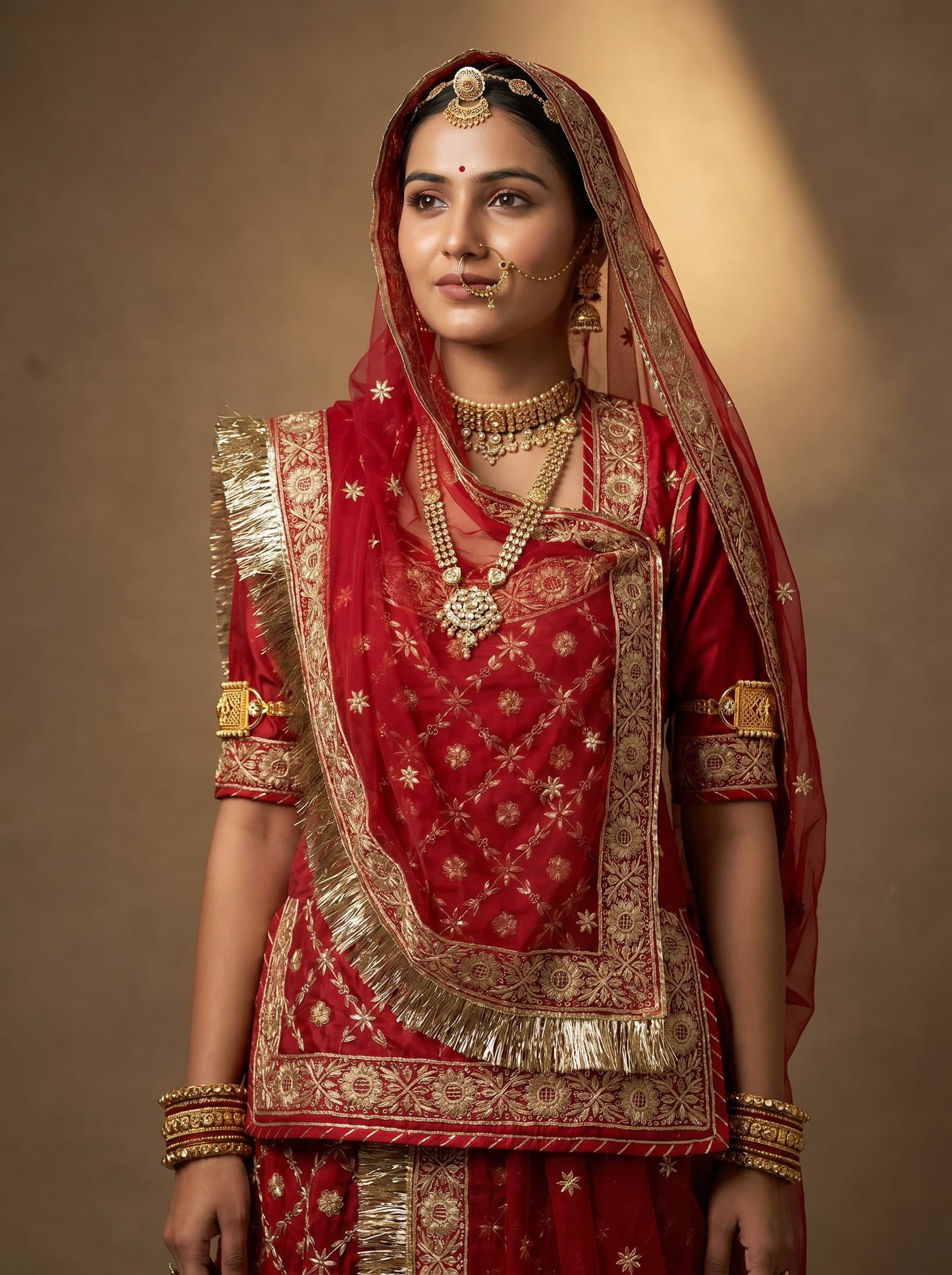
Red Bari Rajputi Poshak — Antique Zari
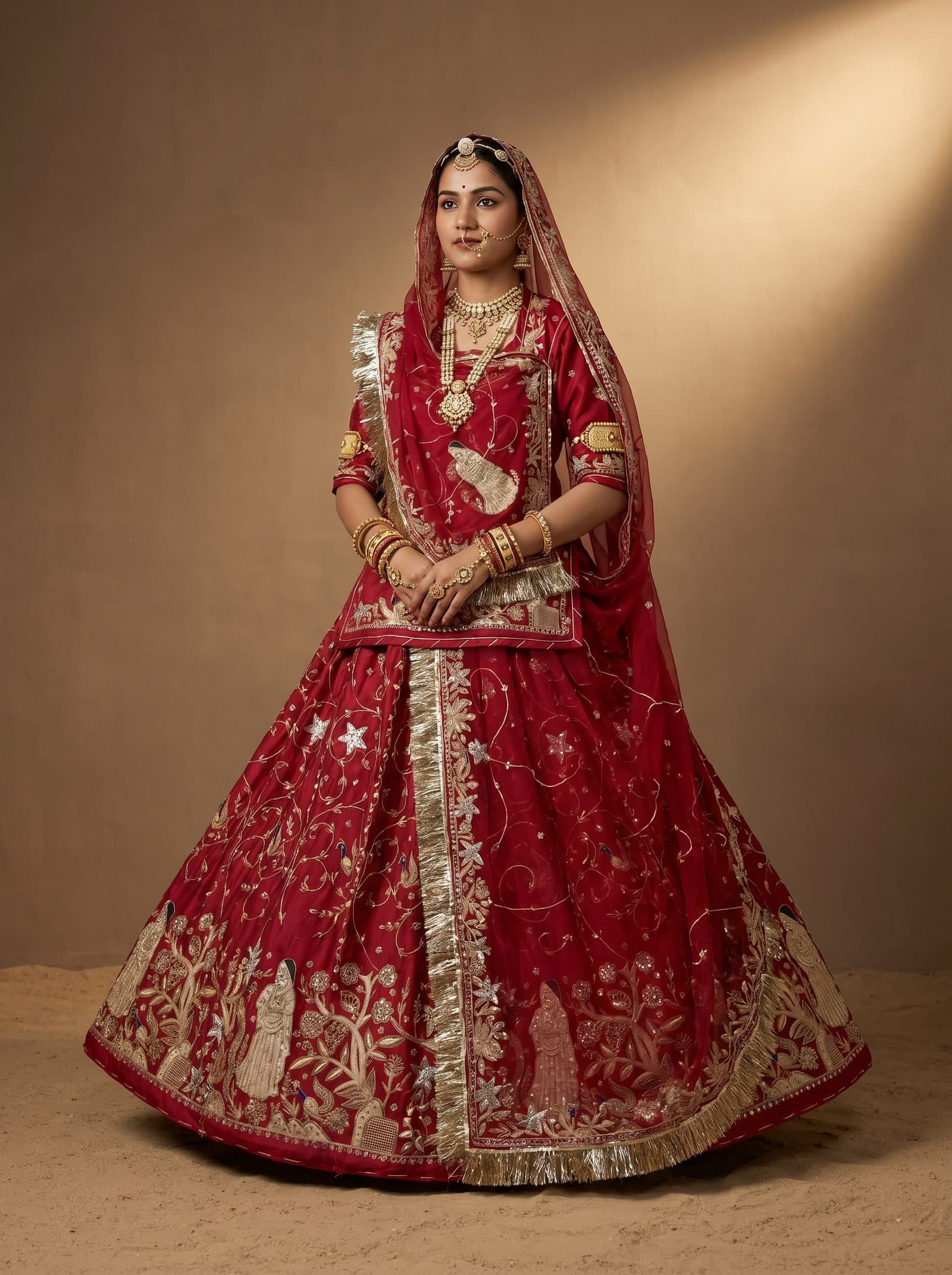
Red Bari Rajputi Poshak — Pichwai Motif
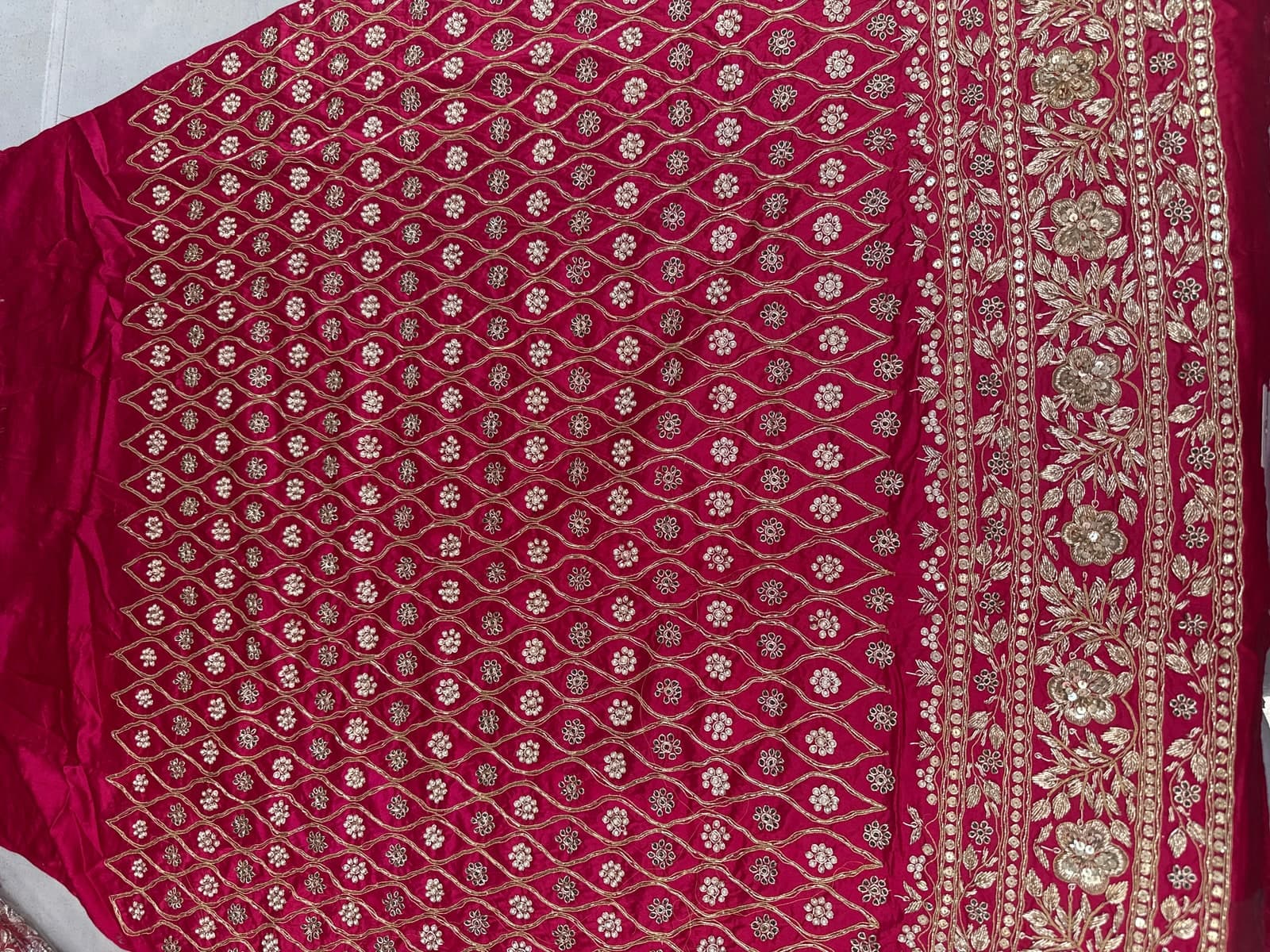
Rani Pink Bari Rajputi Poshak — Gota Jaal
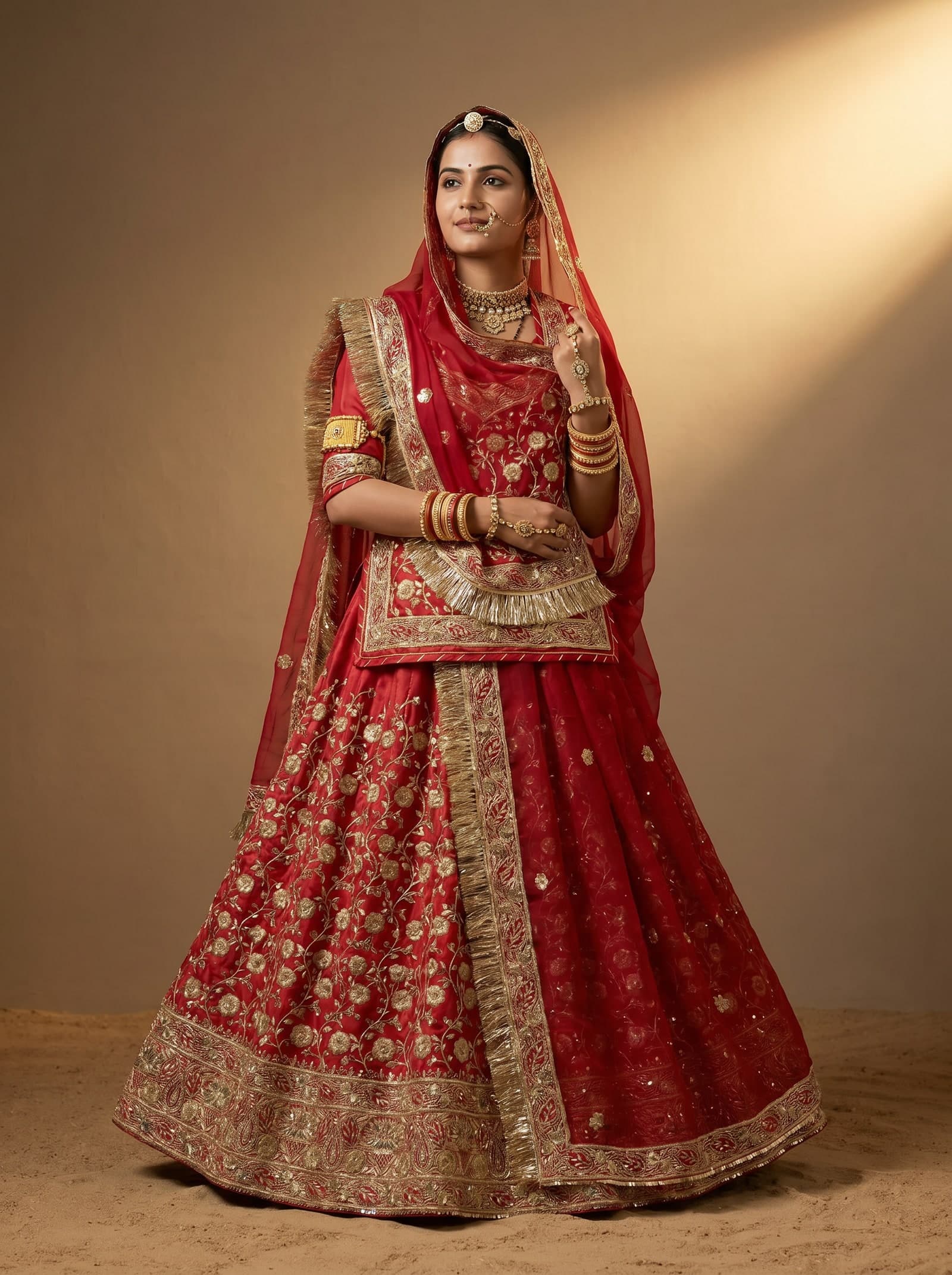
Red Bari Rajputi Poshak — Floral Zari
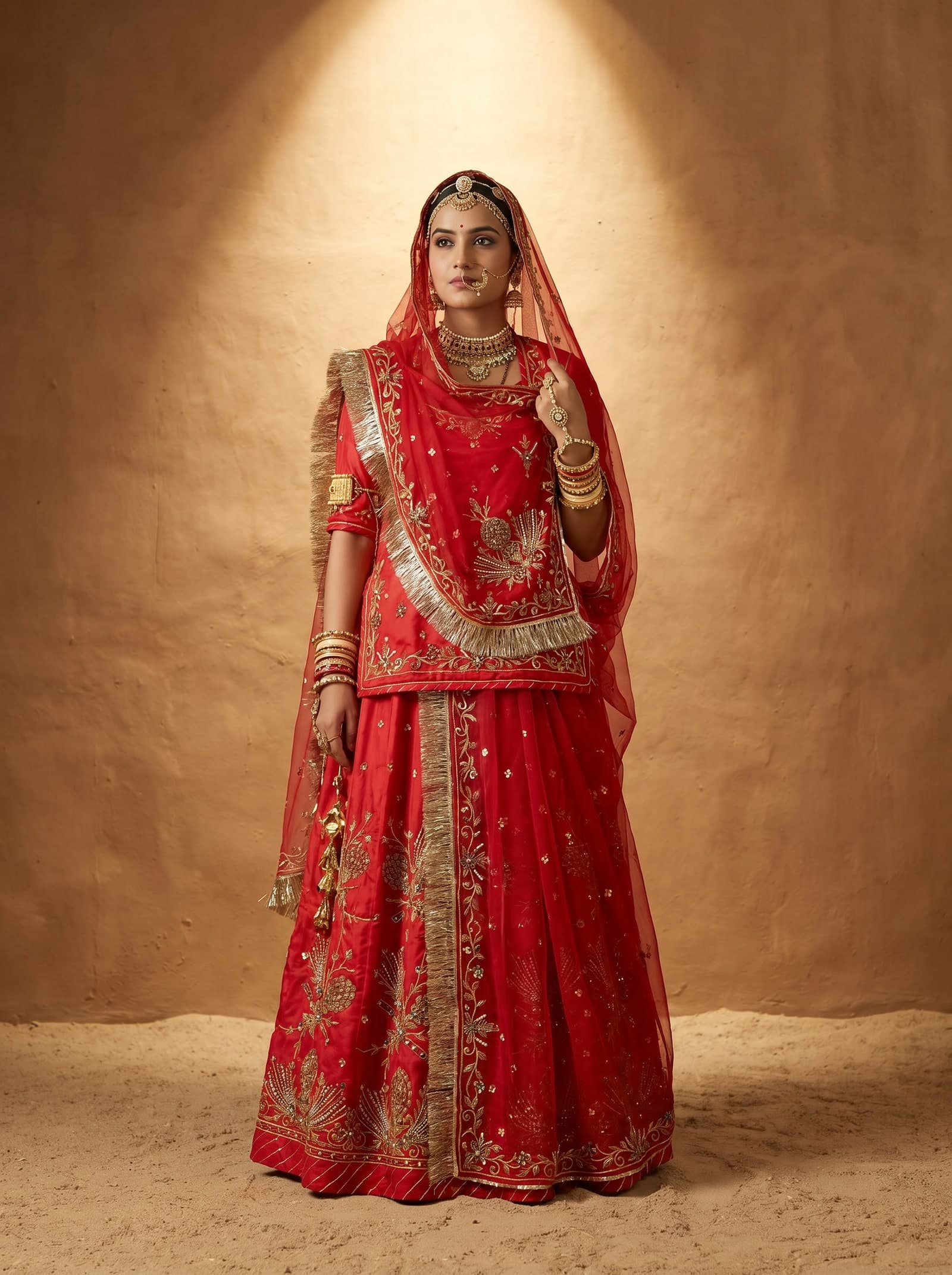
Scarlet Red Bari Rajputi Poshak
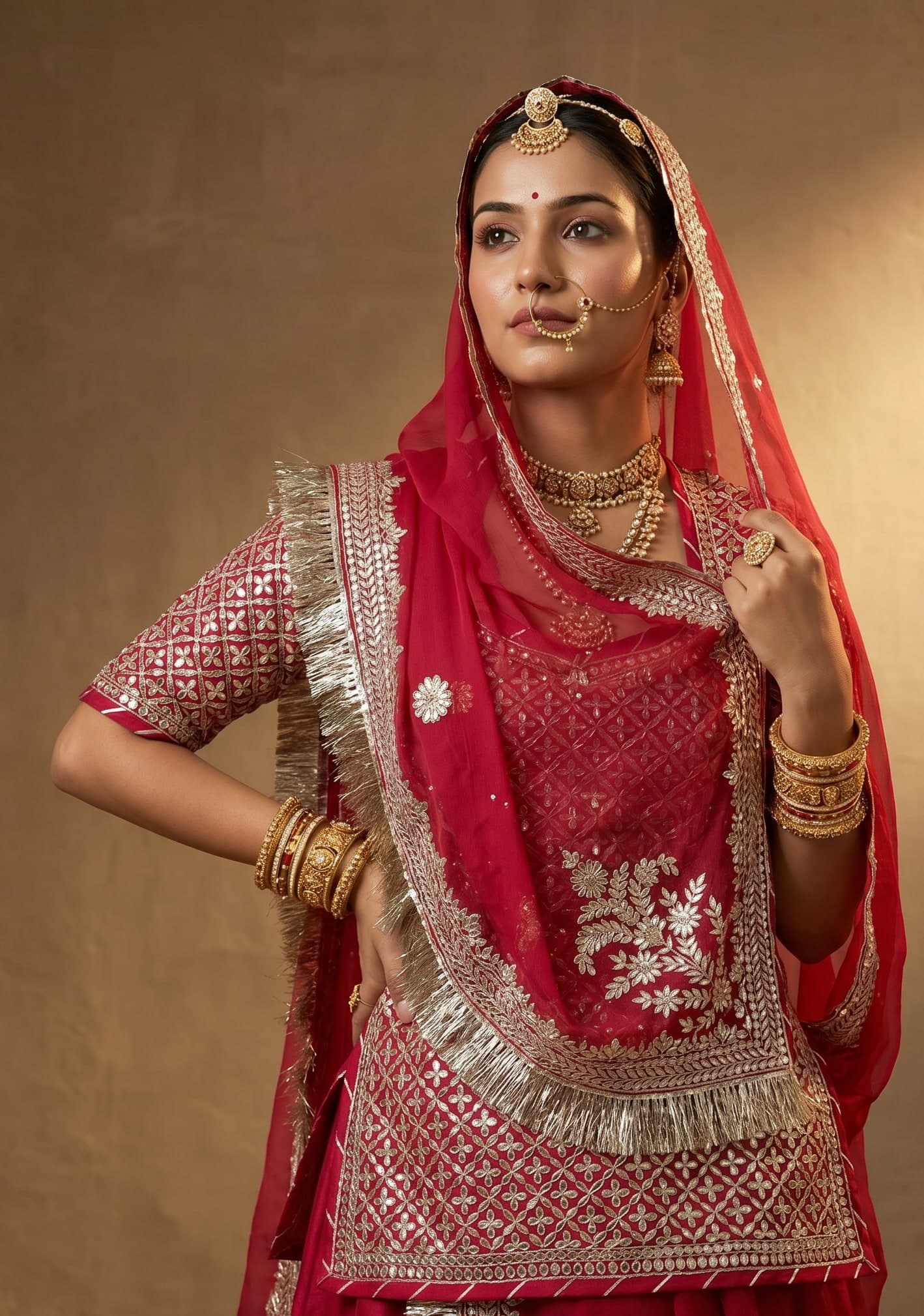
Red Bari Rajputi Poshak — Gota Patti
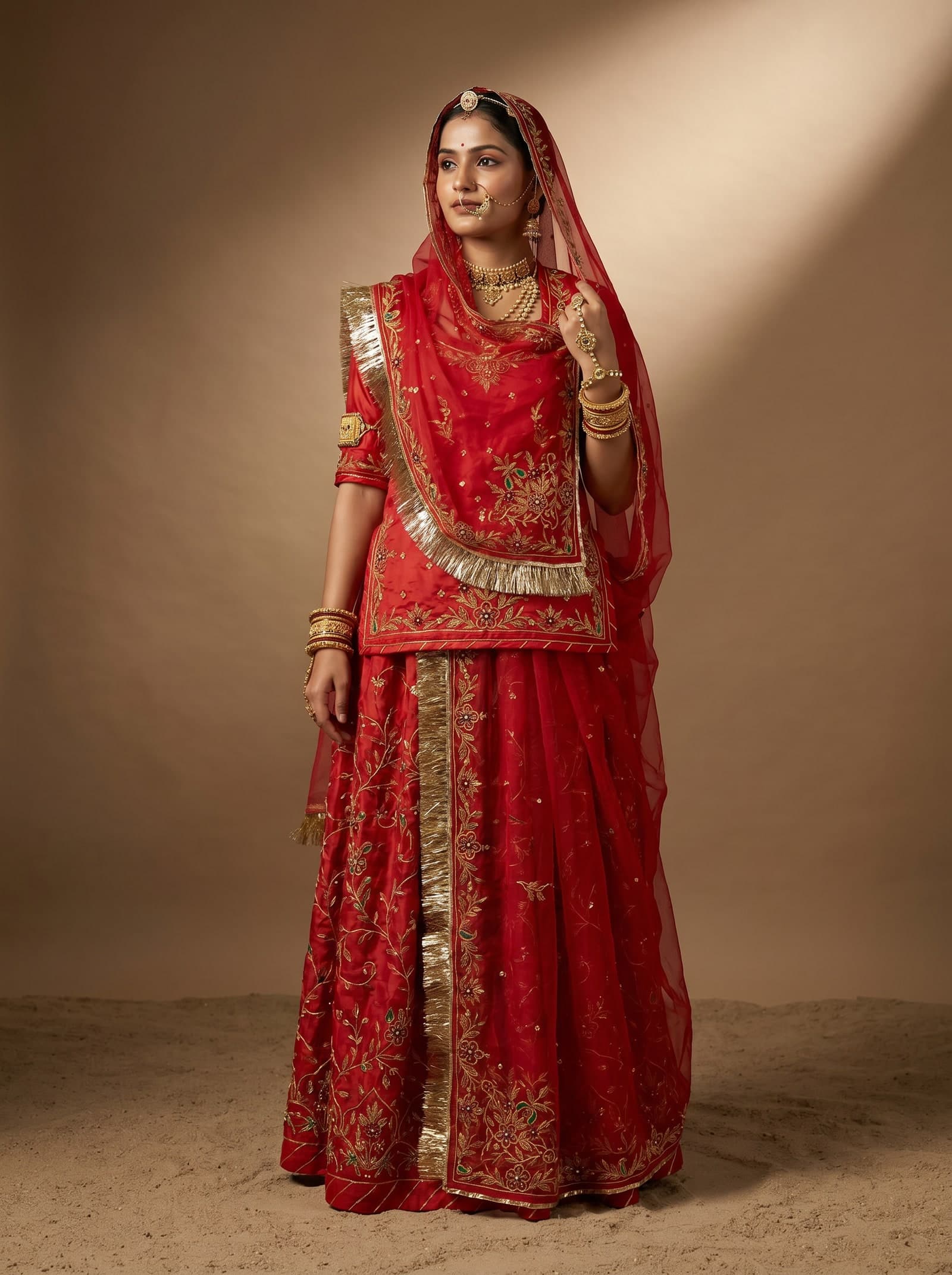
Red Bari Rajputi Poshak — Antique Samla & Dori Jaal
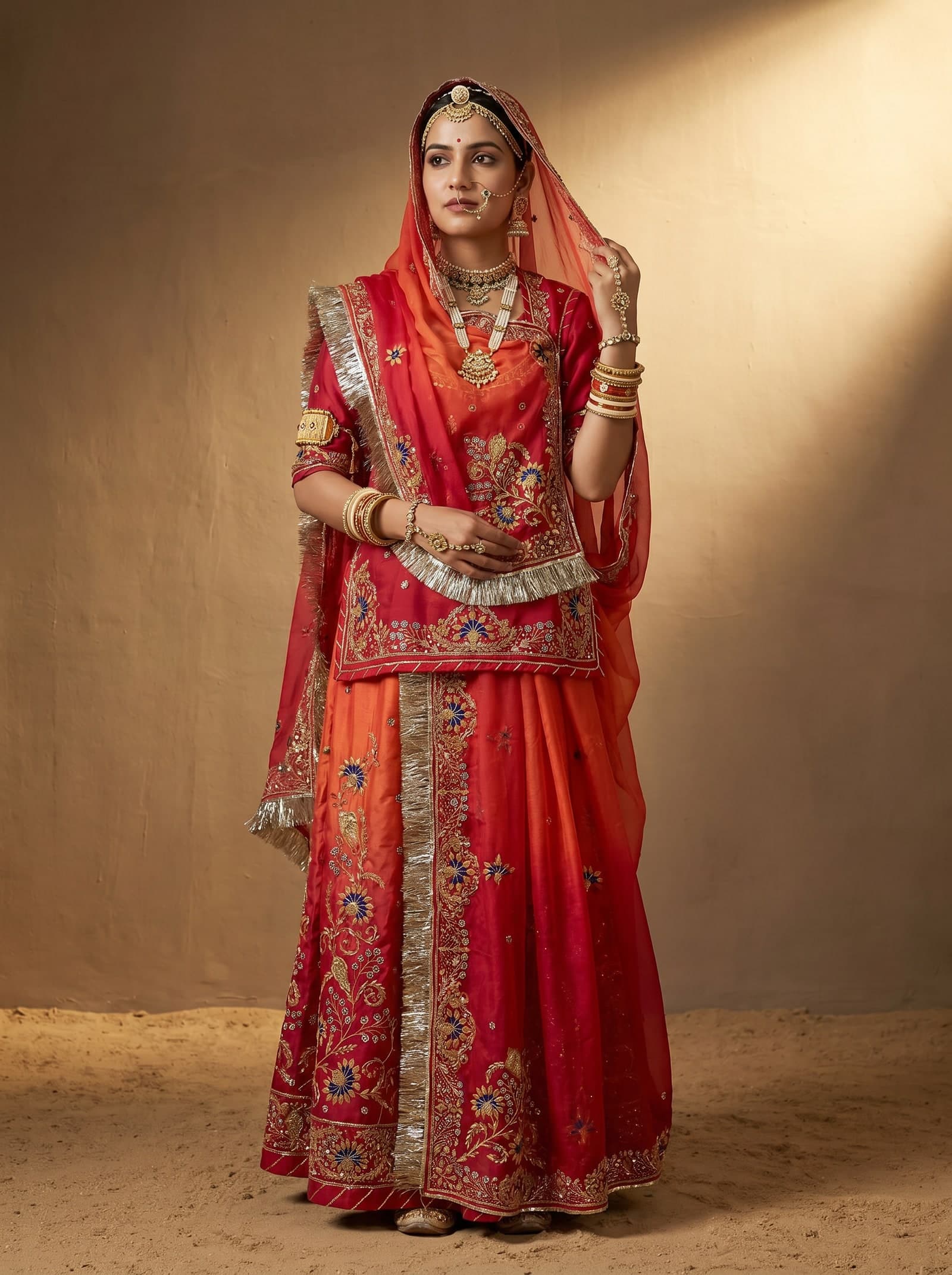
Red-Orange Shaded Bari Rajputi Poshak — Golden Dabka
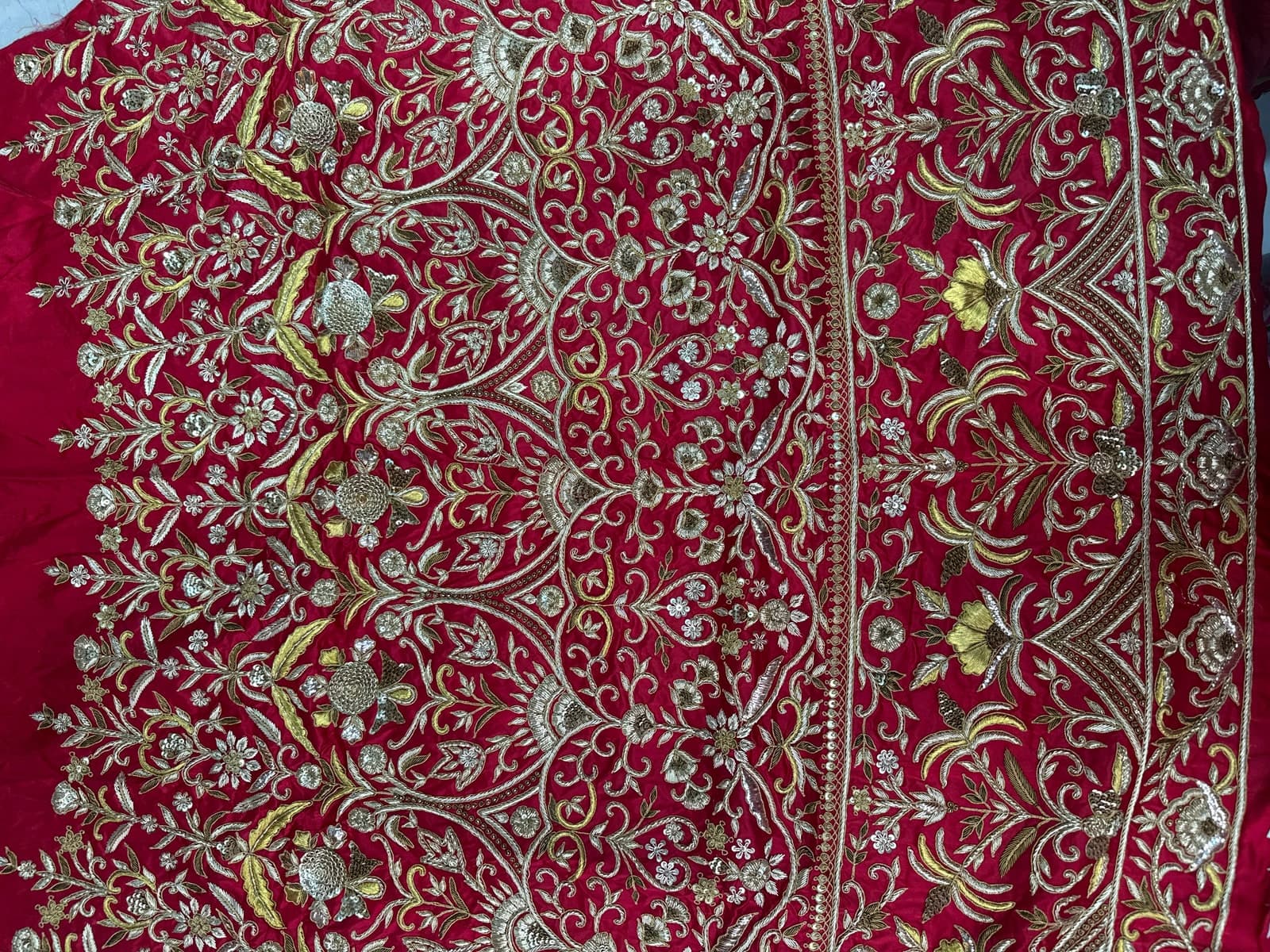
Crimson Bari Rajputi Poshak — Antique Golden Zari
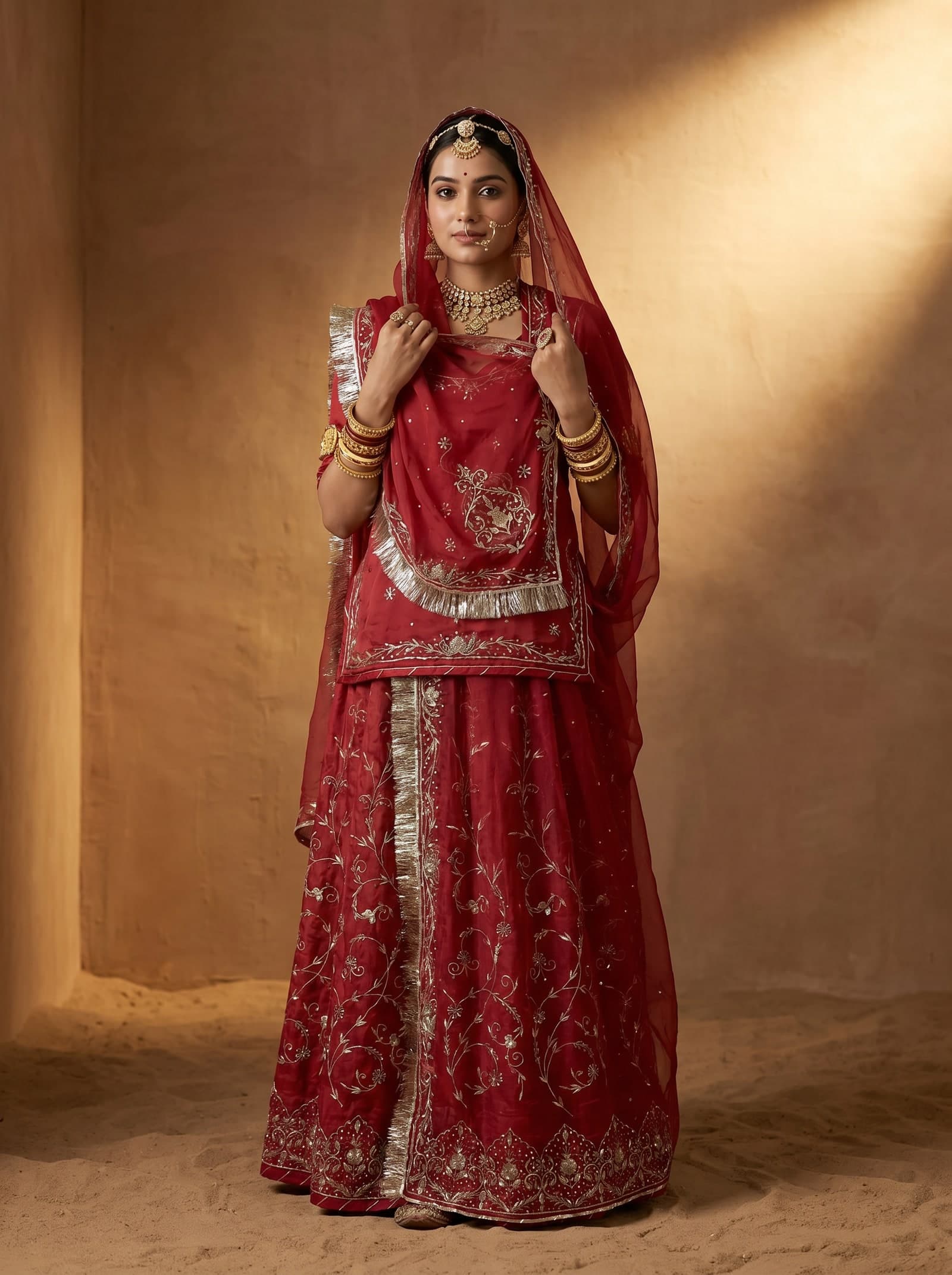
Red Bari Rajputi Poshak — Dabka & Dori Jaal
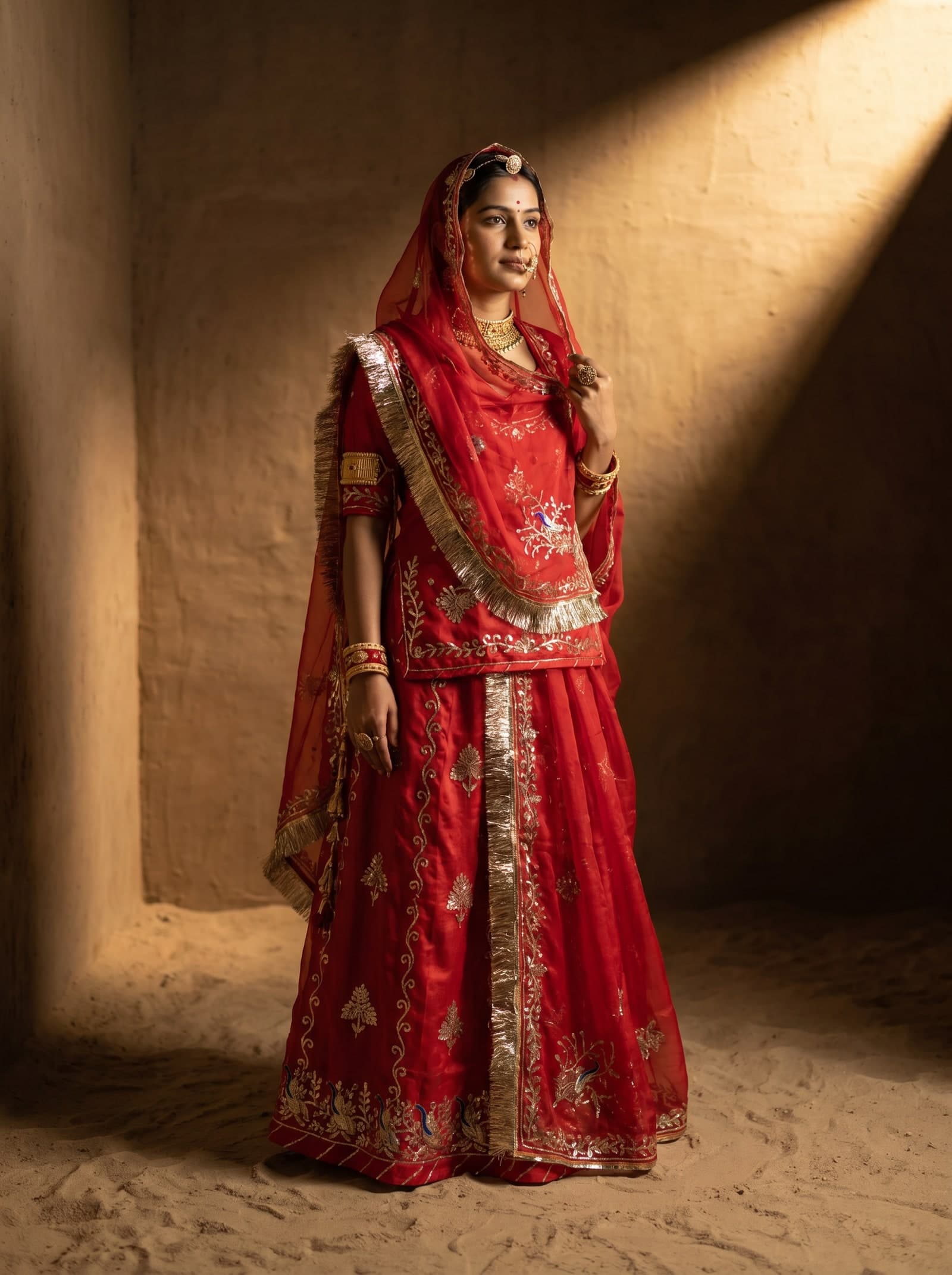
Scarlet Red Bari Rajputi Poshak — Aari Tari
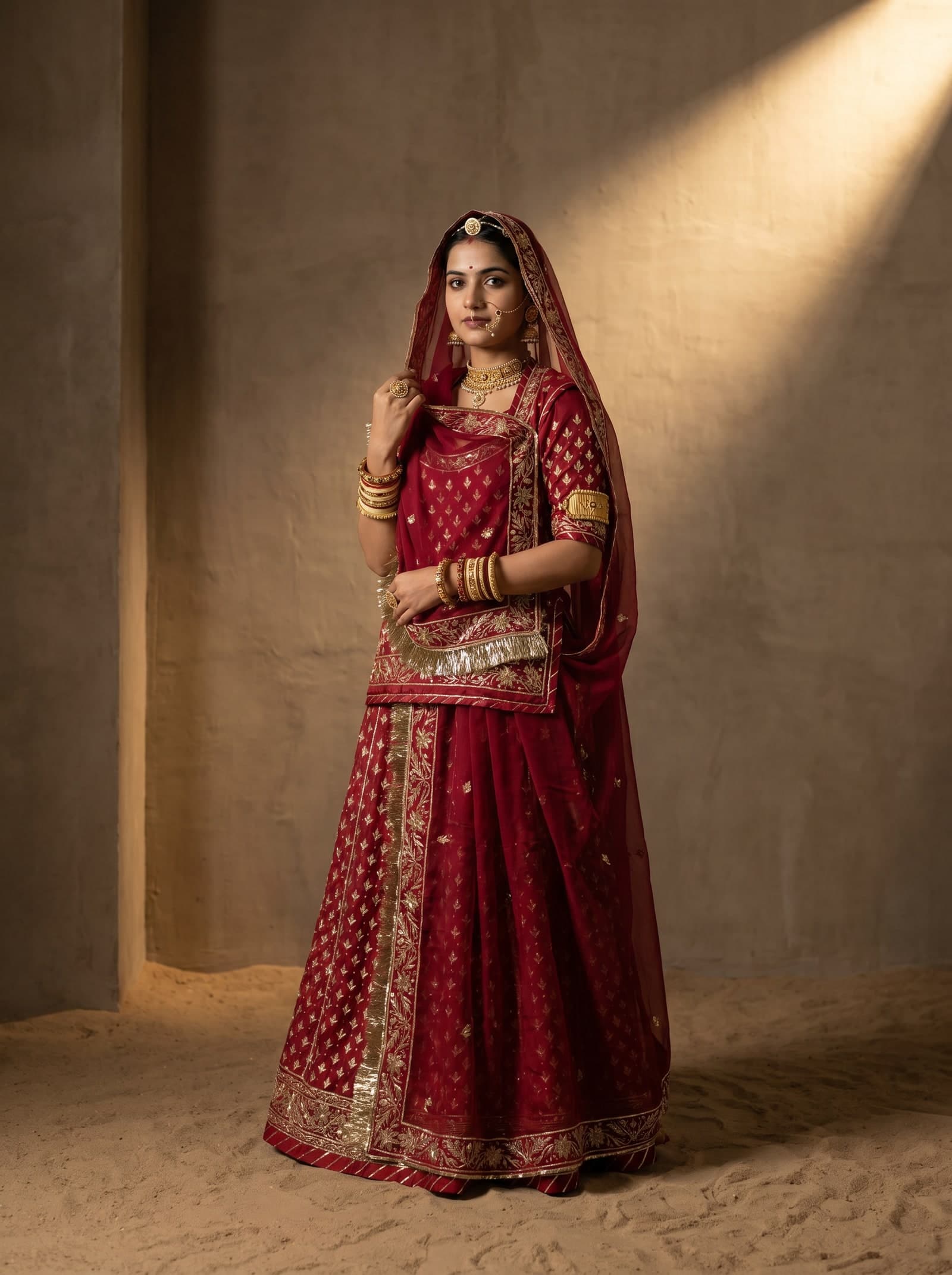
Deep Red Bari Rajputi Poshak — Dabka
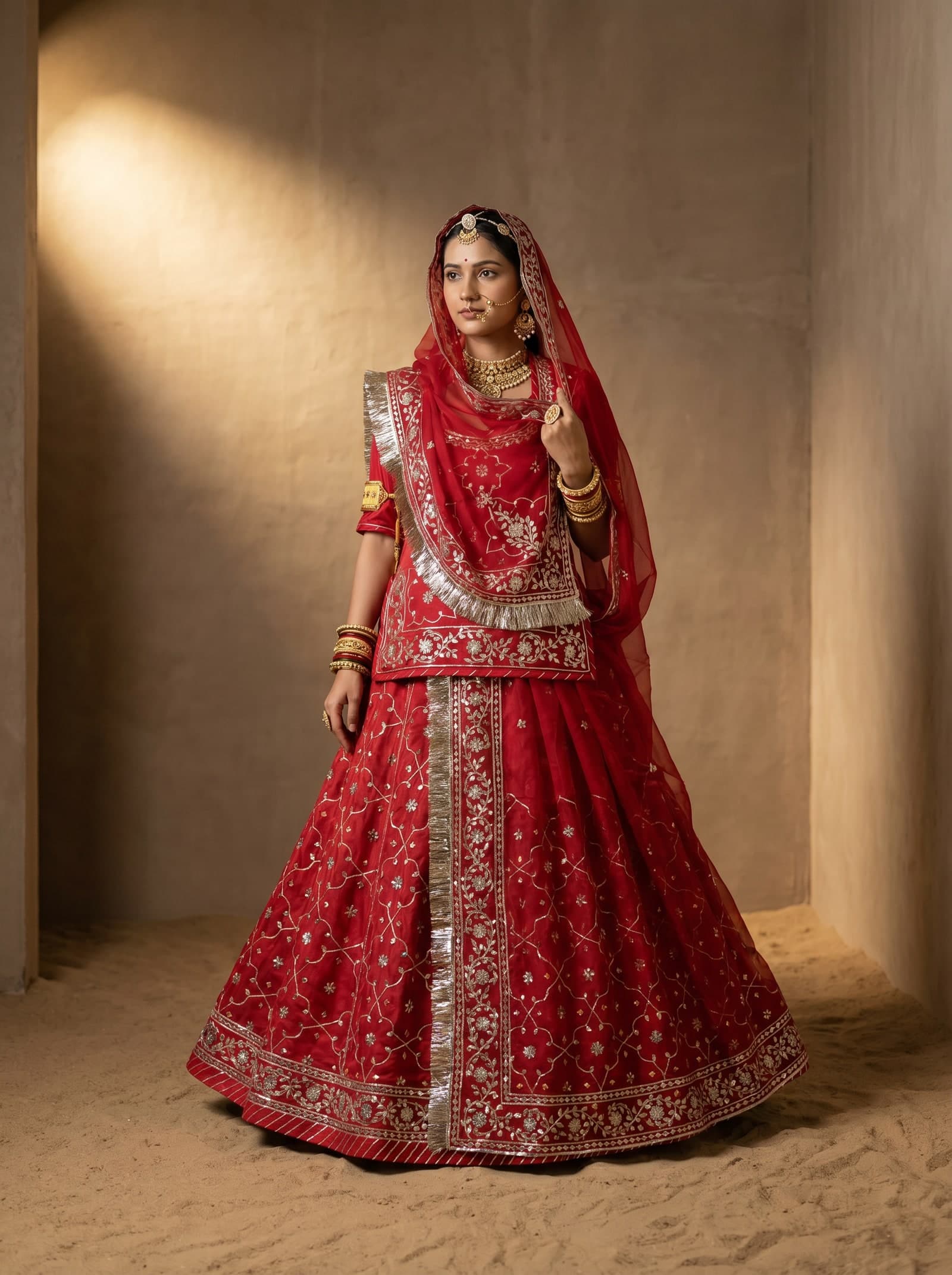
Red Bari Rajputi Poshak — Kachi Patti & Copper Sikhiya
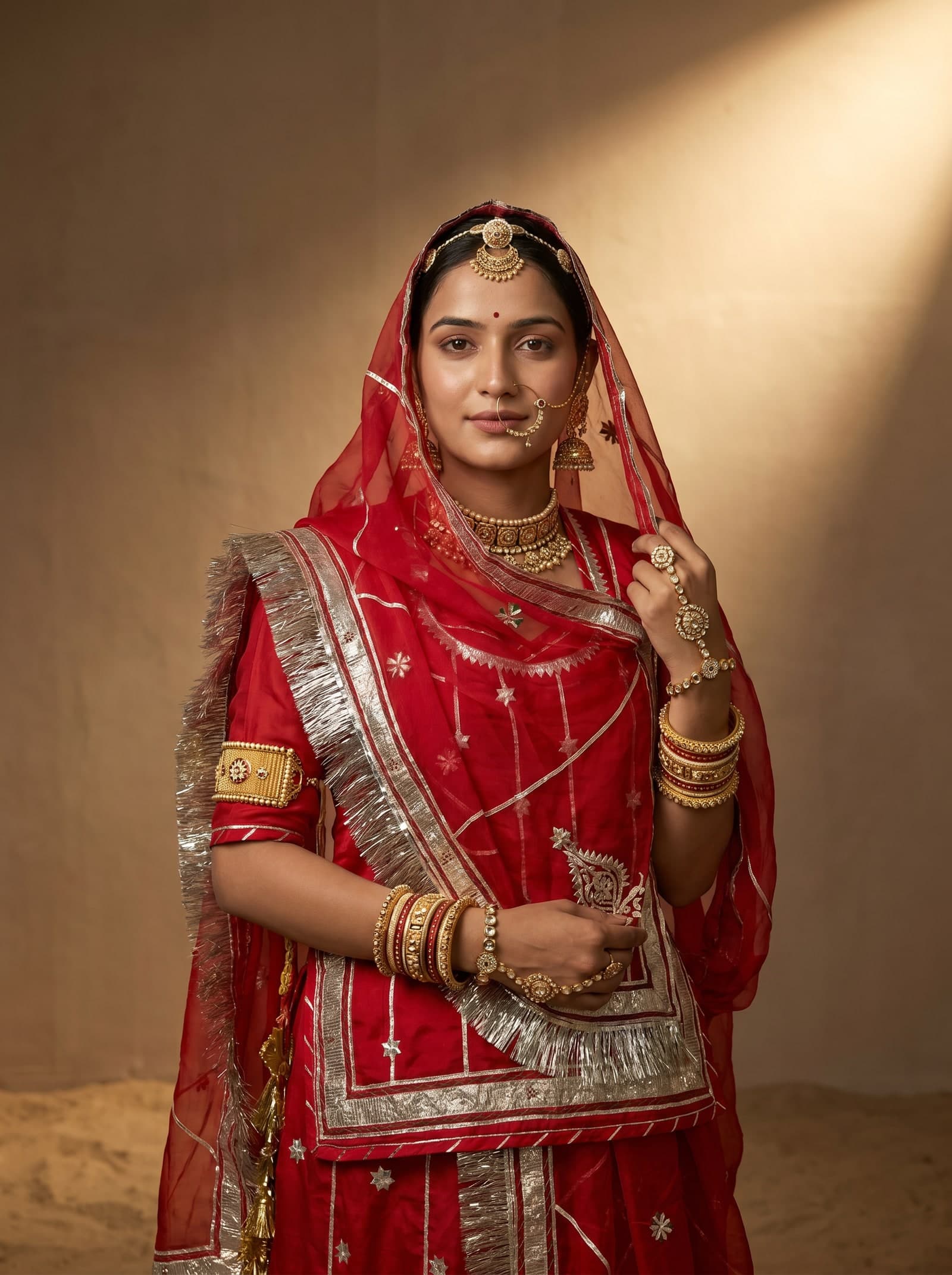
Red Bari Rajputi Poshak — Copper Lappa & Kachi Patti
A word on where to spend the weight. The odhna sits closest to your face in every photograph and is held over your head through the phere, so its kor — the border — is the piece of handwork people actually look at. The ghaghra border is next, because it moves. A modest kanchli under a magnificent odhna reads far richer than the reverse, and it costs less.
If you are comparing a heavy poshak here against one quoted elsewhere, turn the cloth over. Real dabka is coiled wire and springs back under a thumbnail; aari-tari read from the reverse shows an even rhythm and no long lazy jumps. Machine work lies flat and shines too evenly. That single check explains most price differences in this band.
Questions, answered
What is a heavy rajputi poshak?
A heavy Rajputi poshak carries handwork across the whole garment rather than only along the borders — the kanchli, kurti and every kali of the ghaghra are worked, usually in dabka, zardozi or aari-tari. The extra weight comes from the density of the embroidery and the metal in the thread, not from the cloth.
How heavy is a bridal poshak, actually?
A fully worked 24-kali bridal poshak is genuinely heavy to wear for a long evening — enough that you notice it when you stand. Lift one before you commit to it. Brides who will sit and stand through seven phere past midnight often keep the heaviest work on the odhna and the ghaghra border instead of over the whole piece.
Is heavy work the same as party wear?
Close, but not identical. Party-wear poshaks are worked heavily enough to read rich under evening light while staying wearable for a few hours of standing. Bridal pieces go further — more kali, denser jaal, and often real silver. Both live on this page; the price band tells you which is which.
What does a heavy rajputi poshak cost?
At our atelier, ₹20,000 to ₹95,000 depending on how much of the cloth is covered, the kali count of the ghaghra and whether the thread carries real silver. Heavier real-silver commissions run past ₹2,00,000. The poshak price calculator gives you a range in under a minute.
Can heavy work be made lighter for a summer wedding?
Yes — we can keep the visual density but move it to the odhna and the ghaghra border, and cut the base in a lighter satin or chiffon instead of velvet. It photographs almost identically and it is a far kinder thing to wear through a Jaipur May.